Wild Rice Pilaf
Introduction
Have you ever wondered if a humble side like wild rice pilaf could simultaneously boost your meal’s protein, fiber, and flavor while still being dinner-party worthy? Wild rice delivers roughly 6–7 g of protein and 2–3 g of fiber per cooked cup (USDA data), making it a more nutrient-dense base than many white rices—and when combined into a pilaf, it transforms from a simple grain into a layered, textural centerpiece that challenges the idea that sides must be boring.
Ingredients List
1 cup uncooked wild rice (or 1 cup wild rice blend for faster cooking) — nutty, slightly chewy kernels that pop with toasted flavor; substitute: 1 cup quinoa or brown rice for shorter cook time and lighter texture.4 tablespoons unsalted butter or 3 tablespoons olive oil — butter gives richness, olive oil keeps it dairy-free; substitute: ghee or avocado oil.1 medium yellow onion, finely diced — adds sweetness and depth; substitute: 1/2 cup chopped leek for a subtler flavor.2 garlic cloves, minced — brightens the pilaf; substitute: garlic-infused oil for low-FODMAP.1 medium carrot, diced small — adds color and sweet crunch; substitute: roasted butternut squash in fall.2 celery stalks, diced — vegetal backbone; substitute: fennel for an anise note.3 cups low-sodium chicken or vegetable broth — use homemade or low-sodium boxed; substitute: 3 cups water + bouillon for pantry-friendly version.1/2 cup dry white wine (optional) — lifts flavors and adds acidity; omit and add extra broth if preferred.1/2 cup toasted sliced almonds or chopped pecans — for crunch; substitute: pepitas for a nut-free swap.1/4 cup dried cranberries or cherries — for sweet-tart contrast; substitute: chopped apple for freshness.1 teaspoon fresh thyme leaves (or 1/2 tsp dried) + 2 tablespoons chopped fresh parsley — herbs finish the dish; substitute: rosemary sparingly.Zest of 1 lemon and 1 tablespoon lemon juice — brightens and balances richness.Salt and freshly ground black pepper to taste.
Timing
Preparation time: 15 minutes.Cooking time: 40–50 minutes for pure wild rice (or 25–30 minutes for a wild rice blend).Total time: 55–65 minutes — about 15–20 minutes longer than a typical white rice pilaf but often worth the trade for improved nutrition and texture.Using a wild rice blend cuts cooking time by roughly 30–40% while retaining nutty flavor; pressure-cooker/Instant Pot methods can further reduce active time (see FAQ).
Step 1: Rinse and Toast the Rice
Rinse 1 cup wild rice under cold water briefly to remove dust. Heat 1 tablespoon butter or oil in a medium saucepan over medium heat, add the drained rice and toast, stirring for 2–3 minutes until aromatic and some kernels turn glossy. Toasting enhances nuttiness and helps each kernel stay separate; don’t brown—just warm and fragrant.
Step 2: Sauté Aromatics
In the same pan, add remaining 2 tablespoons butter or oil and sauté the diced onion, carrot, and celery over medium heat until translucent and slightly caramelized, about 6–8 minutes. Add the garlic in the last 60 seconds. Personal tip: Cook the veggies slowly—this build of savory-sweet flavor is what makes a pilaf feel layered and restaurant-quality.
Step 3: Deglaze and Combine
Pour in 1/2 cup white wine (optional) to deglaze the pan, scraping any browned bits. Add the toasted rice back if you removed it, then pour in 3 cups warm low-sodium broth, add thyme, a pinch of salt, and bring to a gentle simmer. For a richer pilaf, use a portion of chicken stock; for vegan, use vegetable stock. If using a wild rice blend, reduce broth to about 2 1/2 cups—follow package cues.
Step 4: Simmer Gently, Don’t Stir
Cover, reduce heat to low, and simmer undisturbed for 35–45 minutes for pure wild rice (or 20–30 minutes for blends), until many kernels have split open and texture is tender but still toothsome. Tip: Lifting the lid releases steam and can disrupt cooking—resist the urge. If liquid is absorbed but rice is still firm, add 1/4 cup hot stock and continue cooking.
Step 5: Steam Off and Fluff
Remove from heat and let sit, covered, 10 minutes to steam—this finishing step firms up grains and melds flavors. Uncover, fluff with a fork, fold in toasted nuts, dried fruit, lemon zest, lemon juice, chopped parsley, and a final drizzle of olive oil or a tablespoon of butter. Adjust salt and pepper. Personal tip: Add herbs at the end for brightness; chopped chives or tarragon work beautifully for a spring variation.
Nutritional Information
Per 1-cup serving (approximate estimates based on USDA data and recipe additions): Calories: 300–340; Protein: 7–9 g; Carbohydrates: 40–45 g; Dietary Fiber: 3–5 g; Fat: 10–14 g (depending on oil/butter and nuts); Sodium: 250–450 mg (depends on broth).Wild rice contributes higher protein and fiber than refined white rice—USDA reports ~6.5 g protein per cooked cup—plus minerals like manganese, magnesium, and phosphorus. The addition of nuts increases healthy monounsaturated fats and vitamin E, while vegetables add micronutrients and color.
Healthier Alternatives for the Recipe
Swap butter for extra-virgin olive oil or light olive oil to reduce saturated fat and keep it vegan.Replace dried fruit with fresh apple or pomegranate seeds to lower added sugars and increase hydration.Boost protein by stirring in 1 cup cooked chickpeas or 1 cup diced roasted chicken—ideal for making the pilaf a main.Use a wild rice and quinoa mix for a complete amino-acid profile if you want a plant-based “complete protein.”For low-FODMAP diets, omit onion/garlic and use garlic-infused oil and green onion tops; use fennel fronds or parsley for freshness.
Serving Suggestions
Serve warm as a holiday side under roasted turkey or alongside pan-seared salmon for a balanced plate. Turn leftovers into stuffed bell peppers with ground turkey and roasted tomatoes, or mix with greens, avocado, and a citrus vinaigrette for a hearty salad. For weeknight versatility, top with a fried egg and hot sauce, or serve as a bed for spiced tofu or grilled portobello. Garnish ideas: toasted seeds, a drizzle of balsamic reduction, or crumbled feta for a Mediterranean twist.
Common Mistakes to Avoid
Using the wrong rice-to-liquid ratio: wild rice needs more liquid (about 3:1 for pure wild rice) than white rice—otherwise you’ll get undercooked kernels.Over-stirring during simmering: stirs release starch and can make the pilaf gummy; stir only when combining ingredients and when fluffing after steaming.Lifting the lid too early: interrupts the steam cooking, extending time and risking uneven doneness.Not toasting the rice or nuts: skips a key flavor-building step—toast briefly to unlock oils and fragrance.Over-salting: taste after cooking; broths can add considerable sodium so season gradually.
Storing Tips for the Recipe
Refrigerate in an airtight container for 3–4 days. To reheat, sprinkle a little water or broth, cover, and warm gently on the stovetop or microwave to restore moisture; finish with a squeeze of lemon and fresh herbs. Freeze in meal-sized portions for up to 3 months—freeze plain, then add fresh herbs and crunchy toppings after reheating. For meal prep, make the pilaf base (rice + aromatics) and store nuts/dried fruit separately to retain crunch.
Conclusion
Wild rice pilaf is a flexible, nutrient-forward side that elevates weeknight meals and holiday spreads alike—offering more protein and fiber than many common rices, adaptable swaps for dietary needs, and layered flavor when you toast, sauté, and finish properly. Try the method above, experiment with seasonal add-ins, and tell me how you customized your batch—leave a comment or photo, or explore related posts on grain bowls and grain-to-protein swaps for more ideas.
FAQs
Q: Can I make wild rice pilaf in an Instant Pot or pressure cooker?A: Yes. Use a 1:2.25 rice-to-liquid ratio for pure wild rice in a pressure cooker, cook on high pressure for 25–28 minutes, then natural release for 10 minutes. For blends, reduce time (see package).Q: Is wild rice gluten-free and safe for celiacs?A: True wild rice is naturally gluten-free, but check packaging for cross-contamination if you have celiac disease.Q: How can I shorten cooking time?A: Use a wild rice blend (often labeled "wild rice blend" or "tri-color blend") or pre-soak wild rice 2–4 hours to reduce simmer time. Using an Instant Pot/pressure cooker also speeds it up.Q: Can I make this pilaf ahead for a party?A: Yes—cook the pilaf fully, cool quickly, and reheat with a splash of broth before serving. Keep crunchy toppings separate and add just before serving.Q: My rice is still chewy after the listed time—what now?A: Add 1/4 cup hot broth, cover, and continue to simmer low for 5–10 minutes. Pure wild rice varies by age and package; older kernels take longer.
Wild Rice Pilaf
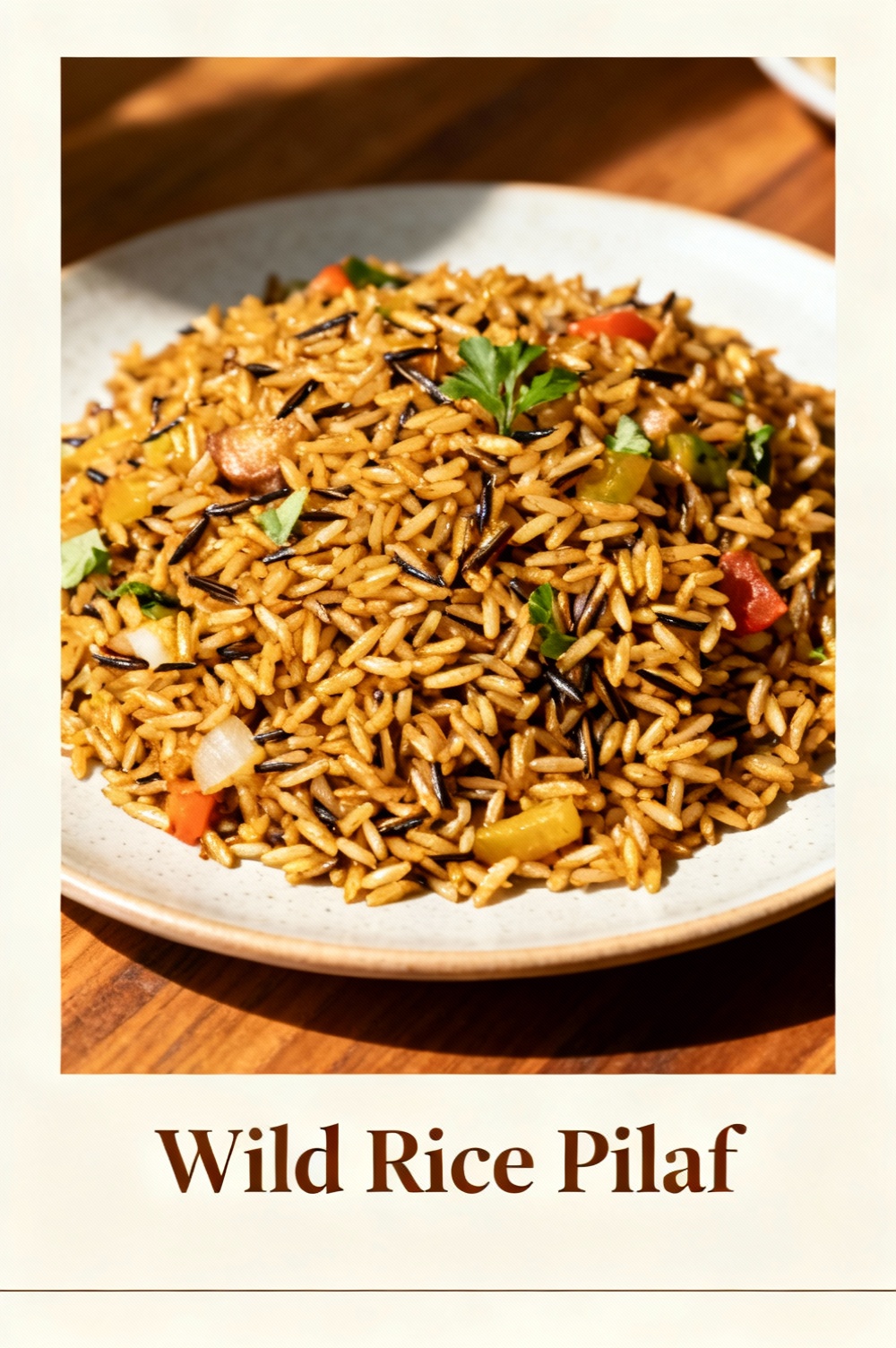
A nutty, fragrant wild rice pilaf studded with mushrooms, shallots, fresh herbs and toasted almonds — a hearty, elegant side for weeknights or holidays.
Ingredients
- 1 1/2 cups wild rice blend, rinsed
- 3 1/2 cups low-sodium chicken or vegetable broth
- 2 tbsp unsalted butter (or olive oil)
- 1 medium yellow onion, finely chopped
- 2 cloves garlic, minced
- 8 oz cremini or button mushrooms, sliced
- 1 large carrot, diced
- 2 tbsp fresh parsley, chopped
- 1 tsp fresh thyme leaves (or 1/2 tsp dried thyme)
- 1 bay leaf
- 1/2 cup sliced almonds, toasted
- Salt and freshly ground black pepper, to taste
Instructions
- Rinse the wild rice blend under cold water and drain well.
- In a medium saucepan, bring the broth to a simmer. Keep warm.
- Heat the butter (or oil) in a large skillet over medium heat. Add the chopped onion and cook until translucent, about 4–5 minutes. Add the garlic and cook 30 seconds more.
- Add the sliced mushrooms and diced carrot; sauté until the mushrooms are browned and the carrot begins to soften, about 5–7 minutes. Season with a pinch of salt and pepper.
- Stir in the rinsed rice to the skillet and toast for 2–3 minutes, coating the grains in the pan juices.
- Transfer the rice-vegetable mixture to the saucepan with the warm broth (or pour broth into the skillet). Add the bay leaf and thyme. Bring to a gentle boil, then reduce heat to low, cover, and simmer 40–45 minutes, or until the rice is tender and most of the liquid is absorbed.
- Remove from heat, discard the bay leaf, and fluff the pilaf with a fork. Stir in the chopped parsley and toasted sliced almonds. Taste and adjust seasoning with salt and pepper.
- Let the pilaf rest, covered, for 5–10 minutes before serving. Serve warm as a side or base for roasted proteins.
Nutrition Information
- Calories: 230 kcal
- Cholesterol: 5 mg
- Sodium: 320 mg
- Carbohydrates: 40 g
- Fiber: 3 g
- Sugar: 2 g
- Protein: 6 g