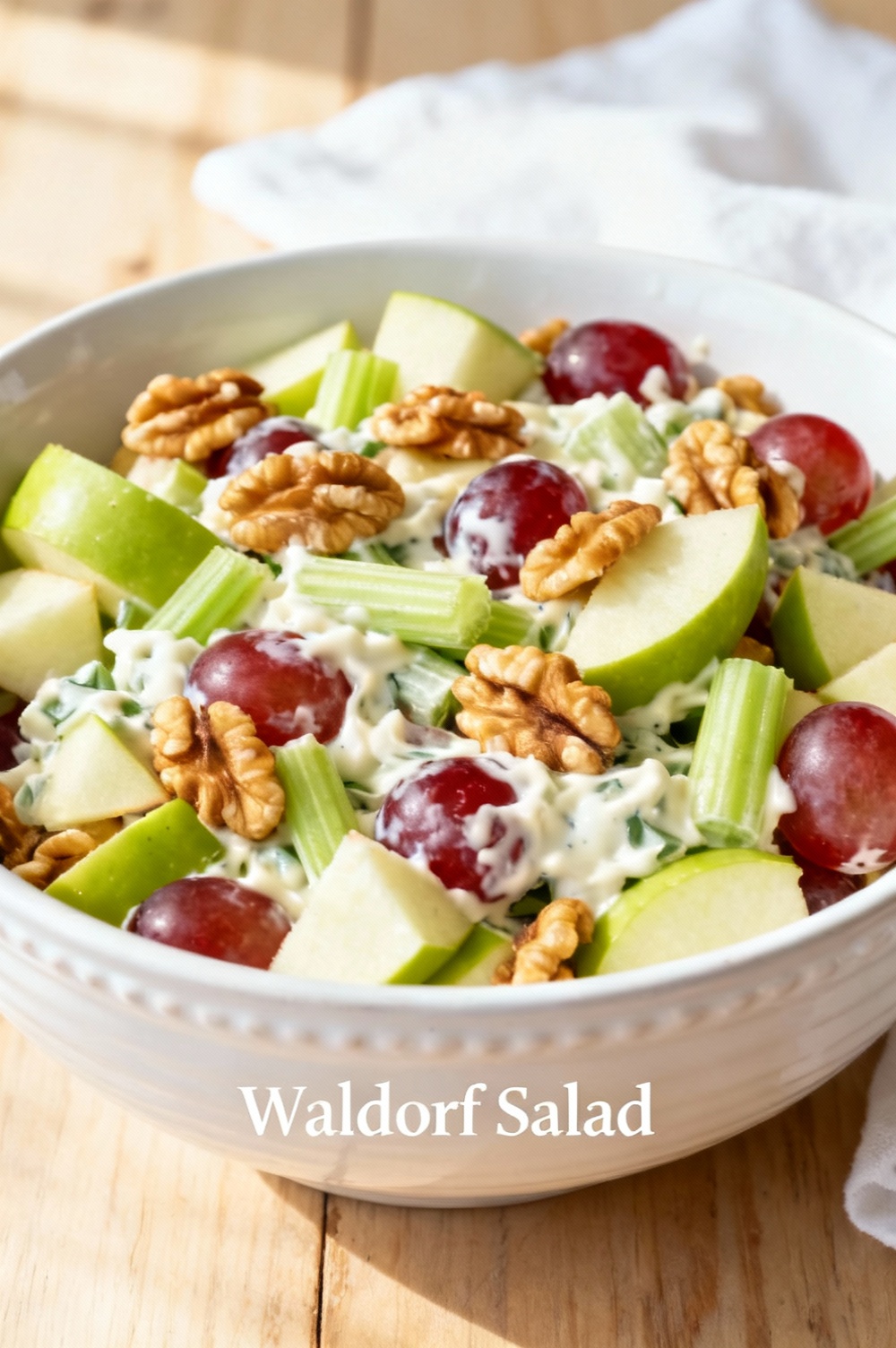
Waldorf Salad
Introduction
Did you know a single serving of classic Waldorf salad can pack as many calories as a small sandwich—yet most people still call it a “light” choice? Based on USDA ingredient averages and portion-size analyses, the combination of walnuts and mayonnaise-driven dressing is the main calorie driver, while apples and celery add fiber and volume. This recipe walks that line between comfort and freshness, challenges the idea that a salad must be low-calorie to be satisfying, and shows how small swaps can preserve flavor while boosting nutrition and variety.
Ingredients List
- 3 medium crisp apples (Honeycrisp, Gala, or Granny Smith for tartness); core removed and diced — substitute: pears or diced Asian pear for a sweeter, juicier profile.
- 2 stalks celery, thinly sliced on the bias for crunch — substitute: fennel for an anise hint or cucumber for lower carbs.
- 1 cup seedless red grapes, halved — substitute: pomegranate arils for color and antioxidants, or chopped dried cranberries for a chewy contrast (reduce quantity to control sugar).
- 1/2 cup walnuts, roughly chopped — substitute: toasted almonds, pecans, or pepitas for nut-free option (use toasted sunflower seeds).
- 1/2 cup mayonnaise (best with full-fat for classic creaminess) — healthier substitute: plain Greek yogurt or a 50/50 mayo-yogurt mix.
- 1–2 Tbsp lemon juice (about 1 lemon) to dress and keep apples bright — substitute: apple cider vinegar for tang.
- 1–2 tsp honey or maple syrup (optional, to taste) — substitute: stevia or omit for less sugar.
- Salt and freshly ground black pepper to taste.
- Optional: 2–3 Tbsp chopped fresh herbs (tarragon, chives, or parsley) for freshness.
- Optional add-ins: chopped cooked chicken for protein, crumbled blue cheese for a tangy twist, or baby greens to bulk it up for a main-course salad.
Timing
Preparation time: 15 minutes.
Active time (toasting nuts, mixing): 10 minutes.
Optional chilling time: 30 minutes.
Total time: 55 minutes (including chill), or 25 minutes if served immediately — about 50% faster than salads that require roasting proteins or grains, and ideal for weeknight prep when you want flavor with minimal cook time.
Step 1: Toast and prepare nuts for depth
Spread walnuts on a baking sheet and toast at 350°F (175°C) for 6–8 minutes, stirring once, until fragrant. Tip: toasting increases perceived fat and flavor without changing calorie content; it also reduces bitterness. Cool completely before chopping to avoid making the salad oily.
Step 2: Pick and prep apples for texture balance
Choose apples based on desired sweetness and crunch: Honeycrisp for juiciness, Granny Smith for tart contrast, Gala for mild sweetness. Core and dice into 1/2-inch pieces. Tip: to prevent browning and maintain crispness, toss diced apples immediately with 1 tablespoon lemon juice per apple. If you plan to make ahead more than 4 hours, use 2 Tbsp lemon juice or briefly submerge in acidulated water.
Step 3: Make the dressing with balanced acidity
Whisk together 1/2 cup mayonnaise, 2–3 tablespoons plain Greek yogurt (optional for tang and lower fat), 1 tablespoon lemon juice, 1 teaspoon honey, and salt and pepper to taste. Tip: start with less dressing and add gradually—it’s easier to add more than to remove excess. For a lighter dressing, swap up to 100% of mayonnaise with nonfat Greek yogurt and add a teaspoon of Dijon for complexity.
Step 4: Combine ingredients without losing crunch
In a large bowl, combine apples, celery, grapes, and cooled walnuts. Pour dressing over the mixture and fold gently until evenly coated. Tip: reserve a small handful of walnuts and grapes to sprinkle on top for visual appeal and an audible crunch when serving.
Step 5: Chill and marry flavors (optional)
Refrigerate for 20–30 minutes to let flavors meld—this softens raw edges of the dressing and lets sweetness and acidity balance. Tip: if serving as a main course, toss with baby greens just before plating to avoid wilt.
Nutritional Information
Estimated per 1-cup serving (approximate values using USDA ingredient averages; exact values vary by brands and portion sizes): Calories 320–360 kcal; Total fat 24 g (Saturated fat ~3 g); Carbohydrates 28 g; Sugars ~20 g; Fiber 3–5 g; Protein 4–6 g; Sodium 150–220 mg.
Data insight: swapping half the mayo for nonfat Greek yogurt reduces calories by ~40–60 kcal per serving and boosts protein by ~4–6 g, shifting the salad from a calorie-dense side dish to a more balanced option. Replacing walnuts with pepitas cuts saturated fat slightly but keeps heart-healthy unsaturated fats intact.
Healthier Alternatives for the Recipe
- Lower-calorie dressing: Replace full-fat mayo with a 50/50 mix of olive-oil-based mayo and plain Greek yogurt, or use all Greek yogurt with a teaspoon of olive oil for texture; reduces calories and increases protein.
- Lower-sugar: Reduce or omit grapes/honey. Substitute pomegranate arils in smaller quantities for antioxidants with less net sugar impact.
- Nut-free/Allergy-friendly: Use toasted pumpkin seeds or sunflower seeds instead of walnuts to maintain crunch and healthy fats without tree nuts.
- Vegan: Use vegan mayonnaise or silken tofu blended with lemon juice and mustard for a creamy, dairy-free dressing; swap honey for maple syrup.
- Paleo/Keto-friendly: Replace grapes and apples with chopped cucumber, radish, or green apple in very small quantity; use avocado for creaminess and replace mayo with avocado oil–based dressing.
- Protein boost: Add diced rotisserie chicken, canned white beans, or chickpeas; Greek yogurt dressing plus added chicken makes this a nutrient-dense main.
Serving Suggestions
- On a bed of butter lettuce or arugula with a lemon vinaigrette drizzle for contrast.
- In endive boats for elegant appetizers—use baby endive leaves as crunchy scoops.
- As a sandwich or wrap filling with whole-grain or sourdough bread; add sliced turkey for a Waldorf-style lunch.
- Paired with seared salmon or grilled chicken for a protein-forward plate—Waldorf’s acidity balances fatty fish beautifully.
- Personalized tip: assemble the base and keep dressing and nuts separate for picnics; toss just before serving to maximize texture.
Common Mistakes to Avoid
- Using too much dressing: you want coating, not drowning—start with half the dressing and add more as needed.
- Not toasting nuts: raw walnuts can taste bitter and lack the depth that toasting provides.
- Letting apples brown: failing to acidulate apples immediately leads to an unappetizing color and slightly altered flavor—use lemon juice or store properly.
- Over-chilling: long refrigeration after dressing can soften celery and make the salad limp—best consumed within 24 hours when assembled.
- Ignoring size uniformity: uneven chopping leads to inconsistent bites; aim for uniform 1/2-inch dice for apples and celery for the best mouthfeel.
Storing Tips for the Recipe
- Assembled and dressed: refrigerate in an airtight container for up to 24 hours for best texture; celery and apples begin to soften after that.
- Dressing separately: store dressing in a jar for up to 4–5 days; stir vigorously before using.
- Nuts: keep toasted nuts in an airtight container at room temperature for up to 2 weeks or refrigerated for longer freshness; add them at serving time to keep crunch.
- Make-ahead strategy: chop apples and toss with lemon, store in an airtight container for up to 8 hours. Combine components the day before but keep dressing and nuts separate; toss before serving.
Conclusion
Waldorf salad is a deceptively simple dish that balances crunch, creaminess, and sweet-tart fruit. With small swaps—Greek yogurt for mayo, toasted seeds for nuts, or reduced-sugar fruit—you can keep the iconic flavors while aligning the recipe with dietary goals. Try the variations above, leave a comment with your favorite swap, and experiment with serving it as a side or a main. If you enjoyed this, explore related posts like “Chicken Waldorf for Meal Prep” or “Vegan Waldorf with Cashew Dressing” for more ways to adapt the classic.
FAQs
Q: What apple is best for a Waldorf salad?
A: Honeycrisp and Gala provide sweet crunch; Granny Smith adds tartness that contrasts well with creamy dressing. Choose based on preferred sweet/tart balance.
Q: How long will Waldorf salad keep?
A: Assembled with dressing, best within 24 hours in the fridge. If dressing and nuts are stored separately, components keep 3–5 days depending on ingredients.
Q: Can I make Waldorf salad ahead for a party?
A: Yes—prep apples (acidulated), celery, and grapes ahead; refrigerate separately and toast nuts the morning of. Combine with dressing 30 minutes before serving for optimal texture.
Q: Is there a low-calorie version that still tastes good?
A: Yes—replace half or all mayo with plain Greek yogurt, reduce or eliminate grapes/honey, and use pepitas instead of walnuts. You’ll reduce calories while maintaining creaminess and crunch.
Q: Can I make this nut-free for school lunches?
A: Absolutely—swap walnuts for toasted sunflower or pumpkin seeds to keep crunch and healthy fats without tree nuts.