Sugar Cookie Cheesecake
Introduction:
What happens when the nostalgia of a sugar cookie meets the creamy indulgence of a classic cheesecake, and why is this mashup becoming a go-to for bakers seeking both texture and crowd-pleasing flavor? Combining two high-search dessert archetypes — sugar cookies as a holiday staple and cheesecake as a perennial favorite — yields a dessert that balances buttery, crumbly notes with silken tang, delivering contrast that registers with both casual bakers and serious dessert lovers.
Ingredients List:
Crust:
- 2 cups (about 220 g) crushed sugar cookies (store-bought or homemade; think soft-baked, lightly crisp edges) — for a more aromatic crust, use browned butter crumbs.
- 5 tablespoons (70 g) unsalted butter, melted — adds richness and helps bind crumbs (substitute coconut oil for dairy-free).
- 1 tablespoon granulated sugar (optional, if cookies are already sweet).
Filling:
- 24 oz (680 g) full-fat cream cheese, softened to room temperature — the backbone of texture; lighter cream cheese reduces richness.
- 1 cup (200 g) granulated sugar — balances tang, can swap part for coconut sugar for caramel notes.
- 3 large eggs, room temperature — provide structure; use 2 eggs + 2 egg yolks for extra creaminess.
- 1/2 cup (120 g) sour cream or full-fat Greek yogurt — adds silk and slight tang; Greek yogurt is higher in protein.
- 2 teaspoons vanilla extract — pure vanilla elevates aroma.
- 1/4 teaspoon salt — enhances flavor.
- Zest of one lemon (optional) — brightens the filling.
Optional swirl or topping:
- 1/2 cup (120 g) sugar cookie crumbs or diced sugar cookie pieces to fold in or sprinkle on top.
- Sprinkles, edible glitter, or cookie dough bits for garnish.
Sensory note: envision a golden, slightly crisp sugar-cookie crust that yields to a glossy, smooth interior with vanilla-tinged aromatics and a hint of citrus brightness if zested.
Timing:
Prep time: 25 minutes.
Bake time: 55–65 minutes (longer if using a water bath).
Chill time: Minimum 4 hours, best 8 hours or overnight.
Total time: ~5.5–13 hours depending on chilling, though active hands-on time is roughly 30–45 minutes. This timeline is typically 15–30 minutes faster than some dense, classic baked cheesecakes that require longer low-temp bakes and extended cooling periods.
Step 1: Prepare the crust
Preheat oven to 325°F (160°C). Press the sugar cookie crumbs mixed with melted butter evenly into the bottom (and optionally 1/2 inch up the sides) of a 9-inch springform pan. Use the base of a measuring cup for firm, even compaction. Tip: freeze the crust for 10 minutes before filling to reduce sogginess and improve texture contrast.
Step 2: Soften and measure ingredients accurately
Bring cream cheese and eggs to room temperature — this cuts mixing time and prevents lumps. Weighing ingredients improves consistency across bakes; a kitchen scale is a baker’s best tool. Tip: beat cream cheese alone first for 1–2 minutes to ensure a silky base before adding sugar.
Step 3: Make the filling with minimal air
Beat cream cheese until smooth, then add sugar slowly, scraping the bowl. Mix in eggs one at a time on low speed, followed by sour cream, vanilla, zest, and salt. Overbeating incorporates air that can cause cracks; keep the speed low and stop as soon as homogenous. If you prefer a denser texture, fold in 1–2 tablespoons of all-purpose flour or cornstarch.
Step 4: Optional add-ins and swirl
Fold in small sugar cookie chunks gently for textural surprise or create a cookie crumb swirl by dropping spoons of crumbs on the surface and swirling with a knife. Tip: for a refined presentation, pipe a thin ring of whipped cream after chilling and garnish with cookie pieces.
Step 5: Bake with technique to avoid cracks
For best results, bake in a water bath (wrap the springform pan bottom in foil and place in a larger roasting pan; add hot water until it reaches halfway up the pan). Bake at 325°F (160°C) for 55–65 minutes until the center jiggles slightly (about 1/2 inch) — carryover heat will finish setting. If skipping the bath, reduce temperature to 300°F and monitor more closely. Tip: opening the oven mid-bake causes temperature shifts; avoid unless checking progress near the end.
Step 6: Cool slowly to prevent sinking
Turn oven off and crack the door open; let the cheesecake rest in the oven for 1 hour to cool gradually. Rapid cooling leads to cracks and sinking. Afterward, release the springform and chill in the refrigerator for at least 4 hours or overnight for best texture and sliceability.
Step 7: Unmold and finish
Run a thin knife around the pan edge before removing to prevent sticking. For a clean presentation, chill 30 minutes after removing the rim. Add any toppings or a thin glaze of melted white chocolate for extra sugar-cookie vibes.
Step 8: Slice and serve like a pro
Use a hot, dry knife between slices (dip in hot water and wipe dry) to get razor-sharp edges. Wipe the blade after each cut for pristine presentation.
Nutritional Information:
Estimated per slice (12 slices per 9-inch cheesecake), approximations:
- Calories: ~470 kcal
- Total fat: ~33 g (Saturated fat: ~18 g)
- Carbohydrates: ~36 g (Sugars: ~27 g)
- Protein: ~7 g
- Sodium: ~320 mg
- Cholesterol: ~120 mg
These values vary based on specific brands, reduced-fat substitutions, and portion size. For lower-calorie counts, reduce sugar, use light cream cheese, or size portions smaller; note that texture and flavor will change with swaps.
Healthier Alternatives for the Recipe:
- Crust: replace sugar cookie crumbs with almond meal or oat-based crust to add fiber and reduce refined carbs; bind with a mixture of mashed banana or a smaller amount of butter and coconut oil.
- Filling: swap half the cream cheese for full-fat Greek yogurt or use Neufchâtel for lower fat; replace some sugar with erythritol or monk fruit blend in a 1:1 baking-friendly format.
- Eggs: use two whole eggs plus two egg whites to lower cholesterol while keeping structure.
- Toppings: substitute high-sugar glazes with a compote of fresh berries sweetened minimally with maple syrup or honey.
Creative dietary adaptations: for keto, use almond-flour sugar-cookie crumbs, erythritol, and full-fat cream cheese; for vegan versions, try cashew-based cheesecakes with coconut cream and a date-almond crust (requires different baking/no-bake technique).
Serving Suggestions:
Serve chilled or allow slices to sit 10–15 minutes at room temperature for a silkier mouthfeel. Pair with:
- Fresh berries and a citrusy compote to cut richness.
- A small scoop of vanilla bean ice cream for an indulgent duo.
- Espresso or a citrus-forward tea to balance sweetness.
Personalized tips: for holiday gatherings, decorate with tinted icing or cookie shapes that echo the sugar-cookie theme; for minimal fuss, top each slice with a sprinkle of crushed sugar-cookie crumbs and a light dusting of confectioners’ sugar.
Common Mistakes to Avoid:
- Using cold ingredients: leads to lumps and overmixing — always room temperature.
- Overbeating: introduces air that causes cracks and collapse.
- Skipping the slow-cool step: sudden cooling will make the cheesecake sink dramatically.
- Ignoring the crust prep: under-pressed crusts fall apart; over-pressed or overbrowned crusts become hard — aim for uniform compression and a light golden color.
- Cutting too early: cheesecake needs full chilling to set; slicing too soon yields messy pieces.
Storing Tips for the Recipe:
Refrigerate wrapped or in an airtight container for up to 5 days; cover the top with plastic wrap touching the surface to minimize condensation and preserve texture. Freeze whole or sliced: wrap tightly in plastic and foil, and store up to 3 months. Thaw in the refrigerator overnight and bring to room temperature for 20–30 minutes before serving. Make-ahead strategy: bake the cheesecake up to 2 days in advance and add delicate toppings the day of service for best freshness.
Conclusion:
A sugar cookie cheesecake blends familiar comfort with refined texture—its buttery crumb and creamy filling make it a versatile showstopper for holidays, birthdays, or anytime craving strikes. Try the recipe, experiment with the healthier swaps that match your dietary needs, and share your adaptations. Want more flavor variations or a printable recipe card? Leave a comment with your favorite cookie twist and I’ll suggest tailored adaptations.
FAQs:
Q: Can I make this cheesecake without a springform pan?
A: You can use a deep-dish tart pan or a loose-bottom pan, but springform is ideal for easy unmolding; if using another pan, line with parchment to assist removal.
Q: Do I have to use a water bath?
A: It’s highly recommended for even cooking and crack prevention, especially if your oven runs hot. If you skip it, lower the temperature and increase vigilance near the end of bake time.
Q: How do I prevent a soggy crust?
A: Pre-bake the crust for 8–10 minutes and/or chill it before filling. Drizzling a thin layer of melted chocolate on the crust before filling creates a moisture barrier.
Q: Can I make mini sugar cookie cheesecakes?
A: Yes — reduce bake time to 18–25 minutes depending on size and still use the same ratio of ingredients; monitor centers for slight jiggle.
Q: What’s the best way to personalize this for kids or parties?
A: Add sprinkles into the batter, fold in small cookie pieces, or top with colorful icing. Consider mini servings for easy portion control and variety.
Try this approach once and tweak the cookie-to-cheesecake ratio to match your perfect balance of crunch and cream — then share a photo or note below about how your version turned out.
Sugar Cookie Cheesecake
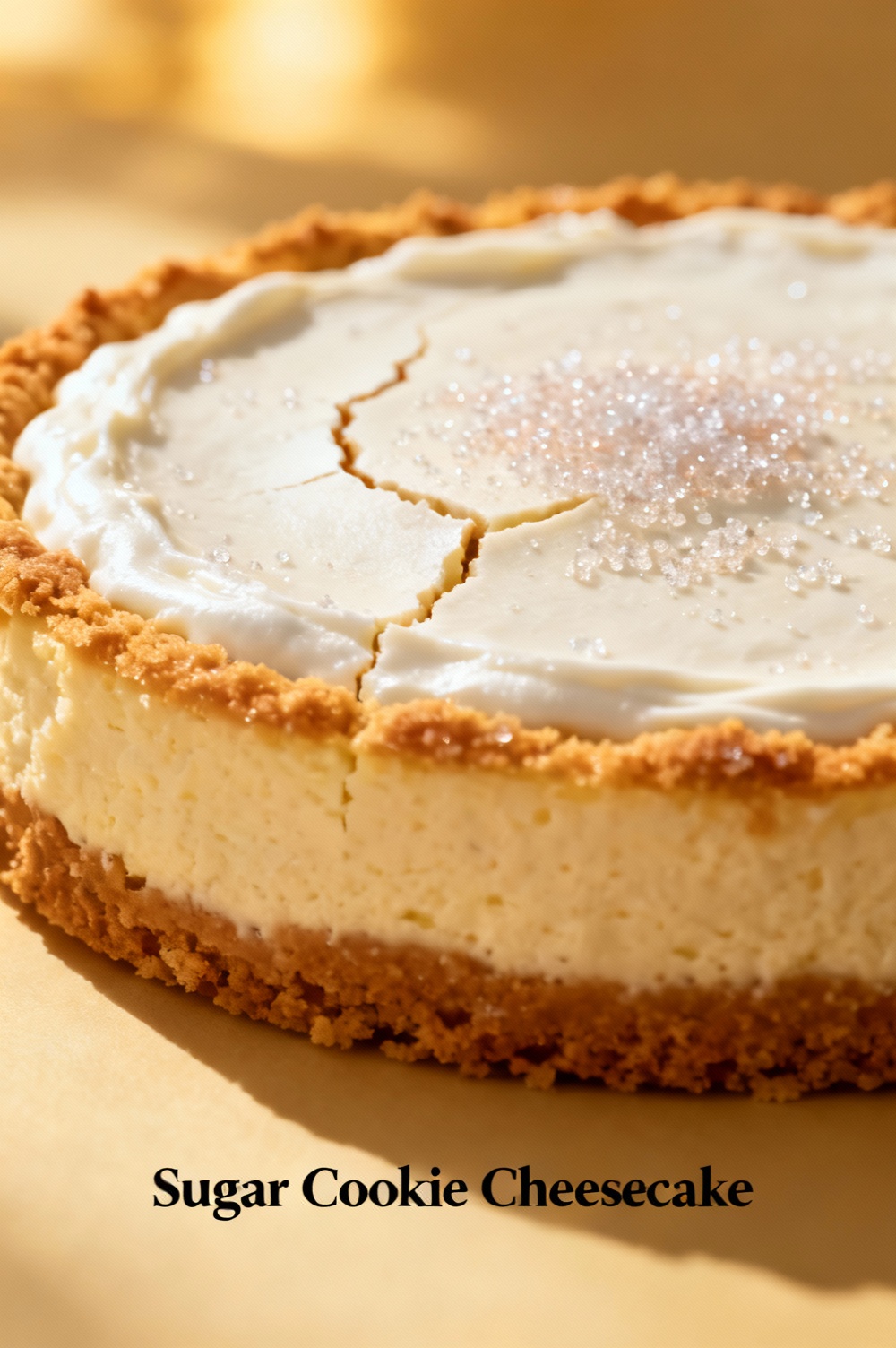
A rich, buttery cheesecake with sugar-cookie flavor and a crisp cookie crust.
Ingredients
- 2 cups (about 220 g) crushed sugar cookies (store-bought or homemade)
- 6 tbsp (85 g) unsalted butter, melted
- 3 (8 oz / 227 g) packages cream cheese, room temperature
- 1 cup (200 g) granulated sugar
- 2 tbsp all-purpose flour
- 1/4 cup (60 g) sour cream
- 3 large eggs, room temperature
- 1 tbsp vanilla extract
- 1 tsp almond extract (optional, for extra sugar-cookie flavor)
- 1 tbsp lemon zest (optional)
- Pinch of salt
- For optional topping: 1/2 cup sour cream, 2 tbsp powdered sugar, 1/2 tsp vanilla (mixed)
- Optional garnish: sprinkles or a few whole sugar cookies
Instructions
- Preheat oven to 325°F (163°C). Grease a 9-inch springform pan and line the bottom with parchment.
- Make the crust: Combine crushed sugar cookies and melted butter until evenly moistened. Press the mixture firmly and evenly into the bottom (and slightly up the sides, if desired) of the prepared pan. Bake the crust 8–10 minutes, then remove and let cool while preparing the filling.
- Beat the cream cheese in a large bowl with an electric mixer on medium speed until smooth and creamy, about 2–3 minutes. Scrape down the bowl as needed.
- Add the granulated sugar and flour and beat until combined and smooth.
- Mix in the sour cream, vanilla extract, almond extract (if using), lemon zest, and a pinch of salt until incorporated.
- Add the eggs one at a time, mixing on low speed after each just until combined. Do not overmix—stop when the batter is smooth and slightly thick.
- Pour the cheesecake batter over the cooled crust and smooth the top with a spatula.
- Bake at 325°F (163°C) for 55–65 minutes, or until the edges are set and the center still has a slight wobble. Avoid overbaking to prevent cracks.
- Turn off the oven, crack the oven door, and let the cheesecake cool in the oven for 1 hour to reduce the chance of cracking.
- Carefully run a knife around the edge of the cake to loosen it from the pan. Refrigerate at least 4 hours, preferably overnight, until fully chilled and set.
- If using the optional topping, stir together 1/2 cup sour cream, 2 tbsp powdered sugar, and 1/2 tsp vanilla. Spread over the chilled cheesecake, then return to the fridge for 15–30 minutes.
- Release the springform pan, garnish with sprinkles or whole sugar cookies if desired, slice, and serve chilled.
Nutrition Information
- Calories: 450 kcal
- Cholesterol: 125 mg
- Sodium: 220 mg
- Carbohydrates: 38 g
- Fiber: 0.5 g
- Sugar: 27 g
- Protein: 6 g