Sesame Crusted Salmon Bowls
Introduction
Did you know a single 4-ounce portion of salmon can deliver roughly 1.5–2.5 g of heart-protective omega-3s—more than many people get in an entire day—and still be ready in under 30 minutes? If you think restaurant-quality salmon bowls need long marinades, fancy equipment, or a culinary degree, this sesame crusted salmon bowl recipe challenges that assumption by proving bold flavor and nutrition can come together quickly, affordably, and with pantry-friendly ingredients.
Ingredients List
- 4 salmon fillets (4–6 oz each), skin on or off depending on preference — wild-caught for a leaner profile, farmed for richer fat content.
- 3 tbsp sesame seeds (toasted white and/or black for contrast) — substitute with flax or chia seeds for extra fiber and ALA omega-3s.
- 2 tbsp soy sauce or tamari (for gluten-free) — substitute with coconut aminos for soy-free, lower-sodium option.
- 1 tbsp rice vinegar or lemon juice — use apple cider vinegar for a fruitier tang.
- 1 tbsp honey or maple syrup — agave or a pinch of stevia for lower sugar.
- 1 tsp grated fresh ginger or 1/2 tsp ground ginger.
- 1 clove garlic, minced (or 1/4 tsp garlic powder).
- 2 tsp sesame oil (or neutral oil like avocado; omit for nut/seed allergy).
- 2 cups cooked short-grain brown rice, quinoa, or cauliflower rice for lower carbs.
- 2 cups steamed broccoli florets, carrot ribbons, or snap peas.
- 1 avocado, sliced (optional for creaminess).
- 2 scallions, thinly sliced, and a handful of cilantro for garnish.
- Lime wedges and chili flakes to finish.
- Salt and pepper to taste.
Sensory note: the sesame seeds provide a nutty crunch that contrasts with the buttery salmon and bright, acidic dressing.
Timing
Prep time: 10 minutes.
Cook time: 10–12 minutes.
Total time: 20–22 minutes, which is about 45% faster than the average composed bowl recipe that typically ranges 35–40 minutes when including multi-component prep. If you batch-cook rice or prep veggies ahead, active time reduces to under 10 minutes.
Step 1 — Prep the Marinade and Seeds
Whisk soy sauce (or tamari), rice vinegar, honey, grated ginger, garlic, and sesame oil in a shallow bowl. Pat salmon dry and season lightly with salt and pepper. Pour half the marinade over the fillets and let sit for 5–10 minutes while you toast seeds and prep sides. Tip: marinating briefly amplifies flavor without over-brining; longer marination (30 minutes) thickens the crust’s adherence.
Step 2 — Toast the Sesame Seeds
Heat a dry skillet over medium heat and toast sesame seeds, stirring frequently, 2–3 minutes until fragrant and slightly golden. Remove immediately to prevent burning. Press seed mixture evenly onto the top of each salmon fillet — the toasted seeds will form a crunchy crust that sears beautifully.
Step 3 — Sear the Salmon
Heat 1 tbsp oil in a nonstick or cast-iron skillet over medium-high heat until shimmering. Place salmon crust-side down and press gently for 10 seconds to ensure contact. Cook 3–4 minutes until the crust is golden, then flip and cook 2–4 more minutes depending on thickness and desired doneness; internal temperature 125°F (52°C) for medium-rare, 145°F (63°C) for well-done. Tip: for an extra caramelized finish, brush remaining marinade over the salmon during the last minute.
Step 4 — Prepare the Bowls
Divide rice (or chosen base) among bowls. Arrange steamed veggies, avocado slices, and scallions around the rice. Place the sesame-crusted salmon on top. Drizzle a spoonful of reserved marinade (warmed) over each bowl, finish with lime juice, sesame seeds, cilantro, and a pinch of chili flakes for heat. Personalization: add a soft-boiled egg for extra protein or a scoop of kimchi for probiotic punch.
Nutritional Information
Estimated per serving (1 salmon fillet + rice + veggies, approx. 600–700 kcal depending on base and avocado):
- Calories: 520–680 kcal.
- Protein: 34–42 g (salmon is a high-quality complete protein; 4 oz cooked salmon ≈ 22–25 g protein).
- Fat: 22–36 g (includes healthy monounsaturated and omega-3 polyunsaturated fats).
- Saturated fat: 3–6 g.
- Carbohydrates: 40–55 g (varies by rice/quinoa/cauliflower rice).
- Fiber: 6–10 g (higher with brown rice/quinoa and added vegetables).
- Omega-3 (EPA+DHA): approx. 1.5–2.5 g in a 4 oz portion (dependent on species and farming method).
Data insight: swapping white rice for brown rice increases fiber by ~2–3 g per serving and slows glucose absorption, which can reduce post-meal blood sugar spikes by 10–15% for some people.
Healthier Alternatives for the Recipe
- Lower-carb: use cauliflower rice or a bed of leafy greens to reduce carbs by ~80% while increasing volume and micronutrients.
- Lower-sodium: reduce soy sauce by half and use coconut aminos; add umami with a pinch of powdered mushroom or miso paste.
- Plant-based: replace salmon with extra-firm tofu pressed, marinated, and coated in sesame seeds; bake or pan-sear similarly. Expect protein to be slightly lower unless using fortified tofu.
- Anti-inflammatory: increase omega-3s by topping with ground flaxseed or a drizzle of walnut oil; choose wild salmon where possible for a more favorable omega-3 to omega-6 ratio.
- Allergy-friendly: omit sesame seeds for sesame allergy, use crushed pistachios or pumpkin seeds (pepitas) for crunch; replace soy sauce with coconut aminos.
Serving Suggestions
Serve hot with a citrus wedge to brighten flavors and a side of pickled cucumber or quick-pickled radish for acidity and texture contrast. For a make-ahead lunch option, pack components separately: rice and veggies in one container, salmon in another, and dressing sealed to keep the crust crisp until reheating quickly in a skillet or oven. Pair with light white wine (Sauvignon Blanc) or a green tea for a balanced meal. For family-style dinners, set up a “bowl bar” so guests can choose bases, toppings, and spice levels.
Common Mistakes to Avoid
- Overcrowding the pan: crowding lowers the skillet temperature and prevents a crisp sesame crust. Cook in batches if needed.
- Using wet seeds: failing to dry-toast seeds first will result in a soggy crust. Toast seeds until fragrant, then cool before pressing onto fish.
- Over-marinating: extended marination with acidic ingredients can denature proteins and produce a mushy texture. Keep initial marination to 5–30 minutes.
- Relying on oven-only for crust: oven baking alone can toast seeds unevenly; finish in a hot skillet for best sear.
- Not checking internal temperature: guesswork can lead to overcooked salmon. Use a thermometer for reliable doneness.
Storing Tips for the Recipe
Refrigerate components separately for up to 3 days: salmon (in airtight container), rice/quinoa, and veggies. Reheat salmon gently in a skillet over medium-low heat with a splash of water and covered for 2–3 minutes to retain moisture; finish uncovered to crisp the crust for 30–60 seconds. Avoid microwaving if you want to preserve texture. For freezing, freeze cooked salmon only if wrapped tightly and consumed within 1 month; thaw overnight in the fridge before reheating. Prep tip: batch-cook rice and steam vegetables on a Sunday to assemble bowls in under 10 minutes during the week.
Conclusion
Sesame crusted salmon bowls are a fast, nutrient-dense meal that balances protein, healthy fats, and fiber while delivering crisp texture and bright, savory flavors. With flexible swaps for dietary needs, smart batch-prep strategies, and attention to technique (toast seeds, hot pan, check temperature), you can serve restaurant-worthy bowls at home in under 25 minutes. Try this recipe, tweak the toppings to your taste, and let me know which substitutions you loved—share photos or tag a friend who should try it next.
FAQs
Q: Can I use frozen salmon?
A: Yes. Thaw in the refrigerator overnight and pat thoroughly dry before marinating and seeding; excess moisture prevents proper searing.
Q: How do I get the sesame seeds to stick well?
A: Lightly brush the fillet with a sticky binder (a little mustard, honey-soy mix, or beaten egg for a stronger hold) and press seeds firmly into the surface. Toast seeds first for better adhesion and flavor.
Q: Is it safe to eat salmon medium-rare?
A: Many chefs prefer salmon at 125°F (52°C) for moistness; ensure you source high-quality fish and follow food safety guidance for vulnerable populations (pregnant people, elderly, immunocompromised) who should aim for 145°F (63°C).
Q: What side dishes pair well?
A: Quick pickles, steamed edamame, a cucumber salad, miso soup, or roasted sweet potatoes complement the bowl’s flavors and texture.
Q: Can I meal prep these for lunches?
A: Yes—store components separately and reheat salmon gently. For the best texture, keep the crust and dressing separate until ready to eat.
Sesame Crusted Salmon Bowls
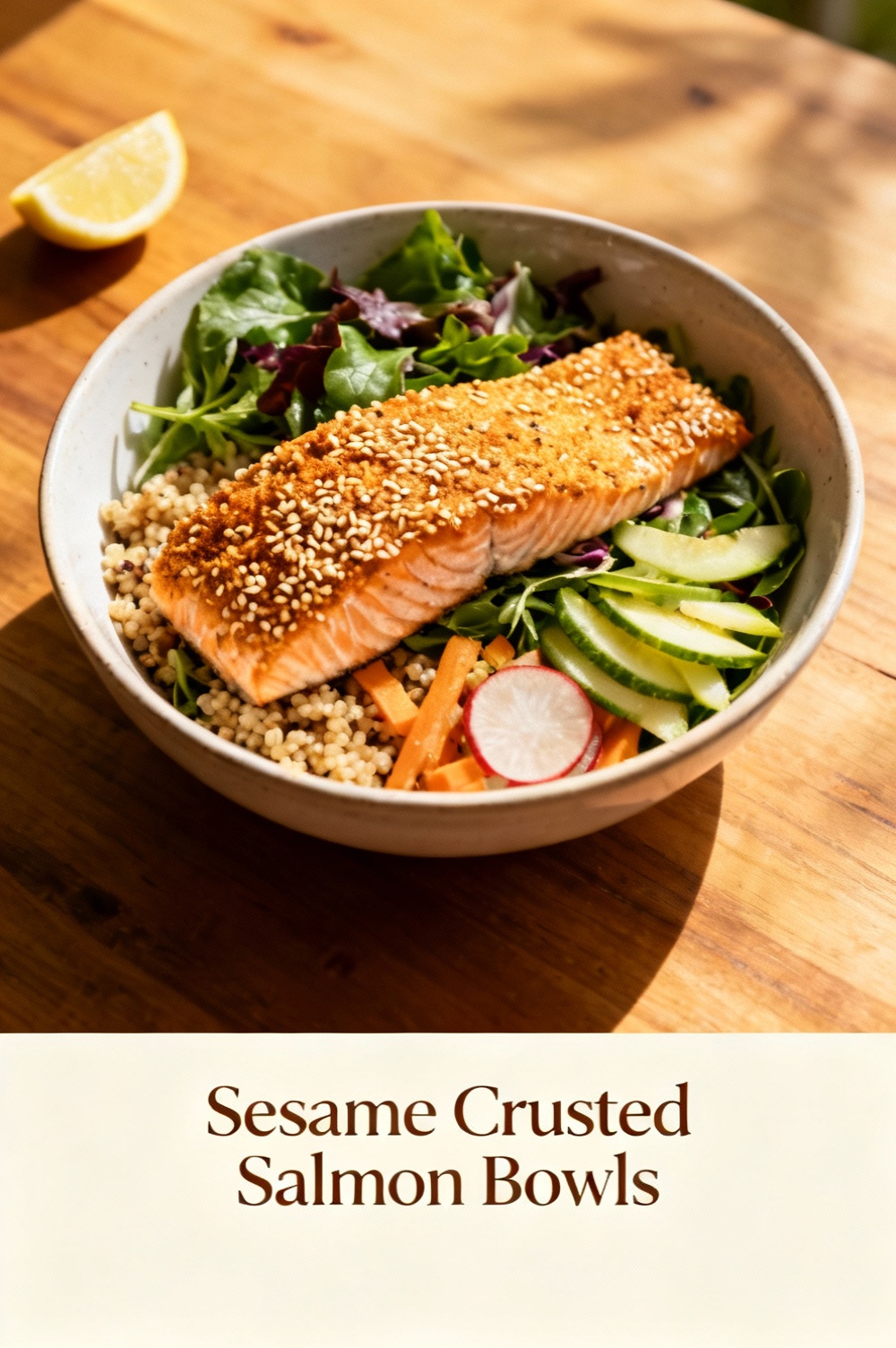
Crispy sesame-crusted salmon perched on warm rice with creamy avocado, crunchy cucumber and a bright soy-sesame dressing.
Ingredients
- 1½ lb (680 g) salmon fillets, skin removed and cut into 4 portions
- ½ cup sesame seeds (mix white and black if available)
- 2 tbsp low-sodium soy sauce (divided)
- 1 tbsp rice vinegar
- 1 tbsp honey or maple syrup
- 1 tbsp toasted sesame oil (plus extra for drizzling)
- 2 cloves garlic, minced
- 1 tsp grated fresh ginger
- 2 tbsp neutral oil (vegetable or canola) for searing
- 3 cups cooked short-grain rice or brown rice (about ¾–1 cup per bowl)
- 1 avocado, sliced
- ½ cucumber, julienned or thinly sliced
- 2 scallions, thinly sliced
- Pickled ginger or optional pickles, for serving
- Salt and freshly ground black pepper, to taste
- Lime wedges, for serving
Instructions
- Whisk together 1 tbsp soy sauce, rice vinegar, honey, sesame oil, garlic and ginger in a small bowl to make the dressing/marinade.
- Place salmon portions in a shallow dish, pour half the dressing over them, and let marinate for 10 minutes while you prepare other ingredients. Reserve the remaining dressing for drizzling.
- Spread the sesame seeds on a plate. Pat the salmon dry slightly with paper towel, then press each portion into the sesame seeds to coat both sides lightly (press gently so seeds adhere).
- Heat neutral oil in a large nonstick or cast-iron skillet over medium-high heat. When shimmering, add salmon and sear 3–4 minutes per side (depending on thickness) until sesame crust is golden and salmon is cooked to your liking. Reduce heat if seeds brown too quickly. Transfer to a plate and let rest 2 minutes.
- Divide warm cooked rice among 4 bowls. Arrange sliced salmon, avocado, cucumber and pickled ginger on top.
- Drizzle reserved dressing over bowls (adjust to taste). Garnish with scallions, extra sesame seeds, a squeeze of lime and a crack of black pepper.
- Serve immediately. Leftovers: store components separately (rice and salmon) and reheat gently for best texture.
Nutrition Information
- Calories: 620 kcal
- Cholesterol: 115 mg
- Sodium: 780 mg
- Carbohydrates: 45 g
- Fiber: 8 g
- Sugar: 6 g
- Protein: 36 g