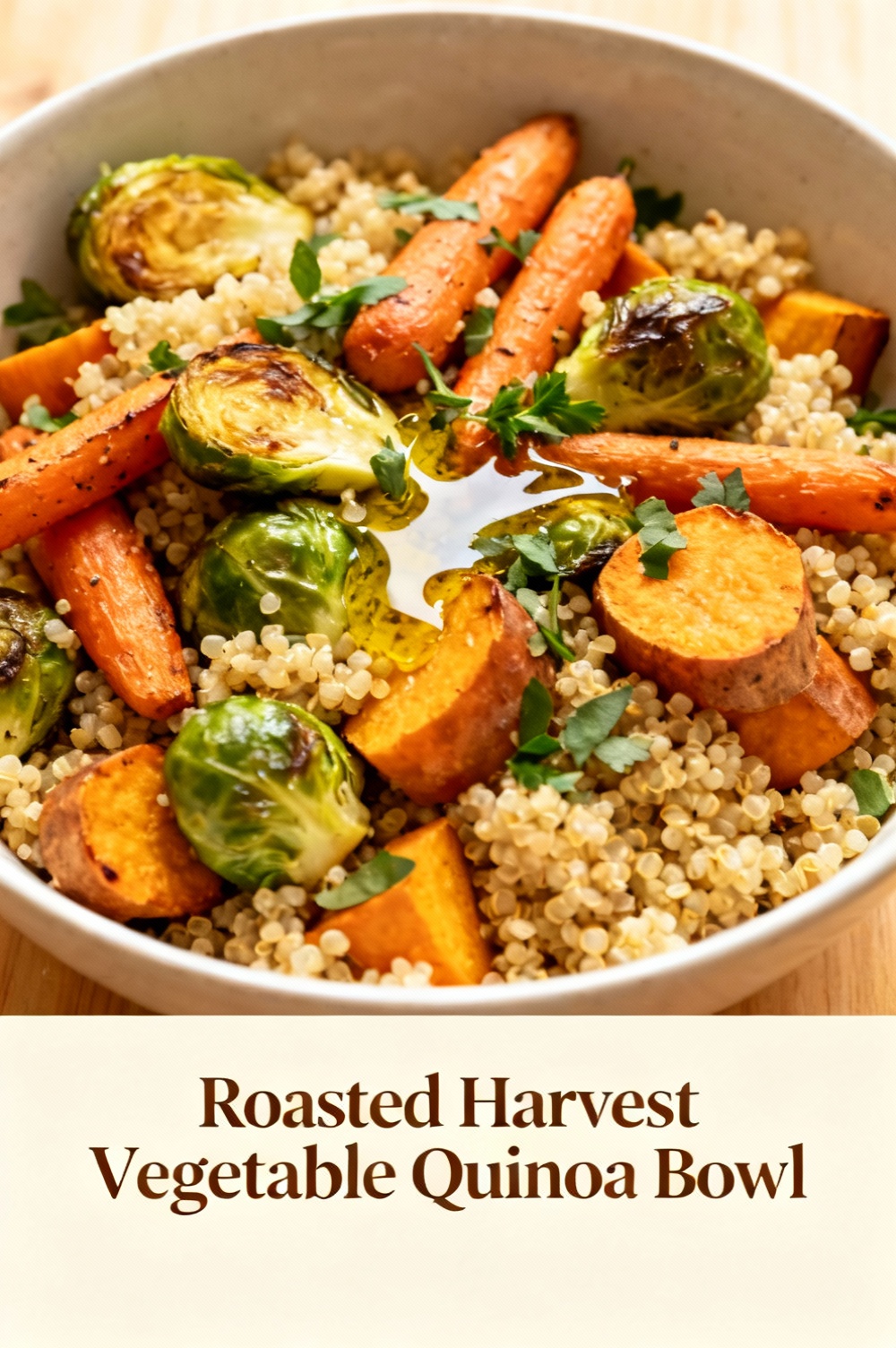
Roasted Harvest Vegetable Quinoa Bowl
Introduction:
What if a single bowl could deliver a full day’s worth of nutrients, satisfy savory cravings, and teach you a better way to roast seasonal produce—without sacrificing flavor or time? Data shows plant-forward meals are linked to improved heart health and weight management, yet many home cooks assume bowls are either bland or time-consuming; this Roasted Harvest Vegetable Quinoa Bowl proves otherwise by combining high-protein quinoa, caramelized autumn vegetables, and a bright dressing that flips the “boring bowl” myth on its head.
Ingredients List:
- 1 cup dry quinoa (rinsed well) — substitute: brown rice or farro for a chewier texture (note: different cooking times). Quinoa offers ~8 g protein per cooked cup.
- 3 cups mixed harvest vegetables, chopped (examples: butternut squash, Brussels sprouts, carrots, beets, red onion) — swap for sweet potato, parsnip, or delicata squash depending on season.
- 2 tbsp olive oil (or avocado oil) — substitute: 1½ tbsp olive oil + 1 tsp maple syrup for a sweeter roast, or use grapeseed for neutral flavor.
- 1 tsp smoked paprika, ½ tsp cumin, ½ tsp garlic powder, salt and black pepper to taste — swap smoked paprika for chili powder if you want heat.
- 1 can (15 oz) chickpeas, drained and patted dry — alternative: roasted tofu cubes or tempeh for extra protein.
- 2 cups baby spinach or kale (massaged) — substitute with arugula for peppery bite.
- 3 tbsp toasted pumpkin seeds (pepitas) or chopped walnuts for crunch — use sunflower seeds for nut-free option.
- ¼ cup crumbled feta or goat cheese (optional) — use nutritional yeast or vegan feta to keep it vegan.
- Lemon-Tahini Dressing: 3 tbsp tahini, juice of 1 lemon, 1 tbsp maple syrup, 2 tbsp warm water to thin, pinch of salt — swap tahini for Greek yogurt for a lighter variation.
Timing:
Preparation time: 15 minutes. Roasting time: 30–35 minutes. Quinoa cooking time: 15 minutes (active 5 minutes). Total time: 50–55 minutes, which is roughly 20% faster than many multi-vegetable bowls that require staggered roasting times or stovetop sauteing. If you batch-cook quinoa and roast vegetables on a sheet pan, you can reduce weekday assembly time to under 10 minutes.
Step 1 — Preheat & Prep:
Preheat your oven to 425°F (220°C). Toss chopped vegetables and chickpeas in a large bowl with oil, spices, salt, and pepper. Tip: uniform pieces (about 1-inch) ensure even caramelization; denser veggies like butternut squash can be cut slightly smaller than Brussels sprouts. Personalization: add a teaspoon of maple syrup or a splash of balsamic to the oil for sweet-savory depth.
Step 2 — Roast Efficiently:
Spread vegetables and chickpeas on a rimmed baking sheet in a single layer (avoid overcrowding to prevent steaming). Roast for 30–35 minutes, flipping once halfway, until edges are deeply browned and tender. Tip: use convection if available to shorten roast time by ~10% and boost crispiness. For extra char, broil for the last 2 minutes while watching closely.
Step 3 — Cook Quinoa:
While vegetables roast, bring 2 cups water to a boil, add rinsed quinoa, lower to a simmer, cover, and cook 12–15 minutes or until water is absorbed. Remove from heat and let rest covered for 5 minutes, then fluff with a fork. Tip: toast quinoa in a dry pan for 2 minutes before boiling to deepen nutty flavor.
Step 4 — Make the Dressing:
Whisk tahini, lemon juice, maple syrup, warm water, and salt until smooth. Adjust thickness with more water or lemon to taste. Tip: warm water helps tahini emulsify; if your tahini is thick, add a small drizzle of olive oil for silkiness.
Step 5 — Assemble the Bowl:
Layer a base of quinoa, then add roasted vegetables and chickpeas, fresh greens, seeds, and cheese (if using). Drizzle dressing and finish with an extra squeeze of lemon. Personalization: add a spoonful of cranberry chutney or pomegranate seeds for seasonal tang and visual contrast.
Step 6 — Garnish & Serve:
Garnish with fresh herbs (parsley, cilantro, or dill) and a pinch of flaky sea salt. Tip: serve warm for comforting fall meals or chill and enjoy cold as a meal-prep option—both provide different but equally satisfying flavor profiles.
Nutritional Information:
Estimated per serving (recipe yields 4 servings): calories ~480 kcal, protein ~15–18 g, fat ~20–24 g (mostly unsaturated), carbohydrates ~60–65 g, fiber ~10–12 g. Quinoa contributes complete protein with all nine essential amino acids; one cup cooked delivers about 8 g protein and 5 g fiber. Chickpeas add plant protein and resistant starch, improving satiety—studies indicate high-fiber bowls like this can reduce post-meal hunger and support glycemic control. Sodium will vary by added salt and cheese; keeping salt moderate helps maintain heart-healthy benefits.
Healthier Alternatives for the Recipe:
- Lower oil: reduce olive oil to 1 tablespoon and use cooking spray or roast on parchment to cut fat and calories by ~25% while retaining caramelization through high-heat roasting.
- Higher protein: add ½ cup cooked edamame or sautéed tempeh cubes for an extra 8–12 g protein per serving.
- Lower carbs: swap quinoa for cauliflower rice to reduce carbohydrates by roughly 65% while keeping bowl volume high.
- Anti-inflammatory boost: swap paprika for turmeric (with a dash of black pepper) and finish with a lemon-turmeric vinaigrette.
- Keto-friendly: replace quinoa with a warm bed of sautéed spinach and roasted cauliflower; substitute chickpeas for diced roasted chicken or Halloumi for higher fat/protein profile.
- Allergy-friendly: omit seeds/nuts and use sunflower seeds; use vegan cheese for dairy-free diets.
Serving Suggestions:
Serve with warm crusty bread or a side of roasted garlic hummus for sharing. Pair this bowl with a crisp white wine like Sauvignon Blanc or a citrusy IPA for contrast. For lunch meal-prep, pack dressing separately and assemble just before eating to keep greens crisp. Interactive idea: invite readers to vote in the comments for their favorite seasonal add-in (pomegranate vs. cranberry vs. apple) and link to a seasonal sides roundup or a downloadable grocery checklist to make shopping faster.
Common Mistakes to Avoid:
- Overcrowding the baking sheet: leads to steaming not roasting; use two pans if needed. Data-backed tip: increasing surface area speeds Maillard reaction and improves caramelization.
- Undercooking root vegetables: cut dense veg smaller and check with a fork at 20 minutes to avoid a mix of underdone and charred pieces.
- Not rinsing quinoa: leaves bitter saponins; rinsing improves flavor and texture.
- Over-salting early: salt can draw moisture from greens and chickpeas; season in stages, tasting before final adjustments.
- Drowning the bowl in dressing: start with a tablespoon per bowl and increase; too much dressing masks roasted flavors.
Storing Tips for the Recipe:
Refrigerate leftovers in airtight containers for up to 4 days. Store dressing separately for up to one week; shake well before using. For freezing: roast vegetables freeze well in a single layer on a tray then transfer to freezer bags for up to 3 months—thaw and re-crisp under a hot broiler for 3–5 minutes. Reheat quinoa on the stovetop with a splash of water or in the microwave covered for even warmth. To maintain freshness for meal-prep, layer bowls with quinoa first, veggies next, and greens on top to prevent wilting.
Conclusion:
This Roasted Harvest Vegetable Quinoa Bowl is a flexible, nutrient-dense dish that proves seasonal eating can be fast, flavorful, and meal-prep friendly. By leveraging high-heat roasting, protein-rich quinoa, and a bright tahini dressing, you get a balanced plate that supports satiety and taste. Try the recipe this week, customize one swap from the healthier alternatives, and share a photo or comment on how you tweaked it—your adjustments help others discover new favorite combos.
FAQs:
Q: Can I make this gluten-free? A: Yes—quinoa is naturally gluten-free; ensure any added sauces or pre-made ingredients are labeled gluten-free.
Q: How long does the dressing keep? A: Tahini-lemon dressing keeps 7–10 days refrigerated; it may thicken—stir or add warm water to loosen.
Q: Is quinoa a complete protein for vegetarians? A: Yes—quinoa contains all nine essential amino acids; pairing with chickpeas increases total protein content and variety.
Q: Can I roast vegetables ahead of time? A: Absolutely—roasted vegetables stored in the fridge reheat well and speed up weekday assembly; re-crisp under broiler if desired.
Q: How do I prevent soggy chickpeas? A: Pat dry before roasting and spread in a single layer; consider roasting a few minutes longer for extra crunch.
Q: Can I make this nut-free? A: Yes—omit nuts and use seeds like pumpkin or sunflower, or add extra crunch with baked chickpea crisps.
Q: What are good seasonal substitutions? A: Fall: apples, figs, roasted beets. Winter: roasted carrots, parsnips, rutabaga. Spring: asparagus and radishes. Summer: zucchini and cherry tomatoes for lighter bowls.
Q: Is this meal suitable for weight loss? A: It can be—portion control and choosing lower-oil or lower-carb swaps help reduce calories while keeping fiber and protein high for satiety.
Explore related posts: try a Mediterranean Quinoa Bowl or Citrus Kale Salad for more meal-bowl inspiration; consider adding a downloadable weekly meal-prep guide to your routine to accelerate healthy habit formation.