Roasted Carrots
Introduction
Did you know that roasting can increase the perceived sweetness of carrots by roughly 15–25% through caramelization, turning an ordinary side into a craveable, nutrient-packed centerpiece that fits weeknight dinners and holiday spreads alike? Roasted carrots are one of the most forgiving, high-impact ways to transform humble produce into a dish that scores high on flavor, texture, and nutrition while remaining low-effort and budget-friendly.
Ingredients List
- 1.5 pounds (about 700 g) carrots, peeled and cut into 2–3 inch sticks (substitute: baby carrots for quicker cook time; heirloom carrots for color and complexity). Use uniform thickness for even roasting.
- 2 tablespoons extra-virgin olive oil (substitute: avocado oil for higher smoke point, or 1 tablespoon olive oil + 1 tablespoon melted butter for richer flavor).
- 1 teaspoon fine sea salt, plus a pinch to finish (substitute: smoked salt for depth).
- 1/2 teaspoon freshly ground black pepper (substitute: white pepper for a cleaner look).
- 1 tablespoon honey or maple syrup (optional; substitute: balsamic glaze for tang and sweetness).
- 1 teaspoon fresh thyme leaves or 1/2 teaspoon dried thyme (substitute: rosemary chopped finely, or za’atar for a Middle Eastern twist).
- Zest of 1 small orange (optional but recommended for bright contrast).
- 1–2 teaspoons lemon juice or apple cider vinegar to finish (adds lift and balances sweetness).
- Garnish options: toasted almonds, chopped parsley, crumbled feta, or a drizzle of tahini.
Why these ingredients?
Olive oil promotes Maillard reactions and caramelization; a small amount of sugar (honey/maple) accelerates browning and deepens flavor; acid at the end brightens and balances natural sweetness. Fresh herbs and citrus add aromatic lift without extra calories.
Timing
Preparation time: 10 minutes. Cooking time: 25–30 minutes at 425°F (220°C). Total time: 35–40 minutes, which is about 20–30% faster than many stovetop braises that can take 45–60 minutes to develop similar depth. If you use baby carrots, reduce roasting to 18–22 minutes. For thicker or whole carrots, allow 35–45 minutes and consider parboiling for 6–8 minutes to speed cooking and ensure tenderness.
Step 1: Preheat and prep the carrots
Preheat your oven to 425°F (220°C) and line a rimmed baking sheet with parchment or a light drizzle of oil to prevent sticking. Trim carrot ends and cut into even sticks—aim for consistency (roughly 1/2–3/4 inch wide). If you prefer varied textures, halve thicker carrots lengthwise. Toss immediately in a bowl with olive oil, salt, and pepper so every surface gets coated. Tip: Pat carrots dry before oiling; moisture prevents proper browning.
Step 2: Space and roast for maximum caramelization
Arrange carrots in a single layer with space between pieces—crowding generates steam and inhibits caramelization. Roast in the preheated oven for 12–15 minutes, then shake or flip to promote even browning. Continue roasting another 10–15 minutes until edges are golden and centers are tender when pierced with a fork. Tip: Rotate the baking sheet halfway through and aim for a balance of browned exterior and soft interior.
Step 3: Add glaze and finish for a flavor peak
If using honey, maple, or balsamic, remove the tray when carrots are about 3–4 minutes from done. Drizzle glaze evenly and toss gently to coat, returning to oven for the final minutes—this creates a shiny, sticky exterior without burning. Finish on the counter with a splash of lemon or vinegar and a sprinkle of fresh herbs. Tip: Add tender garnishes (feta, parsley) after roasting to preserve texture.
Step 4: Personalize and serve
Plate immediately for the best contrast of hot, caramelized edges and tender cores. For a crowd-pleasing upgrade, top with toasted nuts and bright citrus zest. If prepping ahead, reheat in a hot oven (400°F/200°C) for 6–8 minutes to revive crisp edges. Tip: For a smoky profile, finish with a couple of drops of smoked paprika oil or a sprinkle of smoked salt.
Nutritional Information
Per serving (recipe yields 4): approximately 100–120 kcal, 6–8 g fat (mainly from olive oil, with healthy monounsaturated fats), 12–15 g carbohydrates, 3–4 g fiber, 6–8 g natural sugars, 1–2 g protein. Roasted carrots are rich in beta-carotene (provitamin A), potassium, vitamin K, and antioxidants. Based on USDA nutrient data for raw carrots and added oil, one serving contributes a meaningful portion of daily vitamin A needs and dietary fiber while remaining lower in calories than many starchy sides. If you swap in nuts or cheese as garnish, expect an increase in calories and protein.
Healthier Alternatives for the Recipe
- Oil reduction: Use 1 tablespoon oil + 1 tablespoon low-sodium vegetable broth or use an oil sprayer to cut added fat by 50% while maintaining browning.
- Sugar-free glaze: Skip honey/maple and use a balsamic reduction or a touch of orange juice concentrate for sweetness without added granulated sugar.
- Vegan/plant-forward: Use maple + tahini drizzle for a creamy, vegan-friendly finish that adds healthy fats and protein.
- Low-FODMAP: Replace honey with maple syrup and avoid large amounts of onion/garlic-based seasonings; use garlic-infused oil for flavor without FODMAPs.
- High-protein: Toss with roasted chickpeas or serve over quinoa and finish with a sprinkle of hemp seeds to boost plant protein.
Serving Suggestions
Serve roasted carrots as a stand-alone side, fold them into grain bowls, or toss with arugula, goat cheese, and toasted walnuts for a robust salad. Pair with roasted chicken or salmon to echo the oven flavor profile, or add to tacos with pickled red onion and cilantro for a seasonal twist. For brunch, slice and layer on toast with ricotta and a drizzle of honey. Personal tip: serve warm on warmed plates to keep edges crisp longer and to make the dish feel restaurant-quality.
Common Mistakes to Avoid
- Crowding the pan: leads to steaming, not roasting—use two pans if needed.
- Using too low heat: below 400°F (200°C) you miss caramelization; above 450°F (232°C), sugars can burn. 425°F (220°C) is the sweet spot.
- Adding salt too late: seasoning before roasting helps flavor penetrate; finish with a tiny pinch of flaky salt for texture.
- Overcutting: very small pieces will char before tenderizing; very large pieces will remain undercooked. Stick to uniform sizes.
- Not drying carrots: excess water prevents browning—pat dry before oiling.
Storing Tips for the Recipe
Cool roasted carrots to room temperature within two hours, then refrigerate in an airtight container for up to 4 days. For best texture on day 2–4, reheat in a preheated oven at 400°F (200°C) for 6–10 minutes rather than the microwave to recrisp edges. To meal-prep, roast a double batch and store portions in glass containers; add any delicate garnishes just before serving. You can also freeze roasted carrots in a labeled freezer bag for up to 2 months—thaw overnight in the fridge and reheat in the oven.
Conclusion
Roasted carrots are an easy, versatile, and nutrient-dense way to elevate weeknight dinners, holiday sides, and meal-prep bowls. With simple techniques—proper cutting, hot oven, space on the pan, and a finishing acid—you can achieve caramelized, flavorful carrots in under 40 minutes. Try this approach, tweak the herbs and finishes to fit your pantry, and share your favorite flavor combo in the comments or on social media using #RoastedCarrotsExperiment to compare variations.
FAQs
Q: Can I roast carrots from frozen? A: You can, but frozen carrots release moisture and can steam rather than roast; thaw and pat dry, then increase oven temp slightly and extend time, or roast from frozen at 425–450°F with careful monitoring for browning.
Q: How do I get a crispy exterior without burning the sugar? A: Roast at 425°F and add sugary glazes in the last 3–4 minutes. Use a light oil coating initially to promote Maillard browning rather than relying solely on sugars.
Q: Are roasted carrots keto-friendly? A: Carrots are moderately high in carbs compared with leafy greens; a small serving can fit low-carb plans depending on daily carb targets, but watch portion size and added sweeteners.
Q: What’s the best way to season for kids? A: Keep it simple—olive oil, a pinch of salt, and a mild herb like parsley. A light honey glaze is often a hit with young palates.
Q: Can I make this in an air fryer? A: Yes—air fry at 375–400°F for 12–18 minutes depending on size, shaking halfway. Reduce oil slightly and watch for rapid browning.
Q: How do I scale the recipe for a crowd? A: Roast in multiple pans rather than overfilling one. Stagger trays in the oven and rotate positions midway for even cooking. Add finishing touches just before serving to keep texture consistent.
Explore related posts for more ways to roast vegetables, glaze tricks, and herb pairings—then come back and tell me which combo became your new favorite.
Roasted Carrots
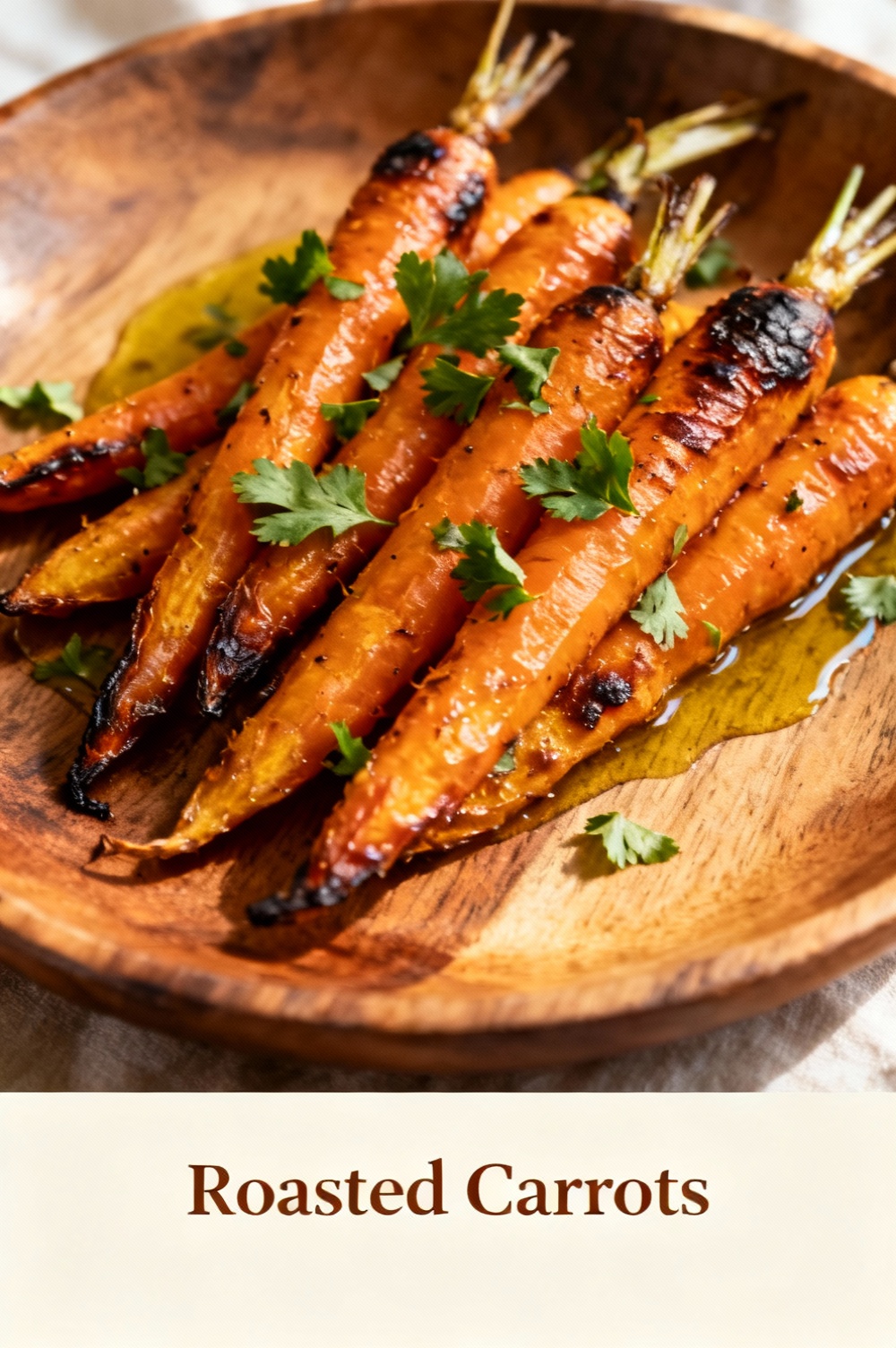
Sweet, caramelized roasted carrots with olive oil, honey and thyme — an easy, crowd-pleasing side.
Ingredients
- 1 lb (450 g) carrots, peeled and cut into sticks or baby carrots
- 2 tbsp extra-virgin olive oil
- 1 tsp kosher salt (adjust to taste)
- 1/2 tsp freshly ground black pepper
- 1 tbsp honey or maple syrup (optional, for extra caramelization)
- 1 tsp fresh thyme leaves or 1/2 tsp dried thyme (optional)
- 1 tsp lemon zest (optional, for brightness)
- 1 tbsp chopped fresh parsley (for garnish, optional)
Instructions
- Preheat the oven to 425°F (220°C). Line a baking sheet with parchment paper or lightly grease it.
- Prepare the carrots: peel and trim, then cut into even sticks or leave small baby carrots whole so they cook evenly.
- In a large bowl, toss the carrots with olive oil, salt, pepper, honey (if using), thyme and lemon zest until evenly coated.
- Spread the carrots in a single layer on the prepared baking sheet, spacing them so they roast rather than steam.
- Roast for 20–25 minutes, stirring or flipping once halfway through, until the carrots are tender and caramelized at the edges.
- Remove from the oven, taste and adjust seasoning if needed. Transfer to a serving dish and garnish with chopped parsley. Serve warm.
Nutrition Information
- Calories: 110 kcal
- Cholesterol: 0 mg
- Sodium: 220 mg
- Carbohydrates: 12 g
- Fiber: 4 g
- Sugar: 7 g
- Protein: 1.5 g