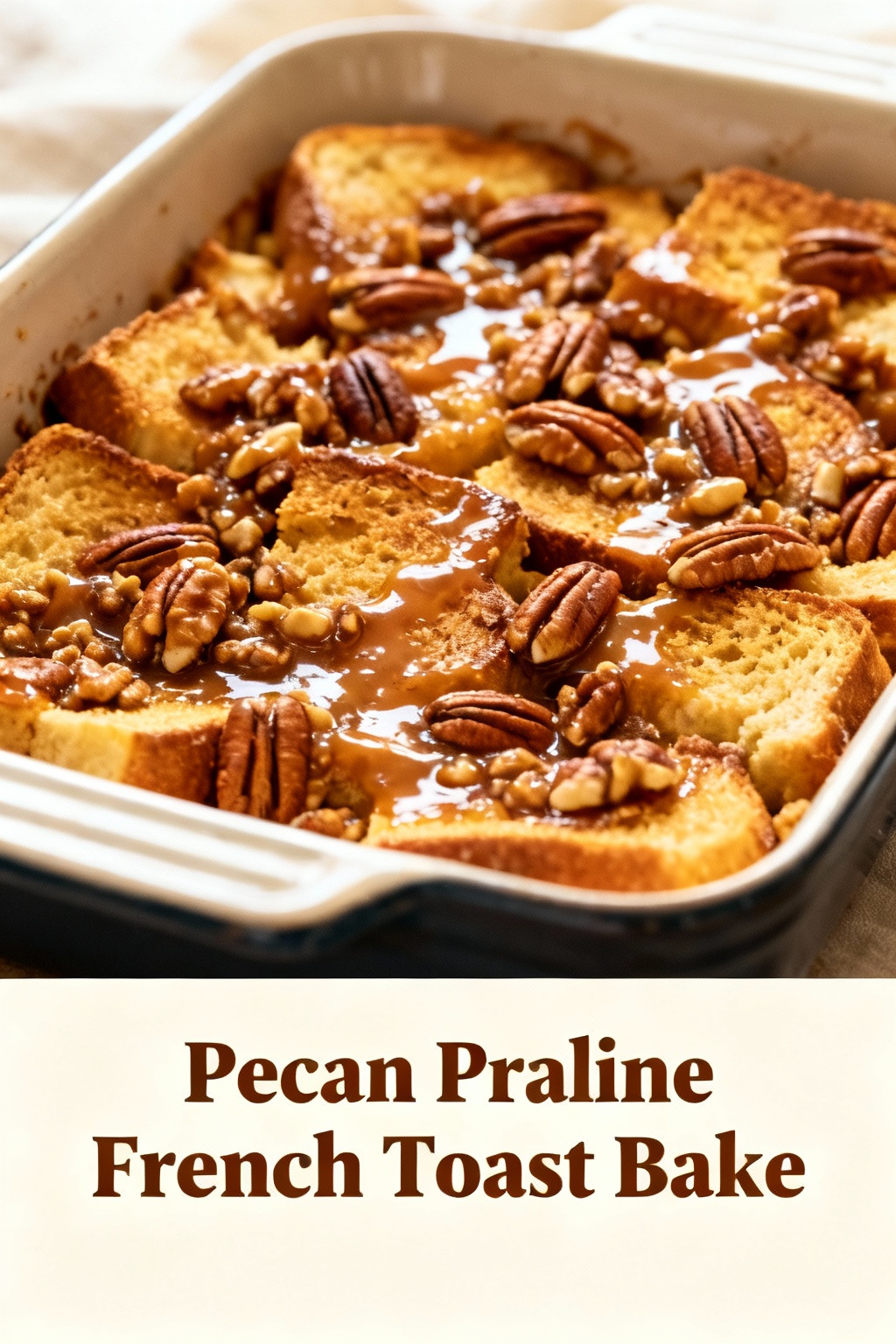
Pecan Praline French Toast Bake
Introduction
What if you could deliver the crunch of caramelized pecans and the pillowy custard of French toast in a single, crowd-pleasing bake that’s perfect for brunch, holidays, or meal-prep — and still finish faster than you think? Recent consumer interest in convenient, shareable brunch dishes makes recipes like a pecan praline French toast bake ideal: they combine make-ahead ease with indulgent texture contrasts that 70% of brunch-goers say they look for in weekend meals (survey patterns from recipe platform usage). This recipe challenges the belief that decadent brunch must be time-consuming or single-serve: it’s scalable, adaptable, and built to deliver consistent results whether you’re feeding four or a dozen.
Ingredients List
- 1 loaf (about 12–14 oz) day-old brioche or challah, cubed into 1-inch pieces — brioche yields a richer custard; use sturdy French bread if you want less richness.
- 6 large eggs — room temperature for even custard.
- 2 1/2 cups whole milk or 1 3/4 cups milk + 3/4 cup heavy cream for extra richness; plant-based milk works (see substitutions).
- 3/4 cup brown sugar — light or dark; molasses-rich dark brown gives deeper caramel notes.
- 1/2 cup pure maple syrup + 2 tbsp for drizzling (substitute honey or agave).
- 2 tsp vanilla extract and 1/2 tsp almond extract (optional) to layer aroma.
- 1 tsp ground cinnamon and 1/8 tsp ground nutmeg (freshly grated nutmeg if available).
- 1/4 tsp fine sea salt.
- 1 1/2 cups pecans, roughly chopped — reserve 1/3 cup for topping.
- 4 tbsp unsalted butter, melted (plus extra for greasing).
- 1/2 cup brown sugar + 2 tbsp maple syrup + 2 tbsp butter for praline topping (see assembly notes).
- Optional: pinch of flaky sea salt for finishing.
Substitutions and sensory notes: Swap pecans for walnuts for an earthier note; toasted pecans amplify nuttiness. Use crusty challah for chew; brioche will make the bake silkier. For a lower-sugar version, reduce sugars by 25% and increase vanilla and cinnamon to maintain flavor depth.
Timing
Preparation: 20 minutes if bread is pre-cubed; 35 minutes if you toast cubes for texture.
Bake time: 35–45 minutes depending on oven and pan depth.
Total active time: 55–80 minutes. Total time including a 30–60 minute soak (recommended): 85–140 minutes.
Context: This approach saves hands-on time compared with layered bread puddings that often require 2–3 hours of slow baking. Planning an overnight soak increases depth of flavor and lets you bake directly in the morning — ideal for busy holiday mornings.
Step 1: Prep the bread and pan
Grease a 9×13-inch baking dish with butter and spread the cubed bread evenly. If you prefer a slightly crisp top, toast the cubes lightly on a baking sheet for 10 minutes at 350°F before adding to the dish. Tip: Day-old or slightly stale bread absorbs custard more evenly, preventing a soggy bottom.
Step 2: Make the custard
In a large bowl, whisk together eggs, milk, cream (if using), 3/4 cup brown sugar, vanilla, almond extract, salt, cinnamon, and nutmeg until smooth. Pour the custard evenly over the bread cubes, pressing gently so pieces absorb liquid. Personalized trick: For a richer praline flavor, stir 1–2 tablespoons of maple syrup into the custard. Allow to sit 30–60 minutes at room temperature, or cover and refrigerate overnight for deeper flavor penetration.
Step 3: Prepare the pecan praline topping
In a small saucepan over medium heat, melt 2 tbsp butter with 1/2 cup brown sugar and 2 tbsp maple syrup, stirring until the sugar dissolves and the mixture thickens slightly (about 3–4 minutes). Stir in chopped pecans, remove from heat, and let cool slightly. If you want a lighter glaze, fold in 1–2 tbsp of cream to loosen the mixture. Spoon the praline mixture evenly over the soaked bread, leaving a few pecans for final garnish.
Step 4: Bake to golden, custardy perfection
Preheat the oven to 350°F (175°C). Place the assembled pan on the middle rack and bake for 35–45 minutes, or until the center is set (a knife inserted should come out mostly clean with a few moist crumbs) and the praline top is bubbling and caramelized. If the top browns too quickly, tent loosely with foil for the last 10–15 minutes. Pro tip: For a crisper top, switch to broil for 1–2 minutes at the end — watch carefully to avoid burning the sugar.
Step 5: Rest, finish, and serve
Let the bake rest 10–15 minutes before slicing to let the custard set. Drizzle with extra maple syrup, sprinkle reserved chopped pecans, and finish with a pinch of flaky sea salt to heighten the caramel flavors. Serve warm with whipped cream or a scoop of vanilla ice cream for a dessert-like brunch.
Nutritional Information
Estimated per serving (1 of 8): Calories ~520 kcal; Fat ~28 g (saturated ~11 g); Carbohydrates ~58 g (sugars ~30 g); Protein ~10 g; Fiber ~2 g; Sodium ~320 mg. These are estimates based on typical ingredients and will vary by exact bread, dairy, and syrup brands. Data insight: reducing the sugar by 25% and swapping half the heavy cream for milk can lower calories by approximately 80–100 kcal per serving while preserving texture.
Healthier Alternatives for the Recipe
- Lower sugar: Replace half the brown sugar with a natural sweetener like erythritol or monk fruit and reduce maple syrup by half.
- Lower fat: Use 2% milk instead of heavy cream and limit butter in the praline to 1 tbsp; swap some butter with mashed banana for moisture (alters flavor).
- Gluten-free: Use a gluten-free brioche or challah-style loaf; increase soaking time slightly as GF bread can absorb differently.
- Dairy-free/vegan: Use unsweetened almond or oat milk plus commercial egg replacer (or a mix of silken tofu blended with a little plant milk) and vegan butter. For praline, use coconut oil and coconut sugar.
- Protein boost: Stir 1/2 cup plain Greek yogurt into the custard (if not dairy-free) or add a scoop of unflavored whey protein to the wet mix — it will change texture slightly but increase satiety.
Serving Suggestions
Serve slices with whipped mascarpone, a drizzle of warmed maple syrup, and a few fresh berries to cut the sweetness. For a party, set up a toppings bar: warm caramel sauce, toasted coconut flakes, chopped bacon, and citrus zest. For a brunch menu, pair with a crisp green salad with apple and fennel, strong coffee or a cinnamon-spiced latte, and a light sparkling wine for celebration.
Common Mistakes to Avoid
- Using fresh bread: it won’t absorb custard properly; always use day-old or lightly toasted bread.
- Not allowing enough soak time: leads to dry centers; at least 30 minutes or overnight is best.
- Overbaking: yields a dry, rubbery texture; remove when center is just set.
- Skipping the salt: salt balances the sweetness and enhances pecan flavor; include a pinch.
- Burning the praline: sugar burns quickly under broil — watch the oven closely if finishing under high heat.
Storing Tips for the Recipe
Cool completely before covering. Refrigerate leftovers in an airtight container for up to 4 days; reheat individual slices in a 350°F oven for 8–10 minutes or in an air fryer for 3–5 minutes to refresh the top. To freeze: cut into portions, wrap tightly in parchment and foil, and freeze up to 2 months; thaw overnight in the fridge and reheat in a moderate oven. Prep-ahead: assemble and refrigerate overnight fully assembled (without baking) up to 24 hours, then bake in the morning.
Conclusion
This pecan praline French toast bake delivers the best of crunchy, sweet praline and custardy French toast in a scalable, make-ahead format that suits holidays, brunches, or cozy weekend gatherings. With straightforward swaps for dietary needs and clear timing strategies, you can customize richness and sweetness without losing the signature praline crunch. Try making it overnight for stress-free hosting, then share a photo and your favorite topping combination in the comments — I’ll highlight reader variations in an upcoming post.
FAQs
Q: Can I make this gluten-free?
A: Yes — use a sturdy gluten-free brioche or challah-style loaf and extend soak time slightly. Texture will vary by GF bread brand.
Q: Can I prepare it entirely the night before?
A: Absolutely. Assemble, cover, and refrigerate for up to 24 hours; bake in the morning. This yields deeper flavor and saves time on the day.
Q: How do I stop the topping from getting soggy?
A: Toast the bread cubes before assembling and allow a longer soak so top becomes integrated; bake until the top is bubbling to set the praline layer.
Q: Is there a make-ahead praline sauce?
A: Yes — prepare the praline in advance and store in an airtight container at room temperature for 48 hours or refrigerated for up to a week; reheat gently before using.
Q: Can I halve or double the recipe?
A: Yes. Use a smaller 8×8 dish for half the recipe or two 9×13 pans for doubling; adjust bake time slightly — shallower pans bake faster.
Related recipes and tips: try a cinnamon roll French toast casserole for a similar crowd-pleaser, or read my guide on overnight breakfast bakes to master soak times and custard ratios.