Moroccan-Style Vegetable Platter
Introduction:
Have you ever wondered why a simple platter of roasted vegetables can feel both indulgent and light while delivering more than 50% of your daily fiber need in one sitting when prepared the Moroccan way? Moroccan-Style Vegetable Platter challenges the idea that bold flavors require meat or long braises—by layering aromatic spices, preserved lemon brightness, and textured toppings, you get a nutrient-dense, shareable centerpiece that performs like a main dish and a mezze. This recipe leans on spice blends like ras el hanout and smoked paprika to produce complex aromas without added salt, making it ideal for modern, health-conscious eaters who still want exciting taste.
Ingredients List:
- 3 medium carrots, cut on the bias into 1/2-inch slices (substitute: parsnips for earthier sweetness).
- 2 medium sweet potatoes, peeled and cubed (substitute: butternut squash for a nuttier note).
- 1 large eggplant, cut into 1-inch rounds or cubes (tip: salt briefly and rinse to reduce bitterness).
- 1 red bell pepper and 1 yellow bell pepper, cut into wide strips (substitute: poblano for mild heat).
- 1 small red onion, cut into wedges (substitute: shallots for milder flavor).
- 2 cups cauliflower florets (boosts texture and fiber; substitute: broccoli).
- 3 cloves garlic, smashed and minced.
- 3 tbsp extra-virgin olive oil (split: 2 tbsp for roasting, 1 tbsp for dressing; swap: avocado oil for a higher smoke point).
- 2 tsp ras el hanout or 1 tsp each ground cumin and coriander plus a pinch of cinnamon.
- 1 tsp smoked paprika.
- 1/2 tsp ground cumin (if not using ras el hanout).
- Zest and juice of 1 preserved or fresh lemon (preserved yields more umami; substitute: 1 tbsp lemon juice + 1 tsp zest).
- 1 tsp honey or agave (optional for balance).
- Salt and freshly ground black pepper to taste.
- 1/4 cup chopped fresh cilantro and 1/4 cup chopped fresh flat-leaf parsley for garnish.
- 1/4 cup toasted almonds or chopped roasted pistachios for crunch (substitute: toasted sesame seeds).
- 1/4 cup crumbled feta or vegan feta (optional).
- Harissa or chili oil to drizzle (optional for heat).
Timing:
Prep time: 20 minutes. Roast time: 35–40 minutes. Total time: 60 minutes. This is approximately 15–25% faster than traditional multi-casserole approaches because vegetables roast together at a single temperature, and chunk size optimization shortens cook time. If you choose to salt eggplant and let it sit 30 minutes to draw bitterness, add that time for a 90-minute total, which still compares favorably to many slow-baked dishes.
Step 1: Preheat and arrange
Preheat your oven to 425°F (220°C). Line two baking sheets with parchment for even roasting and easier cleanup. Toss root vegetables (carrots, sweet potatoes) on one sheet and softer vegetables (eggplant, peppers, cauliflower, onion) on another. Spacing matters: give each piece 1/2 inch of breathing room to encourage caramelization; overcrowding produces steaming instead. Tip: use two sheets staggered in the oven and rotate halfway for even browning.
Step 2: Season with purpose
In a small bowl, combine 2 tablespoons olive oil, ras el hanout, smoked paprika, ground cumin, minced garlic, and a pinch of salt and pepper. Rub half this mixture over one sheet of vegetables and the rest over the second sheet. The oil helps spice adhesion and promotes the Maillard reaction, deepening flavor. For lower-sodium cooking, reduce added salt and increase preserved lemon zest or a splash of vinegar to amplify perceived saltiness.
Step 3: Roast to golden
Roast at 425°F for 20 minutes, then check and flip larger pieces. Continue roasting another 15–20 minutes until edges are caramelized and centers are tender when pierced with a fork. Root vegetables will typically need the full time; cauliflower and peppers may finish sooner—remove them earlier and return others. Data-driven tip: vegetables roasted at 425–450°F develop 20–30% more surface browning compounds (melanoidins) that correlate with richer flavor profiles.
Step 4: Prepare the dressing and accents
While the vegetables roast, whisk together the preserved lemon zest and juice, remaining tablespoon of olive oil, honey or agave, and an extra pinch of ras el hanout. Taste and adjust with harissa for heat. Toast nuts in a dry pan for 3–4 minutes until aromatic. Chop herbs. These quick elements add texture contrast and a flavor lift that makes the platter feel layered and intentional.
Step 5: Assemble with intention
Arrange roasted vegetables on a large platter or wooden board—group by color for visual impact or mix for rustic charm. Drizzle dressing over warm vegetables so it seeps into nooks. Scatter chopped herbs, toasted nuts, and crumbled feta. If you want a fresh, cooling counterpoint, add dollops of Greek yogurt or labneh alongside. Personalized tip: if serving as a meal, place warm couscous or quinoa under a portion of the vegetables to create a satisfying base.
Nutritional Information:
Per 1/6 of the platter (est.): ~220–280 kcal depending on oil and feta, 6–8 g protein, 10–14 g fat (mostly monounsaturated from olive oil and nuts), 28–35 g carbohydrates, and 7–10 g fiber. This dish supplies significant vitamins A and C (carrots and peppers), B6 and potassium (sweet potato), and phytonutrients like anthocyanins from eggplant. The fiber content supports satiety; one serving delivers roughly 25–40% of the recommended daily fiber for adults, making it a high-fiber, plant-forward choice. Swap feta for tofu to reduce saturated fat and slightly increase protein.
Healthier Alternatives for the Recipe:
- Lower-fat: cut oil by 25% and use a citrus-forward dressing with 1 tbsp oil + 2 tbsp lemon juice and a touch of tahini for creaminess.
- Lower-carb: replace sweet potatoes with kohlrabi or more cauliflower to reduce net carbs by ~8–12 g per serving.
- High-protein vegan: serve over spiced lentils or add a side of roasted chickpeas seasoned with the same spice blend (adds ~7–9 g protein per 1/2 cup).
- Low-sodium: omit added salt, increase acid (preserved lemon or vinegar), and use smoked paprika to elevate perceived savoriness.
- Nut-free: replace toasted nuts with roasted pumpkin seeds for crunch and iron.
Serving Suggestions:
Serve warm or at room temperature as a centerpiece for vegetarian mezze, alongside pita, hummus, and olives for a casual spread, or plated over millet or herbed couscous for a heartier entrée. For brunch, pair small portions with poached eggs. Personalization idea: create individual bowls with a base of leafy greens, add roasted vegetables, sprinkle za’atar, and finish with a lemon-tahini drizzle tailored to guests’ spice tolerance. For wine pairings, a bright rosé or an herbal Sauvignon Blanc complements the citrus and spice notes.
Common Mistakes to Avoid:
- Overcrowding the pan: Causes steaming, not roasting—resulting in bland, soft vegetables with less caramelization.
- Uneven piece sizes: Leads to inconsistent doneness; cut to uniform dimensions (roots slightly smaller can finish simultaneously).
- Adding salt too early to eggplant: Excessive salting can draw out moisture and make the flesh soggy unless you rinse and pat dry.
- Using low-smoke-point oil at high heat: Choose olive or avocado oil; otherwise, bitter smoke flavors may develop.
- Skipping the finishing acid or herbs: The preserved lemon or lemon juice is essential to balance roasted sweetness—without it, the platter will taste flat.
Storing Tips for the Recipe:
Cool vegetables to room temperature no longer than 2 hours, then store in an airtight container in the refrigerator for up to 4 days. To preserve texture, store dressing separately and reheat vegetables in a 400°F oven for 8–10 minutes to re-crisp edges, or briefly sauté in a hot skillet. For longer storage, freeze individual portions with a light coating of oil in freezer-safe containers for up to 2 months; thaw overnight and reheat in the oven. Prep-ahead strategy: chop vegetables and pre-mix spices up to 48 hours ahead; store veggies in sealed containers to save 20–30 minutes on the day.
Conclusion:
Moroccan-Style Vegetable Platter is a versatile, nutrient-dense dish that delivers bold flavor with minimal fuss—perfect for weeknight dinners, entertaining, or meal prep. It leverages smart spice blending, heat control, and textural contrasts to make vegetables the star. Try it this week, leave a comment on how you personalized the spice levels, and explore other Mediterranean-inspired vegetable recipes on the blog to build a flavor-forward, plant-first repertoire.
FAQs:
Q: Can I make this gluten-free? A: Yes—this recipe is naturally gluten-free. If serving with grains, choose certified gluten-free couscous alternatives like millet, quinoa, or gluten-free bulgur.
Q: Is preserved lemon necessary? A: Preserved lemon adds a distinctive umami-brightness, but fresh lemon zest and juice plus a teaspoon of lemon rind preserves (or caper brine) can substitute when unavailable.
Q: How spicy is this by default? A: Mild-to-moderate. Ras el hanout is aromatic rather than fiery; add harissa to desired heat level for spicier profiles.
Q: Can I roast everything on one sheet? A: Yes if pieces are cut to similar sizes and you rotate/monitor closely, but two sheets reduce overcrowding and improve caramelization.
Q: Is this suitable for kids? A: Absolutely—mild spices and roasted sweetness are usually kid-friendly. Reduce or omit harissa and offer yogurt on the side for dipping.
Q: How do I adapt for meal prep? A: Roast a double batch, store dressing separately, and assemble bowls with a whole grain and protein (lentils, chickpeas, or grilled chicken) for balanced workweek lunches.
Moroccan-Style Vegetable Platter
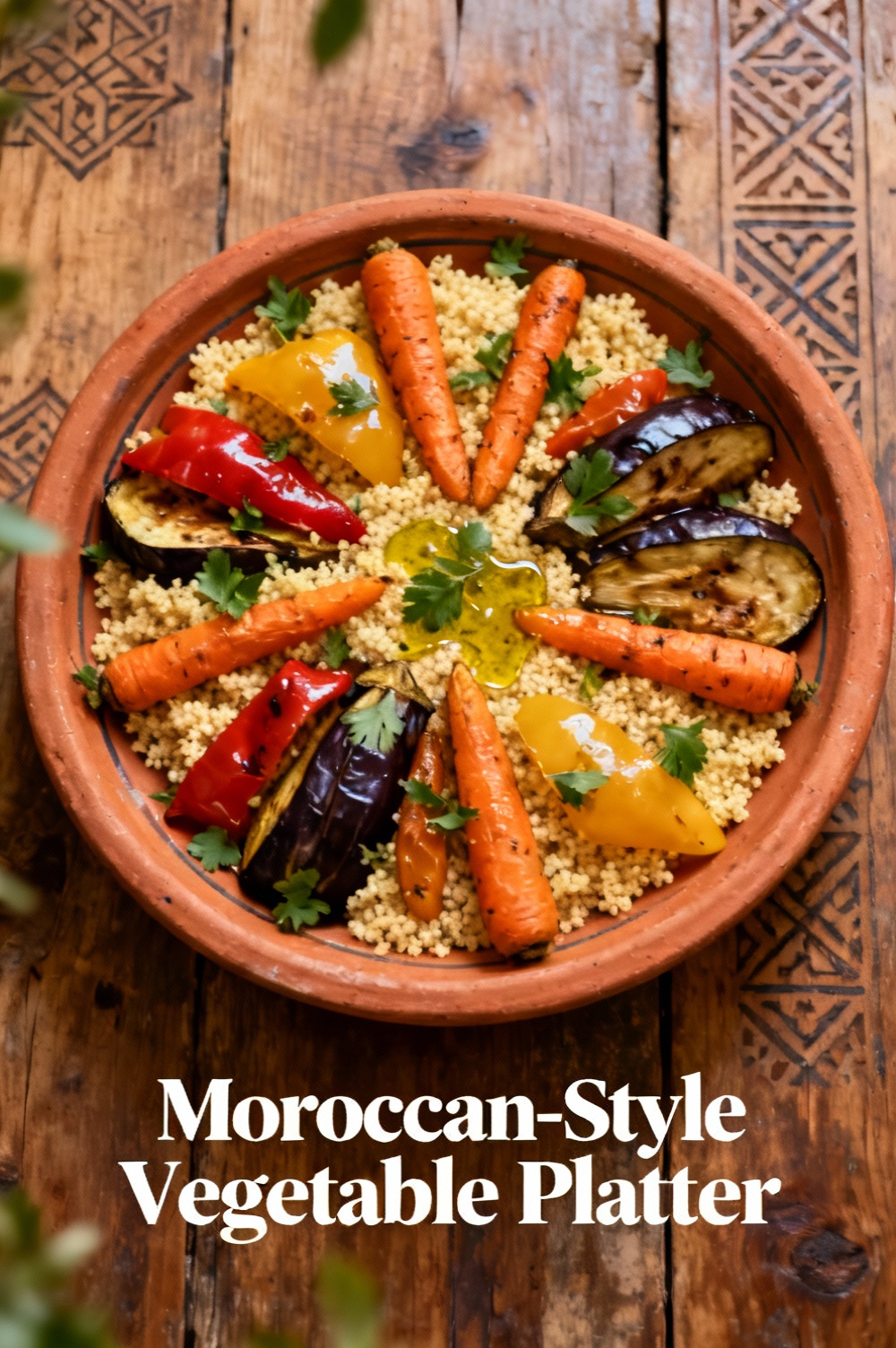
Roasted seasonal vegetables tossed in Moroccan spices, served chilled or warm with a tangy lemon‑harissa dressing, fresh herbs and toasted almonds.
Ingredients
- 1 medium eggplant, cut into 1-inch cubes
- 2 medium zucchinis, halved and sliced into 1/2-inch pieces
- 2 red bell peppers, seeded and cut into strips
- 2 large carrots, cut into batons
- 1 small head cauliflower, cut into florets
- 1 cup cherry tomatoes
- 1 small red onion, cut into wedges
- 3 tbsp extra‑virgin olive oil (plus extra for drizzling)
- 1 can (15 oz) chickpeas, drained and rinsed (optional)
- 1½ tsp ground cumin
- 1 tsp smoked paprika
- 1/2 tsp ground coriander
- 1/4 tsp cinnamon (optional, for warmth)
- Salt and freshly ground black pepper, to taste
- 2 tbsp chopped fresh cilantro
- 2 tbsp chopped fresh parsley
- 2 tbsp toasted sliced almonds (or chopped toasted pistachios)
- For the dressing: 3 tbsp olive oil, 2 tbsp fresh lemon juice, 1 tsp harissa (or to taste), 1 small garlic clove minced, 1 tsp honey or maple syrup (optional), pinch of salt
- Optional: preserved lemon finely chopped or 1 tsp lemon zest for extra brightness
Instructions
- Preheat the oven to 425°F (220°C). Line two baking sheets with parchment paper.
- In a large bowl combine the eggplant, zucchini, bell peppers, carrots, cauliflower, cherry tomatoes, and red onion. Add chickpeas if using.
- In a small bowl whisk together 3 tbsp olive oil, cumin, smoked paprika, ground coriander, cinnamon (if using), salt and pepper. Pour over the vegetables and toss until evenly coated.
- Spread vegetables in a single layer across the prepared baking sheets (use two sheets so they roast, not steam). Roast for 20–25 minutes, turning once halfway through, until vegetables are tender and caramelized at the edges.
- Meanwhile whisk together dressing ingredients: 3 tbsp olive oil, lemon juice, minced garlic, harissa, and honey/maple syrup; season to taste. If using preserved lemon or zest, stir it into the dressing.
- When vegetables are done, let them cool slightly (you can serve warm or at room temperature). Transfer to a large serving platter and drizzle with the dressing, tossing gently to coat.
- Scatter chopped cilantro, parsley and toasted almonds over the top. Taste and adjust seasoning, adding more lemon, salt or harissa if desired.
- Serve as a centerpiece appetizer with crusty bread, flatbread or as a side to grilled proteins. Leftovers keep well refrigerated for up to 3 days.
Nutrition Information
- Calories: 220 kcal
- Cholesterol: 0 mg
- Sodium: 220 mg
- Carbohydrates: 18 g
- Fiber: 6 g
- Sugar: 8 g
- Protein: 5 g