Maple Pumpkin Smoothie
Introduction
Can a 5‑minute maple pumpkin smoothie deliver the cozy warmth of pumpkin pie while cutting added sugar by up to 60% compared with a typical café pumpkin spice latte? This recipe leverages nutrient-dense canned pumpkin (about 1 cup ≈ 245g supplies roughly 200–250% of the Daily Value for vitamin A and ~7g fiber), antioxidant-rich spices, and a touch of pure maple to give you a seasonally indulgent drink that’s faster, cleaner, and often healthier than many commercial alternatives.
Ingredients List
- 1 cup canned pumpkin puree (not pumpkin pie filling) — velvety body and beta‑carotene; substitute with 1 cup roasted & mashed sugar pumpkin for fresher taste.
- 1 cup unsweetened milk (almond, oat, dairy, or soy) — use oat milk for creaminess, cashew milk for richness, or dairy for extra protein.
- 1/2 cup Greek yogurt (plain) or 1/2 cup silken tofu for vegan protein — enhances texture and adds creaminess.
- 1–2 tablespoons pure maple syrup — start with 1 tbsp and add up to 2 based on sweetness preference; substitute with date syrup, honey (not vegan), or 1–2 pitted Medjool dates for natural sweetness.
- 1/2 teaspoon ground cinnamon, 1/8 teaspoon ground nutmeg, pinch of ground ginger and cloves — spices are key for pumpkin pie flavor; use a pumpkin pie spice blend if you prefer.
- 1/2 teaspoon vanilla extract — rounds flavor; optional.
- 1/2 to 1 cup ice for a chilled smoothie, or 1 frozen banana for a thicker, creamier texture without ice.
- Optional add-ins: 1 scoop protein powder (vanilla), 1 tablespoon chia or flax seeds (for omega‑3 and fiber), 1 tablespoon almond or peanut butter (for richness), pinch of sea salt to amplify flavor.
Timing
Preparation time: 3–5 minutes. Blending time: 1–2 minutes. Total time: 5–7 minutes — dramatically faster than baking (pumpkin pie ~90 minutes) and about 10–15 minutes quicker than many café-made specialty drinks once you include waiting time. If you roast fresh pumpkin, add 45–60 minutes for roasting and cooling; using canned pumpkin keeps this a sub‑10‑minute recipe perfect for busy mornings.
Step 1: Measure and prep your base
Measure pumpkin, milk, and yogurt into your blender. If you’re using fresh roasted pumpkin, scoop cooled flesh and measure the same volume. Tip: chilling your milk and yogurt ahead makes the smoothie colder faster and reduces the need for ice, preserving flavor intensity.
Step 2: Add sweeteners, spices, and optional boosters
Add maple syrup, vanilla, and spices. If using protein powder or nut butter, add now so it blends smoothly. Tip: start with the smaller amounts of maple and spice, then taste and adjust — spices can easily overpower the natural pumpkin notes.
Step 3: Texture tailoring and blending
Add ice or frozen banana last, then blend on high for 45–90 seconds until silky. If the texture is too thick, add 1–2 tablespoons of milk at a time. For an ultra-creamy mouthfeel, blend with a small handful of rolled oats (10–15g) — this also increases fiber and keeps you full longer.
Step 4: Taste, tweak, and serve
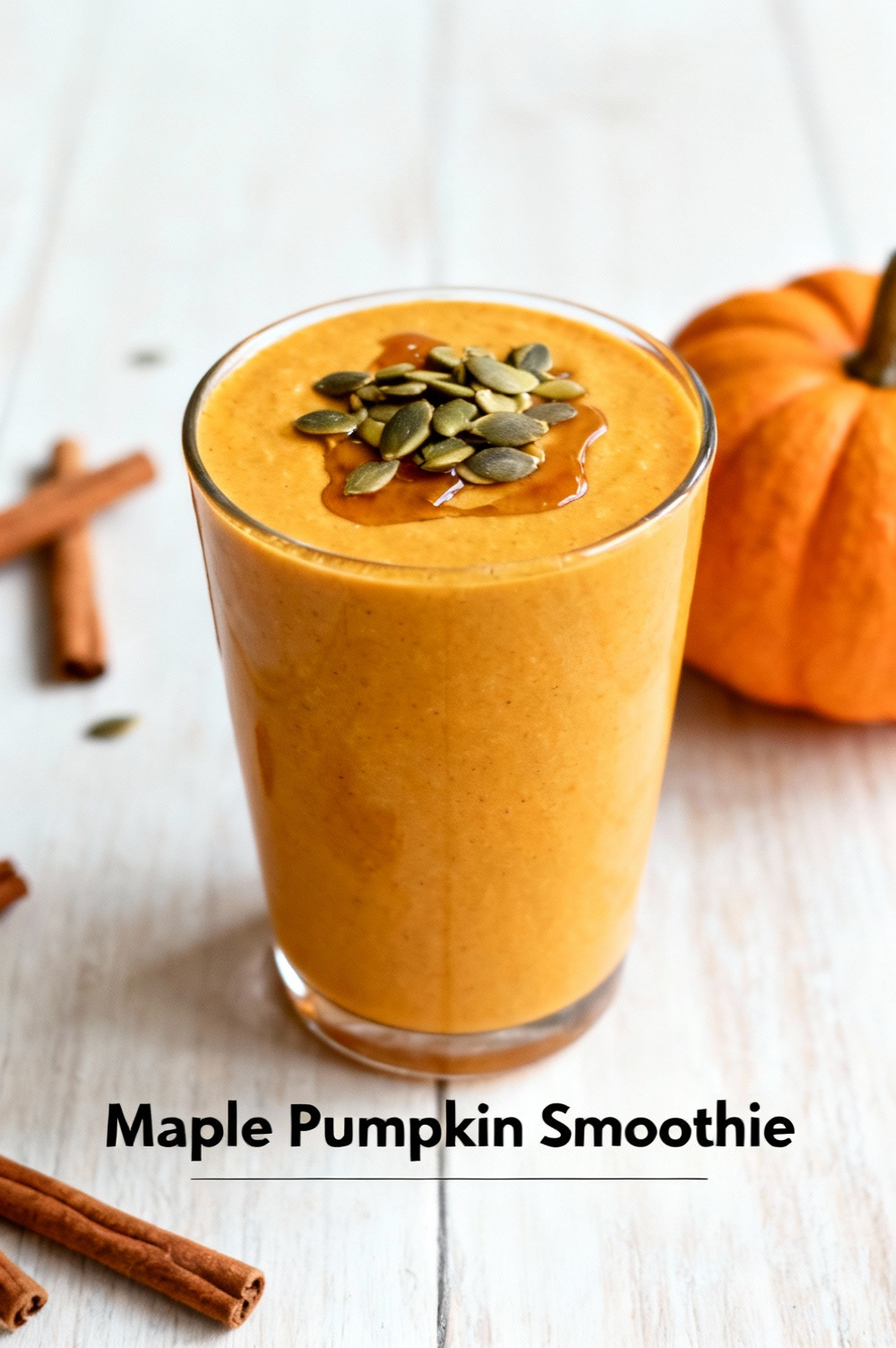
Taste for balance — more maple for sweetness, a pinch of salt to lift flavors, or a squeeze of orange zest for brightness. Pour into a chilled glass and garnish with a light sprinkle of cinnamon, a drizzle of maple, or a few toasted pepitas for crunch. Tip: for a café-style presentation, dust the rim with cinnamon-sugar (or a 1:4 mix of coconut sugar and cinnamon for lower glycemic impact).
Nutritional Information
Estimated per serving (makes 1 large or 2 small servings; values approximate and assume 1 cup canned pumpkin, 1 cup unsweetened almond milk, 1/2 cup plain Greek yogurt, 1 tbsp maple syrup): Calories ~220–260 kcal, Protein 10–15g (higher if dairy yogurt/protein powder used), Fat 5–8g, Carbohydrates 30–35g, Fiber 6–8g, Sugars 12–16g (natural sugars from pumpkin/banana + 1 tbsp maple). Micronutrients: vitamin A very high (200%+ DV), vitamin C modest amount, potassium ~400–600 mg depending on add-ins. Compared to a typical 12 oz pumpkin spice latte (often 40–50g sugar, 300–450 kcal), this version can cut added sugar by 50–70% and increase fiber by 100–300%, depending on swaps.
Healthier Alternatives for the Recipe
- Lower sugar: replace maple syrup with 1–2 pitted dates or 1 tbsp unsweetened applesauce; both provide sweetness with fiber.
- Lower calories: use unsweetened almond milk and omit yogurt; add a scoop of collagen or whey for protein with minimal calories.
- Vegan: swap Greek yogurt for silken tofu or a plant-based yogurt (coconut yogurt adds thick creaminess but increases fat).
- Higher protein: add a scoop of vanilla whey or pea protein; using dairy milk and Greek yogurt also boosts protein.
- Keto-friendly: use full-fat coconut milk, omit maple, add 1–2 tbsp erythritol or monk fruit sweetener, and include MCT oil or a tablespoon of almond butter for satiety.
- Gut-friendly: include a tablespoon of hemp seeds or inulin fiber powder to support microbiome diversity. These swaps maintain pumpkin’s flavor while tailoring macros to your diet.
Serving Suggestions
Serve chilled in a tall glass with a cinnamon stick for stirring, or pour into a mason jar for on-the-go breakfasts. Pair with a toasted grain bowl or wholegrain muffin for a balanced morning. For an afternoon pick-me-up, top with a dollop of whipped coconut cream and a dusting of pumpkin pie spice. For kids or entertaining, serve smaller cups with cinnamon-sugar rims and a sprinkle of crushed graham cracker to mimic the pie crust experience.
Common Mistakes to Avoid
- Using pumpkin pie filling instead of puree: pie filling is sweetened and spiced, which leads to too-sweet or cloying results — always choose plain pumpkin puree.
- Over-spicing: nutmeg and cloves are potent; add spices incrementally and taste.
- Too watery or too icy: add liquid gradually and blend, using frozen banana instead of ice for a creamy texture.
- Not balancing sweetness: cold temp reduces perceived sweetness; taste at room temperature or slightly warmer to judge final sweetness accurately.
- Assuming canned is inferior: high-quality canned pumpkin is time-saving and nutrient-dense; if using fresh, roast and cool fully for best texture.
Storing Tips for the Recipe
Smoothies are best consumed immediately for flavor and texture, but you can store leftovers in an airtight container in the fridge for up to 24 hours; shake or re-blend briefly before drinking. For meal prep, freeze single-serving portions in ice cube trays or freezer-safe jars for up to 2 months—thaw in the fridge or blend frozen cubes with a splash of milk to revive texture. Prep spice mixes and portion pumpkin into freezer-safe bags for quick assembly.
Conclusion
This maple pumpkin smoothie gives you the warm, nostalgic flavors of fall in a fast, nutritious package that’s customizable to your dietary goals. With simple swaps you can make it vegan, higher in protein, lower in sugar, or keto‑friendly while preserving that cozy pumpkin‑pie essence. Try the recipe, tweak spices to your taste, and share your favorite variation in the comments so others can enjoy your twist.
FAQs
Q: Can I use fresh pumpkin instead of canned?
A: Yes—roast or steam sugar pumpkin, scoop and cool; 1 cup roasted mashed ≈ 1 cup canned. Fresh gives a brighter flavor but adds prep time.
Q: Is canned pumpkin safe and nutritious?
A: High-quality canned pumpkin (not pie filling) is nutrient-dense and convenient; it’s an efficient source of vitamin A and fiber. Check labels to avoid added sugars or salts.
Q: How can I make this smoothie creamier without dairy?
A: Use frozen banana, silken tofu, or a handful of soaked cashews; oat milk also adds a naturally creamy mouthfeel.
Q: Can I make this smoothie ahead for the week?
A: Make a freezer pack with measured pumpkin, spices, and sweetener; in the morning add milk and blend. Fully blended smoothies are best fresh but can be refrigerated 24 hours.
Q: Will the spices separate if stored overnight?
A: Slight separation can occur; a quick shake or re-blend restores texture and evenly distributes spices.
For more ideas, explore related recipes like pumpkin spice overnight oats, pumpkin yogurt parfaits, or a cold brew pumpkin smoothie for a caffeinated twist; try swapping the maple for date syrup in those recipes to compare natural sweetener profiles. If you want a printable version, nutrition breakdown per variation, or a dairy‑free meal plan featuring pumpkin, tell me which option you prefer and I’ll generate it.