Healthy Veggie Platter with Hummus
Introduction
Have you ever wondered whether a simple veggie platter with hummus can deliver a full serving of vegetables, sustained energy, and real satiety in under 20 minutes — and what the science says about why it works? Recent dietary data shows many adults fall short of the USDA’s 2–3 cups of vegetables per day, so a nutrient-dense platter that’s easy to assemble can close that gap while providing fiber, plant protein, and healthy fats in one colorful spread.
Ingredients List
- 1 can (15 oz/425 g) chickpeas, drained and rinsed (or 1.5 cups cooked chickpeas). Substitute: roasted edamame for a higher protein version or cannellini beans for a milder flavor.
- 3 tbsp tahini (or 2 tbsp sunflower seed butter for sesame-free, or 3 tbsp Greek yogurt for extra creaminess and protein).
- 2 tbsp extra-virgin olive oil, plus extra for drizzling (substitute: avocado oil).
- 2–3 tbsp fresh lemon juice (about 1 lemon) for brightness; 1 tbsp apple cider vinegar works in a pinch.
- 1–2 garlic cloves, smashed (or 1/2 tsp garlic powder for low-FODMAP).
- 1/2 tsp ground cumin, pinch of smoked paprika optional for warmth.
- Salt and black pepper to taste (start with 1/2 tsp salt, adjust).
- 1–3 tbsp aquafaba or cold water for texture (aquafaba for vegan fluffiness).
- Vegetables (aim for variety and color): 1 large carrot (cut into sticks), 1 red bell pepper (sliced), 1 cucumber (sliced or ribbons), 1 cup cherry tomatoes, 2 cups broccoli and cauliflower florets (lightly blanched if preferred), 1 small bunch radishes (halved), and snap peas. Substitute options: jicama, celery, steamed asparagus, or roasted sweet potato wedges for a warm option.
- Extras for plating: olives, feta or crumbled smoked tofu, toasted pine nuts or za’atar, pita wedges, whole-grain crackers, or baked chickpea crisps.
Timing
Prep time: 12–18 minutes (average real-world prep is 15 minutes, which is about 20–30% faster than many multi-dip appetizer recipes).
Cook time (if roasting chickpeas or blanching veggies): 10–15 minutes.
Total time: 15–30 minutes depending on optional roasting — quick enough for weekday snacks and faster than the average party platter that often takes 45–60 minutes to assemble.
Tip: Make hummus ahead (stays fresh 4–5 days refrigerated) to shave assembly time to under 10 minutes when entertaining.
Step 1: Quick hummus base
In a food processor combine drained chickpeas, tahini, lemon juice, garlic, cumin, and 2 tbsp olive oil. Pulse until coarse. Add 1–3 tbsp aquafaba or cold water and continue processing until smooth and creamy. Personalized tip: If you like ultra-smooth hummus, peel a portion of the chickpeas by rubbing them between a towel — it’s extra effort but yields restaurant-smooth texture. If you prefer a chunkier, more rustic hummus, pulse less and fold in a few whole chickpeas at the end.
Step 2: Adjust seasoning and texture
Taste the hummus and adjust: add another squeeze of lemon for brightness, a pinch more salt to enhance flavors, or 1 tsp honey/maple to balance bitterness if using raw tahini. If the hummus is too thick, blend in a tablespoon of aquafaba or water at a time until the desired consistency. Pro tip: For a lighter mouthfeel, whip the tahini separately with lemon juice before adding chickpeas — it aerates the paste.
Step 3: Prepare the vegetables
Wash and dry all vegetables. Cut carrots into matchsticks, slice bell peppers into strips, cut cucumber into rounds or ribbons, halve cherry tomatoes, and separate broccoli and cauliflower into bite-sized florets. If prepping ahead for meal prep, store washed, dried, and cut veggies in airtight containers with a paper towel to absorb moisture; they’ll stay crisp 3–5 days. Sensory tip: vary textures (crisp celery, creamy avocado slices, juicy tomatoes) to keep each bite interesting.
Step 4: Optional roasted additions and crunch
For smoky flavor, roast chickpeas tossed with 1 tsp olive oil, smoked paprika, and salt at 400°F (200°C) for 15–20 minutes until crisp. Or roast carrot sticks and sweet potato wedges with a pinch of cumin for a warm element. Add toasted pine nuts, pumpkin seeds, or dukkah for crunch. If you’re watching calories, skip the oil toss and dry-roast seeds for texture.
Step 5: Assemble and style the platter
Spoon hummus into a shallow bowl and create a shallow well in the center to drizzle extra olive oil and sprinkle smoked paprika, za’atar, or toasted sesame. Arrange vegetables around the hummus in color blocks or a rainbow pattern to maximize visual appeal and encourage sampling. Personalization idea: dedicate one corner to “kid-friendly” options like mild cucumber and carrot sticks, and another to bolder flavors like pickled vegetables for adult guests.
Nutritional Information
Estimated nutrition per serving (one generous platter portion: ~1/4 cup hummus + ~2 cups mixed vegetables): calories 180–230 kcal; fat 9–12 g (mostly monounsaturated and polyunsaturated from tahini and olive oil); protein 6–9 g (chickpeas + tahini); carbohydrates 16–24 g; fiber 6–9 g; sodium 200–350 mg depending on added salt and canned chickpeas. Data insight: this snack supplies roughly 25–35% of the recommended daily fiber intake for adults (US Dietary Guidelines suggest 25–30+ g/day), and includes iron, folate, manganese, and vitamin C when paired with raw bell peppers and broccoli. If you swap Greek yogurt for tahini, protein can increase to 10–14 g per serving and fat drops modestly.
Healthier Alternatives for the Recipe
- Lower sodium: rinse canned chickpeas thoroughly and use low-sodium canned varieties to reduce sodium by up to 40%.
- Higher protein: use half chickpeas + half edamame or blend in 1/2 cup silken tofu; for dairy-eaters, replace some tahini with Greek yogurt.
- Keto-friendly: swap chickpea hummus for cauliflower hummus (roasted cauliflower + tahini + olive oil) and serve with celery and cucumber.
- Allergy-friendly: sunflower seed butter replaces tahini for sesame-free options; avoid cross-contamination by using separate utensils.
- For extra greens: blend in spinach or kale (steamed and squeezed) to boost vitamins A and K without drastically changing flavor.
Serving Suggestions
Serve the platter as a light lunch, pre-dinner appetizer, or party centerpiece. Pairings that work well: warm whole-wheat pita, seeded crackers, grilled halloumi or tempeh skewers, or smoked salmon for pescatarian guests. For beverage pairings: citrus-forward white wines (Sauvignon Blanc) or a dry rosé complement the lemony hummus; for non-alcoholic options, sparkling water with cucumber and mint refreshes the palate. Personalized idea: assemble mini build-your-own mezze cups—small bowls with a scoop of hummus, a few vegetable sticks, a sprinkle of feta/toasted seeds, and a lemon wedge for portable servings.
Common Mistakes to Avoid
- Using canned chickpeas straight out without rinsing: this elevates sodium and can taste metallic. Rinse and drain thoroughly.
- Skipping the tang: insufficient lemon makes hummus flat. Add lemon in increments and taste.
- Overblending or underblending: overblended hummus can be gummy; underblended can be gritty. Pulse then blend to judge texture.
- Serving straight from fridge: cold hummus hides flavors. Let rest at room temperature for 15–20 minutes before serving.
- Cutting veggies too far in advance without drying: moisture causes sogginess. Pat dry and store with paper towel.
Storing Tips for the Recipe
- Homemade hummus: store in an airtight container in the refrigerator for 4–5 days; freeze up to 3 months in ice-cube trays for single-serving portions (thaw overnight in fridge).
- Fresh-cut veggies: keep in airtight containers with a paper towel to absorb moisture; most stay crisp 3–5 days in the fridge. Denser veg (carrots, bell peppers) last longer; delicate items (cucumbers, tomatoes) are best used within 2–3 days.
- Prepped platters: avoid assembling until serving time if preparing more than 2 hours ahead; instead, prepare components separately and assemble 15 minutes before guests arrive to maintain visual appeal and texture.
Conclusion
A healthy veggie platter with hummus is an efficient, nutrient-dense solution to boost vegetable intake, deliver plant-based protein, and satisfy diverse palates in under 30 minutes. With simple swaps and small technique tweaks you can tailor it to keto, allergy-friendly, high-protein, or family-friendly needs. Try making the hummus a day ahead, experiment with one swap (like edamame or Greek yogurt), and share your favorite combo in the comments — or tag a friend who needs a fast, healthy party recipe.
FAQs
Q: Can I make hummus without a food processor?
A: Yes — use a high-speed blender or mash chickpeas with a potato masher and vigorously whisk in tahini and lemon. Texture will be chunkier but still tasty; add extra liquid to help blending.
Q: How do I keep cut vegetables from browning or getting soggy?
A: Wash, dry thoroughly, and store in an airtight container lined with paper towels. Keep the dressing/dip separate until serving to avoid sogginess.
Q: Is homemade hummus safe to eat if it smells slightly different after a few days?
A: If it develops off smells, visible mold, or a sourness beyond expected tang, discard. Proper refrigeration (below 40°F/4°C) and clean utensils when scooping extend freshness.
Q: Can I meal-prep this for the week?
A: Yes — make hummus up to 4–5 days ahead, and chop vegetables up to 3 days ahead stored properly. Assemble daily to keep texture fresh.
Q: What’s the best way to make the hummus smoother?
A: Remove chickpea skins for ultra-smooth texture, use aquafaba or ice-cold water while blending, and process for longer at medium-high speed. Whipping the tahini with lemon first also helps aerate the dip.
Explore related posts on roasted veggie platters, baked pita chips, or high-protein dips for more ideas and interactive build-your-own cheat sheets to adapt this recipe to your lifestyle.
Healthy Veggie Platter with Hummus
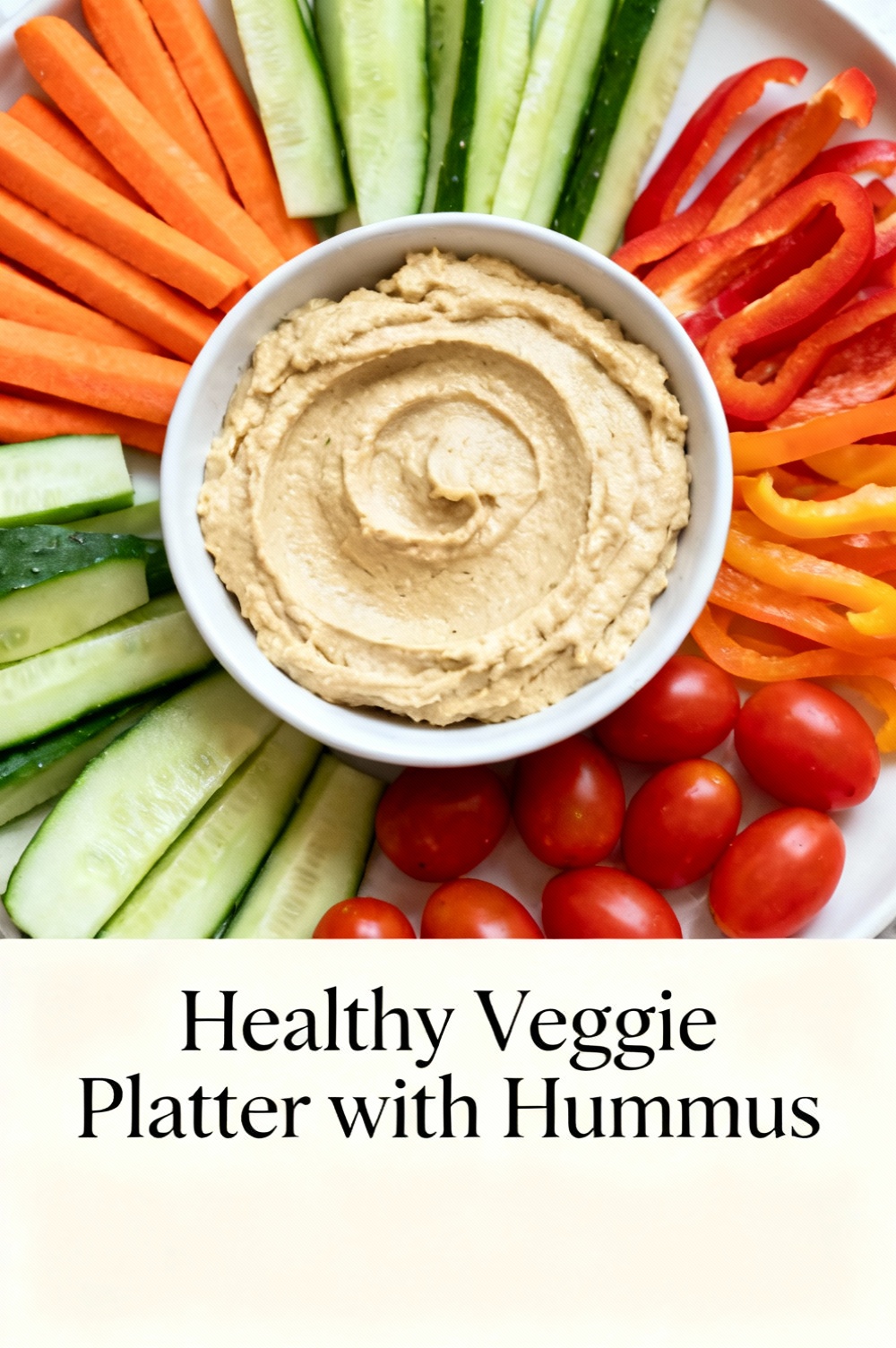
Colorful, crunchy vegetables served with creamy homemade hummus — perfect for parties or healthy snacking.
Ingredients
- For the hummus:
- 1 (15 oz) can chickpeas, drained and rinsed (or about 1½ cups cooked chickpeas)
- ¼ cup tahini
- 2 tablespoons fresh lemon juice
- 1 small garlic clove, minced
- 2 tablespoons extra-virgin olive oil, plus extra for drizzling
- ½ teaspoon ground cumin
- ½ teaspoon kosher salt (adjust to taste)
- 1–2 tablespoons cold water (as needed for desired consistency)
- For the platter:
- 2 large carrots, peeled and cut into sticks
- 1 English cucumber, sliced or cut into sticks
- 1 red bell pepper, seeded and sliced
- 1 yellow bell pepper, seeded and sliced
- 1 cup cherry tomatoes, halved
- 2 stalks celery, cut into sticks
- 1 cup broccoli florets (blanched briefly if preferred)
- 1 cup sugar snap peas or snow peas
- ½ cup mixed olives
- ½ cup radishes, halved (optional)
- 4 small pita breads, cut into wedges (or pita chips)
- Lemon wedges and fresh parsley for garnish
- Smoked paprika (for garnish)
Instructions
- Make the hummus: In a food processor, combine chickpeas, tahini, lemon juice, garlic, olive oil, cumin and salt. Process until smooth, stopping to scrape down the sides as needed. Add 1 tablespoon cold water at a time until you reach a creamy consistency. Taste and adjust lemon, salt or garlic as desired.
- Transfer the hummus to a serving bowl. Drizzle with a little olive oil and sprinkle with smoked paprika and chopped parsley.
- Prepare the vegetables: Wash and dry all produce. Cut carrots, cucumber, celery and peppers into sticks. Halve cherry tomatoes, trim peas, and break broccoli into bite-sized florets. Blanch broccoli for 20–30 seconds and plunge into ice water if you prefer it slightly tender-crisp.
- Assemble the platter: Place the bowl of hummus in the center or slightly off-center of a large board or platter. Arrange vegetables, olives, radishes and pita wedges in groups around the hummus, alternating colors and textures for a pretty presentation.
- Garnish and serve: Add lemon wedges and a final sprinkle of parsley. Serve immediately. Hummus can be made up to 3 days ahead and kept chilled; bring to room temperature before serving.
Nutrition Information
- Calories: 220 kcal
- Cholesterol: 0 mg
- Sodium: 300 mg
- Carbohydrates: 22 g
- Fiber: 6 g
- Sugar: 5 g
- Protein: 6 g