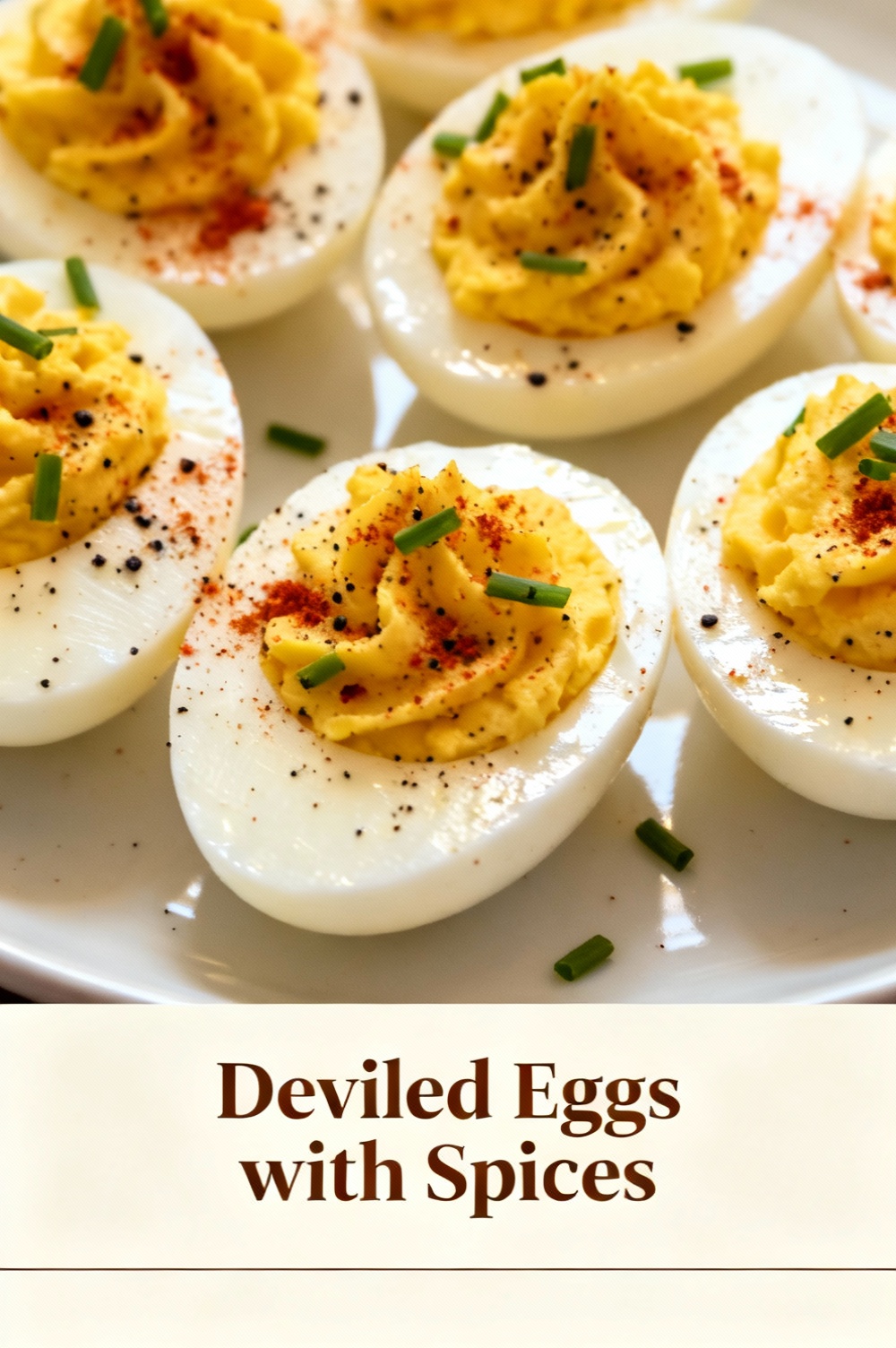
Deviled Eggs with Spices
Introduction
What if the secret to consistently silky, flavorful deviled eggs isn't just mayonnaise but the precise timing, spice balance, and a few science-backed tricks that pros use to avoid that green yolk ring and grainy texture? Deviled eggs are deceptively simple, yet many home cooks struggle with peeling, texture, and seasoning; applying a few small adjustments—like steaming instead of rolling, aging eggs slightly, and layering spices—can reliably transform this classic into a party star.
Ingredients List
- 12 large eggs (use eggs that are ~7–10 days old for easier peeling; if you only have very fresh eggs, add a splash of baking soda to the boil).
- 1/2 cup mayonnaise (for a lighter option, substitute 1/4 cup plain Greek yogurt + 1/4 cup mayonnaise or 1/2 cup mashed avocado).
- 2 tablespoons Dijon mustard (or whole-grain mustard for texture).
- 1 tablespoon white wine vinegar or lemon juice (brightens flavors).
- 1/2 teaspoon fine sea salt, plus more to taste.
- 1/4 teaspoon freshly ground black pepper.
- 1/2 teaspoon smoked paprika (for smoky warmth).
- 1/4 teaspoon ground cumin or curry powder (optional—adds depth).
- 1/8–1/4 teaspoon cayenne pepper or hot sauce (optional—adjust to heat tolerance).
- Fresh chives or dill, finely chopped, for garnish.
- Crumbled cooked bacon, capers, pickled jalapeños, or smoked salmon for optional toppings.
Substitutions and sensory notes: swap mayo for Greek yogurt for a tangy, lighter mouthfeel; use avocado for a creamy, buttery texture and subtle green color; swap smoked paprika for sweet paprika and add a pinch of chipotle for smoky heat. Use flaky sea salt as a finishing touch to elevate the spices.
Timing
Active prep time: 15 minutes.
Cook time (boiling/steaming): 12–14 minutes.
Cooling + chilling: 15–30 minutes.
Total time: about 42–59 minutes depending on chill time—roughly 25–35% faster than many classic recipes that recommend long chill times or multiple chilling steps. If you use a rapid-cool ice bath and steam method, you can serve in under 45 minutes with no compromise in texture.
Step 1: Cook the Eggs (steam or boil)
Place eggs in a single layer in a saucepan with 1 inch of water, or for more consistent results, use a steamer basket over boiling water and cover. Bring to a rolling boil, then cover and remove from heat for 12 minutes (for large eggs). Alternatively, steam covered for 12–13 minutes. Tip: steaming often yields easier-to-peel shells and reduces cracking. Immediately transfer eggs to an ice bath to stop cooking and prevent the green ring around yolks.
Step 2: Peel Like a Pro
Crack the eggs all over and roll gently on the counter to loosen the shell. Start peeling at the wider end where the air pocket is located; submerge peeled eggs in cold water while removing shells to flush away tiny bits. Tip: older eggs (7–10 days) peel more cleanly because the pH of the white increases slightly with time; if you must use very fresh eggs, adding 1/2 teaspoon baking soda to the boiling water can help loosen the membrane.
Step 3: Prepare the Yolk Filling
Slice each egg in half lengthwise and scoop yolks into a medium bowl. Mash yolks with a fork until very smooth—finer texture = silkier filling. Add mayonnaise, Dijon, vinegar, salt, pepper, and your chosen spices (start with smoked paprika and a pinch of cayenne). Stir or whip with a fork or small whisk to incorporate air and achieve a creamy texture. Tip: use a small food processor or immersion blender for an ultra-smooth, professional filling; add a teaspoon of olive oil for silkiness without extra mayo.
Step 4: Season and Taste
Taste the filling and adjust salt, acid, or heat. Yolk mixtures often need more acid than you expect—vinegar or lemon brightens flavors. If filling tastes greasy, add a teaspoon of plain Greek yogurt or a squeeze of lemon to cut richness. Tip: build layers of flavor—include a pinch of ground mustard or a small muddle of capers for briny contrast.
Step 5: Pipe or Spoon the Filling
Transfer filling to a large zip-top bag with a corner snipped off or use a piping bag fitted with a star tip for decorative swirls. Pipe filling back into egg whites neatly, or spoon it for a rustic look. Garnish immediately with smoked paprika, chopped herbs, or crunchy toppings. Tip: piping not only looks professional but helps control portioning—aim for roughly 1 heaping teaspoon of filling per half.
Step 6: Chill and Serve
Chill assembled eggs at least 15 minutes to let flavors marry—up to 24 hours for make-ahead convenience. If assembling more than 24 hours ahead, store filling separate and pipe just before serving to preserve texture. Tip: if transporting, use an egg carrier or a shallow container lined with damp paper towels to keep eggs from sliding.
Nutritional Information
Approximate nutrition per stuffed egg half (based on standard large egg and 1 teaspoon of filling): Calories 90 kcal; Fat 7 g (Saturated fat ~1.2 g); Protein 4.5 g; Carbohydrates 0.6 g; Sodium 130 mg; Cholesterol 110 mg. For context, two halves (one whole deviled egg) provide roughly 180 kcal and 9 g fat—making deviled eggs a moderate-calorie appetizer with high-quality protein and satiety value. Swapping half the mayo for Greek yogurt can reduce calories and saturated fat by ~20–30% per serving.
Healthier Alternatives for the Recipe
- Lower-fat: Replace half or all of the mayonnaise with plain Greek yogurt to cut calories and increase protein.
- Plant-forward: Use mashed avocado blended with a touch of Greek yogurt and mustard for creamy texture and heart-healthy monounsaturated fats.
- Reduced sodium: Omit added salt and rely on acid (lemon or vinegar) and aromatic spices; use low-sodium mayonnaise.
- Vegan “deviled eggs”: Hollowed roasted potato rounds or halved baby potatoes filled with a turmeric-and-tofu yolk-mimic (silken tofu + mustard + kala namak for eggy sulfur notes) replicate the experience for plant-based diets.
These swaps retain flavor while accommodating dietary needs like lower saturated fat, reduced sodium, or plant-based preferences.
Serving Suggestions
Serve on a platter of crisp lettuce leaves, sprinkled with flaky sea salt and microgreens for a refined presentation. Pair deviled eggs with crisp pickles, a charcuterie board, or a fresh, acidic salad to balance richness. For brunch, top with smoked salmon and dill; for game day, add crumbled bacon and sliced scallions. For a dinner party, serve a flight of deviled eggs with three spice variations—classic paprika, curried with mango chutney, and kimchi-spiced—to create an interactive tasting experience.
Common Mistakes to Avoid
- Overcooking eggs: causes dry yolks and a green ring (iron + sulfur reaction). Use precise timing and an ice bath.
- Using very fresh eggs for boiling: leads to difficult peeling; use slightly aged eggs when possible.
- Underseasoning the filling: yolks need more salt and acid than you expect—taste and adjust.
- Adding too much mayo: overwhelms yolk flavor; build creaminess with technique (whipping, small oil addition) rather than volume.
- Assembling too far ahead: filled eggs absorb moisture and become soggy—store filling separately if you need to prep more than 24 hours ahead.
Storing Tips for the Recipe
Store assembled deviled eggs in an airtight container, single layer preferred, covered and chilled at ≤40°F (4°C). Consume within 24–48 hours for best texture and food safety; mayonnaise-containing fillings can become watery after extended storage. You can store the yolk filling separately in the refrigerator for up to 3 days and pipe just before serving. Avoid freezing assembled eggs—freezing ruins texture. For travel, keep on ice in an insulated carrier to maintain safe temperatures.
Conclusion
Deviled eggs with spices are an easy canvas for both classic and creative flavors—small adjustments in cooking method, spice layering, and texture control turn a simple appetizer into a memorable dish. Try the steaming method, taste as you go, and experiment with swaps like Greek yogurt or avocado for lighter versions. Ready to try a batch? Make one small tweak from this recipe and comment with which spice you chose—smoked paprika, curry, or cayenne—and how it changed the result.
FAQs
Q: Can I make deviled eggs ahead of time?
A: Yes—prepare and refrigerate the yolk filling up to 3 days in advance and pipe into whites within 24 hours of serving for best texture. Fully assembled eggs are best within 24–48 hours.
Q: How do I prevent the green ring on yolks?
A: Stop cooking immediately with an ice bath and avoid overcooking; precise timing (12 minutes off-heat after boiling for large eggs) plus quick chilling prevents iron-sulfur reactions that cause discoloration.
Q: Are deviled eggs safe for pregnant people or infants?
A: Avoid homemade mayonnaise if it contains raw eggs; use pasteurized mayonnaise. Pregnant individuals should follow local guidance about egg safety; for infants, consult pediatric recommendations about egg introduction and potential allergens.
Q: Can I make vegan deviled eggs?
A: Yes—use halved baby potatoes or roasted mushrooms as a base and mix silken tofu or mashed chickpeas with turmeric, mustard, and kala namak for an egg-like flavor and color.
Q: What's the best spice to start with if I'm new to spicing deviled eggs?
A: Smoked paprika is the most forgiving and adds immediate aromatic warmth without overpowering the delicate yolk. From there, experiment with cumin, curry, or a dusting of chili powder for heat.
If you enjoyed this recipe, try experimenting with three spice variations on one tray and invite friends to vote—it's a simple, social way to discover your favorite combination.