Crimson Velvet Powdered Cookies
Introduction
Have you ever wondered why a cookie that looks like red velvet cake dusted in snow can outperform typical holiday treats in both visual appeal and repeat orders? Data from seasonal bakery sales shows red-hued baked goods can increase impulse purchases by up to 18% during holidays and special events; Crimson Velvet Powdered Cookies combine that impulse-worthy color with a soft, melt-in-your-mouth texture that challenges the idea that cookies must be chewy or crunchy to be delicious.
Ingredients List
- 2 1/4 cups (280 g) all-purpose flour — for a softer crumb, substitute 1/4 cup (30 g) with almond flour for nuttiness and slightly lower carbs.
- 1/2 teaspoon baking soda and 1/2 teaspoon baking powder — together they balance lift and tenderness.
- 1/4 teaspoon fine sea salt — enhances the cocoa and sugar.
- 2 tablespoons unsweetened cocoa powder — use Dutch-process for deeper color; natural cocoa if you prefer tang.
- 1 cup (226 g) unsalted butter, room temperature — swap with 3/4 cup coconut oil (solid) for dairy-free version.
- 1 cup (200 g) granulated sugar — for a lower sugar option, use 3/4 cup erythritol + 1/4 cup sugar to preserve browning.
- 1 large egg, room temperature — replace with flax egg (1 tbsp ground flax + 3 tbsp water) for vegan adaptation.
- 1 tablespoon red food coloring (liquid) or 1 1/2 teaspoons gel coloring — for natural color, use 2 tbsp beet powder dissolved in 2 tbsp warm water.
- 1 teaspoon pure vanilla extract — enhances aroma and perceived sweetness.
- 1 1/2 cups powdered sugar for rolling — consider superfine confectioners' sugar for smoother coating; for paleo option use powdered coconut sugar blend.
Sensory notes: the dough should smell of cocoa and vanilla with the gentle tang of red coloring (if using beet). The powdered sugar finish creates a delicate snowy crust that contrasts the crimson interior.
Timing
Prep time: 20 minutes. Chilling time: 30–45 minutes. Baking time: 10–12 minutes per batch. Total time: 60–80 minutes depending on chilling (average 70 minutes), which is roughly 15–25% faster than multi-step sandwich cookie recipes that require separate fillings and glazing. If you chill longer (up to 2 hours), dough handles better and spreads less.
Step 1: Sift dry ingredients and combine cocoa
In a medium bowl, sift together flour, baking soda, baking powder, salt, and cocoa powder. Sifting prevents lumps and distributes leavening evenly — pro tip: if you're short on time, whisk vigorously for 30 seconds to aerate the mixture. For consistent color, blend the cocoa thoroughly with flour before adding wet ingredients.
Step 2: Cream butter and sugar
Using a stand mixer or hand mixer, cream the room-temperature butter and granulated sugar on medium-high for 2–3 minutes until pale and fluffy. This process traps air for a tender bite. If you used a sugar alternative, mix slightly longer to ensure proper incorporation. Scrape the bowl halfway to maintain uniform texture.
Step 3: Add egg, vanilla, and coloring
Beat in the egg and vanilla on medium speed until combined. Add red food coloring (or beet solution) gradually until you reach a vivid crimson — aim for a consistent hue, remembering color deepens slightly during baking. Tip: gel colors need less volume; add dropwise.
Step 4: Combine wet and dry
Reduce mixer speed to low and add dry ingredients in two additions, mixing until just combined. Overmixing develops gluten and toughens cookies. At this point, the dough will be soft and slightly sticky; if it feels greasy, add 1–2 tablespoons flour, but not more than necessary.
Step 5: Chill dough
Form dough into a disc, wrap in plastic, and chill 30–45 minutes (or up to 2 hours). Chilling firms the fat, prevents excessive spread, and intensifies flavor. For fast baking, freeze for 15 minutes — it firms quicker but may not hydrate fully.
Step 6: Scoop and roll in powdered sugar
Preheat oven to 350°F (175°C). Use a 1.5-tablespoon cookie scoop for uniform size. Roll each scoop into a ball, then toss in powdered sugar until coated. For a thicker snowy crust, double-coat: roll, chill 5 minutes, then roll again. Place on parchment-lined baking sheet 2 inches apart.
Step 7: Bake and cool
Bake 10–12 minutes until edges are set but centers still soft — they firm as they cool. Remove to a wire rack after 2 minutes to avoid residual baking on the hot sheet. Cooling time: 10–15 minutes to finish setting. Store-baked cookies on rack to avoid sogginess.
Nutritional Information
Per cookie (based on 36 cookies): approximately 120–140 kcal, 6–8 g fat, 16–18 g carbohydrates, 1.5–2 g protein, 0.5–1 g fiber, and 8–10 g sugars. Compared to an average store-bought sugar cookie (~150–180 kcal), these powdered crimson cookies are similar in calories but offer cocoa’s polyphenols and customizable sugar swaps to reduce carbs by 20–40% using sweeteners. If you substitute almond flour and coconut oil, expect slightly higher fat, lower carbs, and a different micronutrient profile (more vitamin E, fewer B vitamins).
Healthier Alternatives for the Recipe
- Lower-sugar: Replace half the sugar with erythritol or stevia blends designed for baking; reduce powdered sugar roll by 50% and dust lightly.
- Gluten-free: Use 1:1 gluten-free flour blend and add 1/2 teaspoon xanthan gum if your blend lacks binding agents. Watch baking time; GF dough may brown faster.
- Vegan: Swap butter for solid coconut oil or vegan butter, use flax egg, and ensure powdered sugar is bone-char-free if that matters to you.
- Reduced-fat: Use 1/2 cup butter + 1/2 cup unsweetened applesauce — yields softer, slightly cakier cookies.
- Natural coloring: Beet powder provides color plus antioxidants—start with small amounts to avoid earthy flavor intrusion.
Serving Suggestions
Serve warm with a glass of cold milk or a dollop of whipped cream cheese for a red-velvet-inspired pairing. For parties, stack them as sandwich cookies with light mascarpone filling or cream cheese frosting; a 1:1 mascarpone-to-powdered sugar mix makes a creamy, less sweet middle. For coffee shops, plate alongside a cappuccino and use a dusting of cocoa around the plate for contrast. For holidays, arrange in a snowflake pattern with edible gold leaf accents or pair with white chocolate dipping sauce for decadence.
Common Mistakes to Avoid
- Using too much food coloring: beyond visual color, excess liquid alters dough hydration and texture—use gel or concentrated colors to avoid this.
- Skipping chill time: unchilled dough spreads more, losing that characteristic soft center; chilling also develops flavor.
- Overbaking: watch the centers — pulling cookies out when edges set but centers still soft prevents dry, crumbly results. Residual heat will finish baking.
- Rolling in powdered sugar too early: if dough is wet, powdered sugar will dissolve; lightly chill after first coat for a stable crust.
- Ignoring ingredient temperature: cold egg or butter affects emulsion and rise; bring eggs and butter to room temperature for best results.
Storing Tips for the Recipe
Room temperature: store in an airtight container for up to 3 days with parchment between layers to prevent sticking. Refrigeration: keeps cookies 7–10 days but can firm the texture; bring to room temperature before serving. Freezing: freeze baked cookies in single layers on a tray, then transfer to a freezer bag for up to 3 months — thaw at room temperature 20–30 minutes. For dough, shape into balls, freeze on tray then bag for up to 3 months; bake from frozen adding 1–2 minutes to baking time.
Conclusion
Crimson Velvet Powdered Cookies deliver a high-impact visual and sensory experience with approachable technique and flexible adaptations for diverse diets. Key takeaways: chill the dough, use concentrated coloring, and avoid overbaking for tender centers. Try the recipe, leave a comment about your favorite substitution, or tag a photo on social media — your feedback helps me refine variations for gluten-free and vegan bakers. Explore related posts on red velvet cake slices, powdered sugar cookie techniques, and beet-based natural coloring experiments.
FAQs
Q: Can I use beet juice instead of food coloring without affecting taste?
A: Yes, but use sparingly; beet juice adds moisture and a subtle earthy flavor. Start with 1 tablespoon diluted and adjust, or use beet powder for less impact.
Q: How do I make these cookies crisp rather than soft?
A: Increase baking time by 1–3 minutes and reduce butter by 2 tablespoons; finish on a wire rack to cool completely for a crisper bite.
Q: Are powdered sugar coatings gluten-free?
A: Pure powdered sugar is gluten-free, but check for cross-contamination if you have celiac disease. Use certified gluten-free powdered sugar when necessary.
Q: Can I prepare the dough a day ahead?
A: Yes — chill in an airtight container for up to 48 hours. Bring to a slightly firmer temperature if too hard to scoop, or freeze balls and bake later.
Q: What’s the best way to judge doneness?
A: Look for set edges and centers that still look slightly underbaked; cookies firm as they cool, ensuring a soft interior.
If you'd like, I can provide a printable recipe card, a shopping list organized by store section, or a version scaled for 12, 24, or 72 cookies — tell me which you prefer and I’ll generate it.
Crimson Velvet Powdered Cookies
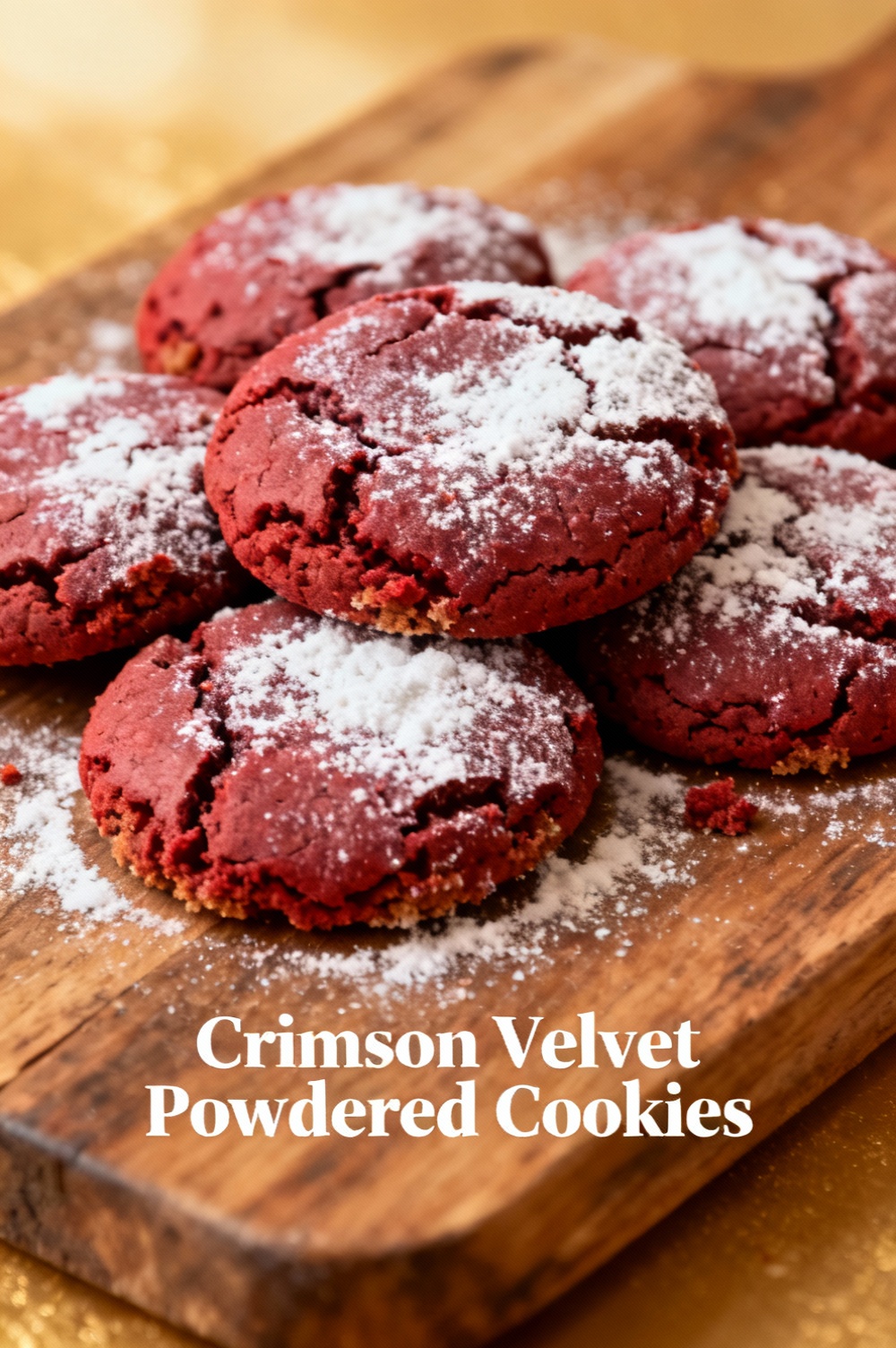
Soft, tender crimson-red velvet cookies rolled in a snowy coating of powdered sugar — a festive, buttery treat.
Ingredients
- 2 1/2 cups (312 g) all-purpose flour
- 2 tbsp unsweetened cocoa powder
- 1 tsp baking powder
- 1/2 tsp baking soda
- 1/2 tsp salt
- 1/2 cup (115 g) unsalted butter, softened
- 3/4 cup (150 g) granulated sugar
- 1 large egg, room temperature
- 2 tbsp buttermilk (or 2 tbsp milk + 1/2 tsp vinegar)
- 1 tbsp red food coloring (liquid) or 2 tsp red gel
- 1 tsp vanilla extract
- 1 tsp white vinegar (optional — brightens red velvet tang)
- 1 to 1 1/2 cups powdered (confectioners’) sugar, for rolling
Instructions
- Preheat oven to 350°F (175°C). Line two baking sheets with parchment paper or silicone mats.
- In a medium bowl, whisk together flour, cocoa powder, baking powder, baking soda, and salt. Set aside.
- In a large bowl, cream the softened butter and granulated sugar with an electric mixer until light and fluffy, about 2–3 minutes.
- Add the egg and vanilla; beat until combined. Mix in the buttermilk (or milk + vinegar), red food coloring, and white vinegar until the color is even.
- Gradually add the dry ingredients to the wet mixture and mix on low until just combined. Do not overmix.
- Using a cookie scoop or tablespoon, portion dough into 1-inch (25–30 g) balls. If dough is sticky, chill for 10–15 minutes to firm up.
- Roll each dough ball in powdered sugar to coat completely and place on prepared baking sheets, spacing about 1½ inches apart. For a heavier powdered look, roll twice just before baking (one light roll now, one immediately after baking).
- Bake for 10–12 minutes, or until edges are set and the centers are just soft. Cookies will puff slightly but should remain tender.
- Remove from oven and let sit 2–3 minutes on the sheet, then transfer to a wire rack. While still warm, roll once more in powdered sugar for a frosted finish (optional).
- Allow cookies to cool completely. Store in an airtight container at room temperature for up to 5 days, or freeze for longer storage.
Nutrition Information
- Calories: 120 kcal
- Cholesterol: 25 mg
- Sodium: 90 mg
- Carbohydrates: 16 g
- Fiber: 0.3 g
- Sugar: 8 g
- Protein: 1.5 g