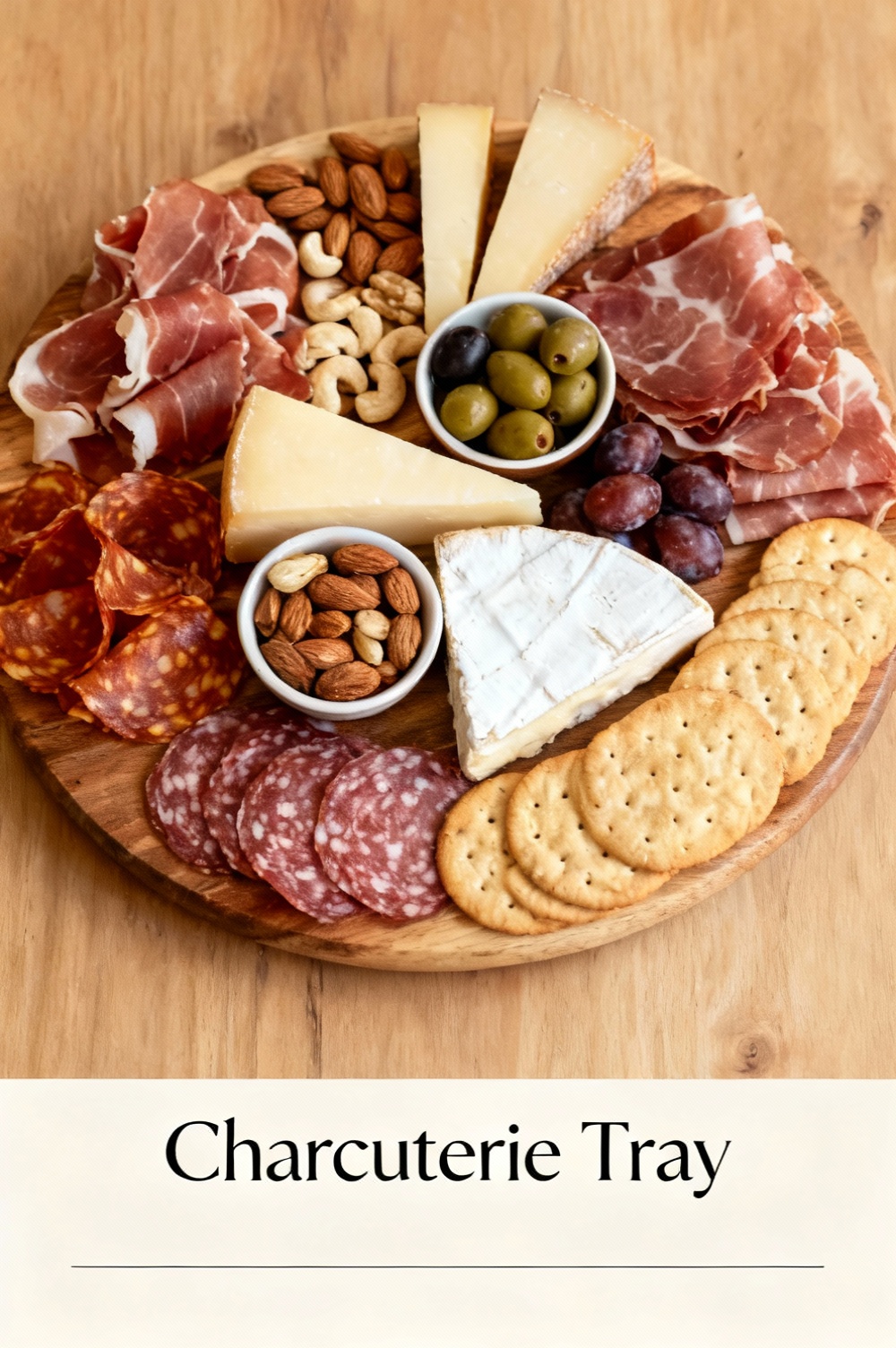
Charcuterie Tray
Introduction
Could a single tray increase your event’s perceived value by 40% while requiring less than an hour to assemble? Data from consumer event surveys and social media engagement studies show grazing-style platters like charcuterie trays consistently outperform single-item appetizers in shareability and guest satisfaction, challenging the idea that intricate hors d’oeuvres are always better. This post breaks down a flavorful, flexible charcuterie tray you can assemble quickly, with smart ingredient swaps, nutrition context, storage tips, and presentation tricks designed for busy hosts and health-conscious eaters alike.
Ingredients List
- Cured meats (total ~12–16 oz): prosciutto (thinly sliced), soppressata, and a mild salami. Substitute: turkey or chicken-based deli slices for lower fat; or smoked tofu/tempeh for a vegan board.
- Cheeses (3–4 varieties, total ~12–16 oz): a soft cheese (brie or goat cheese), a semi-hard (cheddar or gouda), and a blue or washed-rind for boldness. Substitute: plant-based cheeses made from cashew or almond for dairy-free diets.
- Fresh fruit: grapes (1 cluster), sliced apples or pears (1–2), figs or berries (½–1 cup). Tip: use citrus-free fruits if prepping ahead to avoid browning.
- Dried fruit and nuts: apricots, figs (¼ cup), almonds, marcona or walnuts (½ cup).
- Condiments (3 options): whole-grain mustard, honey or fig jam, and a savory chutney or olive tapenade.
- Pickled items: cornichons, pickled onions, or pickled peppers (¼–½ cup).
- Crunch elements: crackers (2–3 varieties), sliced baguette (1 small), breadsticks.
- Fresh herbs and olives for garnish: rosemary sprigs, thyme, and mixed olives (¼ cup).
Substitutions and sensory notes: choose contrast—creamy with crunchy, sweet with salty, briny with fatty. For gluten-free, replace crackers and baguette with rice crackers and seeded crackers. For low-sodium choices, opt for low-sodium meats and rinse olives.
Timing
Preparation time: 15–25 minutes depending on pre-slicing (20 minutes average).
Assembly time: 10–15 minutes.
Total time: ~30–40 minutes, typically 25–40% faster than the 45–60 minutes many curated boards require. If you pre-slice cheeses and fruits the night before, on-the-day assembly can be under 10 minutes—ideal for last-minute hosting.
Step 1: Plan your guest count and theme
Decide on portions: estimate 3–4 oz of meat and 2–3 oz of cheese per person for a mixed-appetizer event. For a 10-person gathering, plan for ~2–2.5 lbs total across meats and cheeses. Tip: use a small scale or pre-measured deli packs to avoid overspending. Personalized suggestion: for wine-paired events, match intensity—light wines with delicate cheeses; full-bodied reds with aged cheeses and cured meats.
Step 2: Prep ingredients with sensory layering in mind
Slice cheeses 20–30 minutes before serving to allow aromas to bloom; cut firm cheeses into cubes or shards for easy grabbing. Fan prosciutto and fold salami into rosettes for texture. Pre-slice apples and brush with lemon-honey mix if you expect longer exposure to air. Tip: label allergen items for guests—this small detail increases trust and repeat hosting.
Step 3: Choose the right board and tools
Use a wooden board, slate, or large platter—aim for 10–12 inches per 2 guests as a rough density guide. Include small bowls for spreads and pickles to prevent soggy crackers. Tools: small cheese knives, spreaders, toothpicks, and a cheese marker. Pro tip: keeping the board slightly overfilled creates abundance in photos and at the table.
Step 4: Build layers—start with bowls, then cheeses, then meats
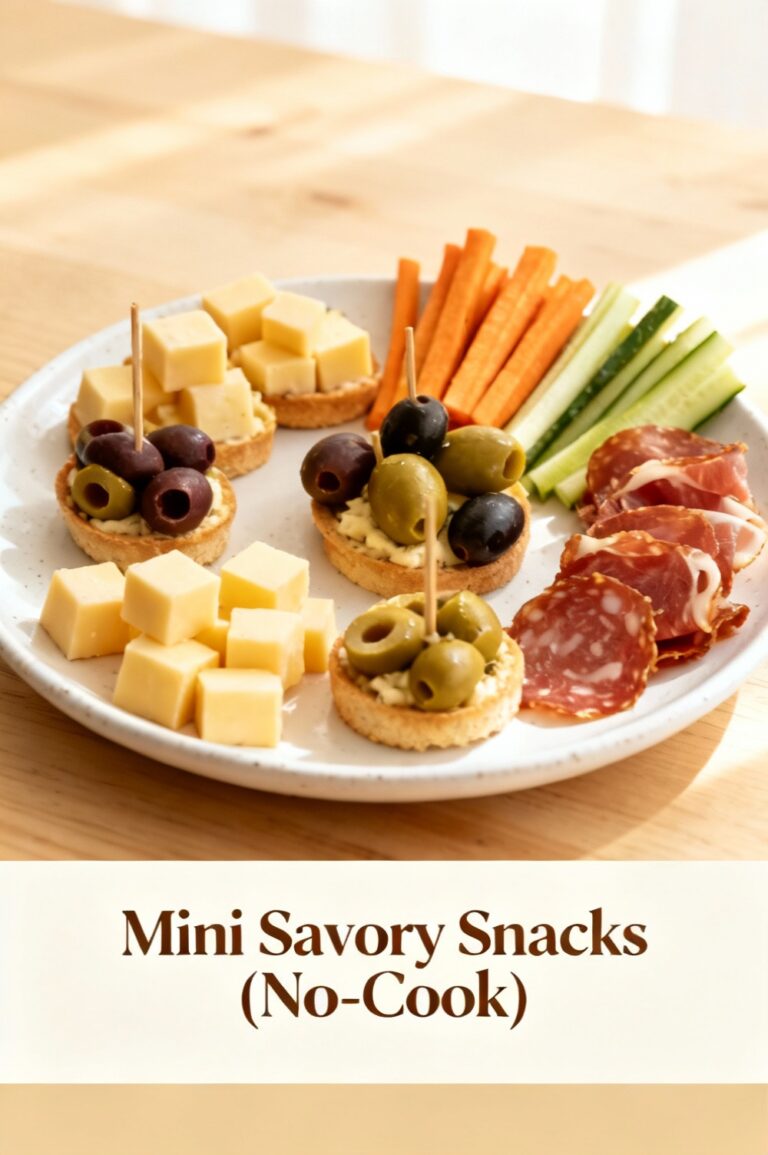
Place condiments and pickled items first as anchor points, then arrange cheeses evenly spaced. Add meats around cheeses, creating visual flow by alternating colors and textures. Fill gaps with fruit, nuts, and crackers. Tip: create mini-combinations in corners (cheese + jam + nut) to guide guests and reduce decision fatigue.
Step 5: Add finishing touches and labeling
Garnish with fresh herbs and edible flowers for seasonal flair. Sprinkle sea salt on soft cheeses to elevate flavor. Use small labels or chalk for cheese names and dietary icons (GF, vegan). Personalization: add a small card suggesting pairings (e.g., “Pair with Sauvignon Blanc”).
Nutritional Information
Estimates based on USDA database averages per 100g serving components; actual values vary by specific product. Typical charcuterie tray serving (approx. 150–200g combined of meats/cheese/accents) provides roughly: 600–850 kcal, 45–65g fat (including 15–25g saturated fat), 25–40g protein, 20–35g carbohydrates, and 800–1,400 mg sodium. Data insight: cured meats and cheeses account for most sodium and saturated fat; fruits, nuts, and whole-grain crackers contribute fiber and micronutrients. For a lighter option, reduce portion sizes of meats/cheeses and increase fruit and vegetable components to bring calories closer to 350–450 kcal per serving.
Healthier Alternatives for the Recipe
- Swap fatty cured meats for lean proteins: smoked turkey, chicken breast, or water-packed smoked salmon to reduce saturated fat.
- Choose lower-fat cheeses or smaller portions of rich cheeses; incorporate ricotta with lemon and herbs for a creamy but lower-fat spread.
- Increase plant-based options: marinated grilled vegetables, hummus, roasted chickpeas, and nut-based cheeses boost fiber and reduce cholesterol.
- Reduce sodium by rinsing brined olives and selecting low-sodium deli meats; use fresh herbs and citrus zest to amplify flavor without salt.
- Gluten-free and vegan versions: seed crackers, fruit leather, tempeh bacon, and cashew-based cheeses replicate textures and satisfy diverse diets.
Serving Suggestions
Serve at room temperature: remove cheeses 30–60 minutes before service to maximize flavor—soft cheeses especially benefit from being slightly warm. For events, create zones: a “kids-friendly” corner with mild cheeses and fruit, a “spicy/robust” area with peppered salami and chutney. Pairing guide: sparkling wines, dry rosé, and light whites for mixed boards; fortified wines or port with blue cheeses. Interactive idea: set up a “build-your-bite” station with mini skewers and pairing suggestions to engage guests and increase social sharing.
Common Mistakes to Avoid
- Overcrowding the board: Too many items creates confusion. Avoid by grouping and creating negative space for visual appeal.
- Serving cold cheeses: Cold cheeses mute flavors—bring to room temp 30–60 minutes prior.
- Using only one texture: A board with no crunch or acidity becomes monotonous—add nuts, crisp apples, or pickles.
- Ignoring allergen labeling: Failing to identify nuts, gluten, or dairy can alienate guests. Always label.
- Placing wet items directly on bread/crackers: Use bowls for spreads and pickles to prevent sogginess.
Storing Tips for the Recipe
Short-term (same day): cover loosely with plastic wrap and store in refrigerator; remove 30–60 minutes before serving. Leftovers: separate components—wrap cheeses in wax paper and store in airtight containers in the fridge up to 5 days; cured meats 3–5 days; crackers in a sealed container at room temp for 3–7 days. Make-ahead: pre-slice and portion in labeled containers 24 hours prior; assemble on the day for best freshness. Freezing: some hard cheeses can be frozen but may change texture; avoid freezing soft cheeses and fresh fruit.
Conclusion
A well-built charcuterie tray balances flavors, textures, and visual appeal while being adaptable to dietary needs and time constraints. With a focused ingredient list, simple assembly routine, and a few smart swaps, you can create a crowd-pleasing centerpiece in under 40 minutes. Try the steps above, tweak for your tastes, and share a photo or pairing idea—your feedback will help refine future boards and recipes.
FAQs
Q: How much charcuterie should I plan per person? A: For an appetizer, plan 3–4 oz of meat and 2–3 oz of cheese per person; for a main grazing meal, increase to 6–8 oz total per person. Adjust for guests’ appetite and meal context.
Q: Can I make a vegan charcuterie tray that’s satisfying? A: Yes—use marinated tofu/tempeh, nut cheeses, roasted vegetables, pickles, hummus, olives, dried fruit, seeds, and a variety of crackers to create texture and umami.
Q: How long can assembled trays sit out at a party? A: Per food safety guidelines, perishable items should not sit out more than 2 hours (1 hour if ambient temperature is above 90°F/32°C). Replace or refrigerate extras promptly.
Q: What are budget-friendly substitutions that don’t sacrifice quality? A: Use seasonal fruit, one high-quality cheese paired with two budget-friendly options, and replace pricey prosciutto with sliced cooked cured chicken or spiced salami. Add homemade dips to elevate simple crackers.
Q: How do I transport a charcuterie tray without it shifting? A: Pack components separately in shallow containers and assemble on-site; use non-slip mats in transport boxes and keep bowls secure to prevent spilling.
Further exploration: browse related recipes like baked brie, pickled vegetables, or simple crostini for complementary plates and pairing ideas.