Buttery Melt-in-Your-Mouth Cookies
Introduction
What if a simple change in butter ratio and technique could make your cookies 30% more tender and reliably "melt-in-your-mouth" every time — would you still reach for a packaged cookie? Data from bakers and food chemists shows that texture hinges less on exotic ingredients and more on precise fat-to-flour balance, sugar type, and minimal gluten development, so this recipe focuses on those science-backed levers to deliver an unbeatable buttery melt-in-your-mouth cookie.
Ingredients List
- 2 cups (250 g) all-purpose flour — substitute up to 25% with pastry flour or 1:1 with gluten-free 1-to-1 flour blend for a more delicate crumb; whole-wheat pastry flour will add nutty flavor but slightly denser texture.
- 1/2 cup (60 g) cornstarch — creates a tender, shortbread-like bite by reducing gluten formation; arrowroot works as a 1:1 swap.
- 1 cup (227 g) unsalted butter, room temperature — for richer flavor, use European-style butter (higher fat) or brown the butter for toasty notes; for dairy-free, use a high-quality vegan butter stick.
- 3/4 cup (90 g) powdered (confectioners’) sugar — gives a meltier mouthfeel than granulated; substitute 3/4 cup granulated sugar if you prefer a crisper edge.
- 1/4 cup (50 g) granulated sugar — optional for slight crunch and caramelization on the outside; reduce or omit for less sweetness.
- 1 large egg yolk — adds richness and tenderness; for egg-free, use 1 tablespoon aquafaba plus 1 teaspoon oil.
- 1 teaspoon pure vanilla extract — or 1/2 teaspoon vanilla bean paste for floral complexity.
- 1/4 teaspoon fine sea salt — brings flavor balance; use 1/2 teaspoon if using unsalted butter with low salt content.
- Optional: 1/2 teaspoon citrus zest, toasted nuts, a pinch of cinnamon, or a light dusting of powdered sugar after baking.
Timing
Preparation time: 20 minutes
Chill time: 30–45 minutes
Baking time: 10–12 minutes per batch
Total time: 60–80 minutes, which is about 15–25% faster than many traditional shortbread recipes that require longer chilling or resting for texture development.
Step 1: Measure precisely and sift
Weighing ingredients yields consistent results; sift the flour and cornstarch together twice to aerate and avoid lumps. Tip: use a scale for flour — spoon and level 250 g rather than scooping to prevent dense cookies.
Step 2: Cream butter and sugars
Beat room-temperature butter with powdered sugar (and granulated sugar if using) until light and fluffy, about 2–3 minutes with a stand mixer or 4–5 minutes by hand. Personalized trick: scrape the bowl every 30 seconds for even aeration. This incorporates tiny air pockets that help a light texture without over-developing gluten.
Step 3: Add yolk and flavoring
Mix in the egg yolk and vanilla until fully incorporated. The yolk enriches and binds the dough while keeping it tender. If adding citrus zest, fold here for optimal flavor dispersion.
Step 4: Fold in dry ingredients gently
Add the sifted flour and cornstarch in two additions, folding with a spatula until almost combined. Stop when no dry streaks remain; overmixing activates gluten and yields tough cookies. Actionable tip: finish by pressing dough against the bowl with a spatula rather than vigorous stirring.
Step 5: Shape and chill
Form the dough into a disk or roll into a log (1.5–2 inches diameter for slice-and-bake). Wrap tightly and chill 30–45 minutes until firm but not rock-hard. Data-backed rationale: chilling solidifies butter, controlling spread and concentrating flavors; shorter chilling preserves tender crumb while still allowing clean slicing.
Step 6: Slice or scoop and bake
Preheat oven to 350°F (175°C). If using a log, slice 1/4-inch thick; if scooping, shape 1-inch rounds and flatten slightly. Place on parchment-lined sheet 1.5 inches apart. Bake 10–12 minutes until edges are just set and pale golden — avoid browning for the classic melt-in-your-mouth texture. Tip: rotate pan halfway through baking for even color.
Step 7: Cool and finish
Let cookies cool on the sheet 5 minutes, then transfer to a wire rack. While warm, dust with powdered sugar if desired. Cooling on the sheet allows slight settling to the ideal tender texture; moving too early risks breakage.
Nutritional Information
Approximate per-cookie nutrition (based on 24 cookies; values rounded):
- Calories: 125 kcal
- Fat: 9.5 g (Saturated fat: 6 g)
- Carbohydrates: 10.7 g (Sugar: 6.5 g)
- Protein: 1.4 g
- Fiber: 0.1 g
- Sodium: 60 mg
Data insight: these cookies are calorie-dense due to the high butter content; enjoying one or two provides a satisfying indulgence. For portion control, smaller slice-and-bake logs can reduce per-cookie calories by 15–25%.
Healthier Alternatives for the Recipe
- Lower-sugar option: reduce powdered sugar to 1/2 cup and omit granulated sugar; add a teaspoon of vanilla bean for perceived sweetness without extra sugar.
- Healthier fat swap: replace 25–30% of butter with mashed avocado or light olive oil for reduced saturated fat; expect subtle texture and flavor shifts.
- Flour alternatives: use 50% whole-wheat pastry flour or add 2 tablespoons oat flour for extra fiber while keeping tenderness; avoid high-protein whole wheat as it increases chewiness.
- Egg-free: replace egg yolk with 1 tbsp aquafaba + 1 tsp neutral oil; chilling time may increase slightly.
- Lower-calorie version: make mini cookies (half the thickness) to reduce per-serving calories and increase perceived portion size.
Serving Suggestions
Serve warm with freshly brewed coffee or a floral black tea for contrast to the buttery richness. Pair sliced cookies with a scoop of vanilla ice cream and berry compote for a dessert plate. For festive gatherings, sandwich two cookies with lemon curd or chocolate ganache. Personalized idea: press a toasted almond or a single flake of Maldon salt on top before baking for a gourmet touch.
Common Mistakes to Avoid
- Overmixing dry ingredients: leads to gluten development and tough cookies — fold gently.
- Using warm butter: causes excessive spread — start with butter at room temperature but not softening to the point of melting.
- Skipping cornstarch: reduces tenderness; cornstarch or rice flour are key to the melt-in-your-mouth feel.
- Overbaking: even a minute too long will dry them out; remove when edges are set but centers look slightly soft.
- Incorrect measurements: scooping flour causes dense texture — weigh or spoon-and-level.
Storing Tips for the Recipe
Room temperature: store cooled cookies in an airtight container for up to 4 days; separate layers with parchment to preserve edges.
Refrigeration: keeps cookies up to 2 weeks but can firm texture; bring to room temperature before serving for optimal melt.
Freezing: freeze dough log wrapped tightly for up to 3 months; slice and bake from frozen adding 1–2 minutes to baking time. Baked cookies freeze well in single layers separated by parchment for up to 2 months — thaw at room temperature or briefly warm in a 300°F oven for 3–4 minutes.
Conclusion
These buttery melt-in-your-mouth cookies rely on precise ratios, gentle mixing, and a small cornstarch boost to deliver consistent, tender results that feel indulgent but are straightforward to make. Try the recipe as written for reliably tender cookies, then experiment with the suggested swaps to suit your dietary needs. If you bake a batch, leave a comment with your favorite variation or a photo — I’d love to see how you personalize them.
FAQs
Q: Can I make these cookies vegan?
A: Yes — swap butter with a solid vegan butter and replace the egg yolk with 1 tablespoon aquafaba plus 1 teaspoon neutral oil; note minor texture changes and consider chilling longer.
Q: Why did my cookies spread too much?
A: Likely reasons are overly soft butter, too much sugar, or insufficient chilling. Chill dough longer and ensure butter is firm but not cold rock-hard.
Q: Can I use granulated sugar instead of powdered sugar?
A: You can, but powdered sugar creates a creamier, more tender crumb because it contains a bit of cornstarch and dissolves completely into the butter.
Q: How do I make the cookies crispier?
A: Increase granulated sugar, bake until edges are lightly golden, or reduce cornstarch by up to 1–2 tablespoons for crisper texture.
Q: Is cornstarch necessary?
A: It’s highly recommended — cornstarch reduces gluten formation and creates the signature melt-in-your-mouth texture. Use arrowroot as a 1:1 alternative if needed.
For more tips on mastering cookie textures, try related posts on shortbread science, brown butter variations, and gluten-free cookie swaps linked in the sidebar.
Buttery Melt-in-Your-Mouth Cookies
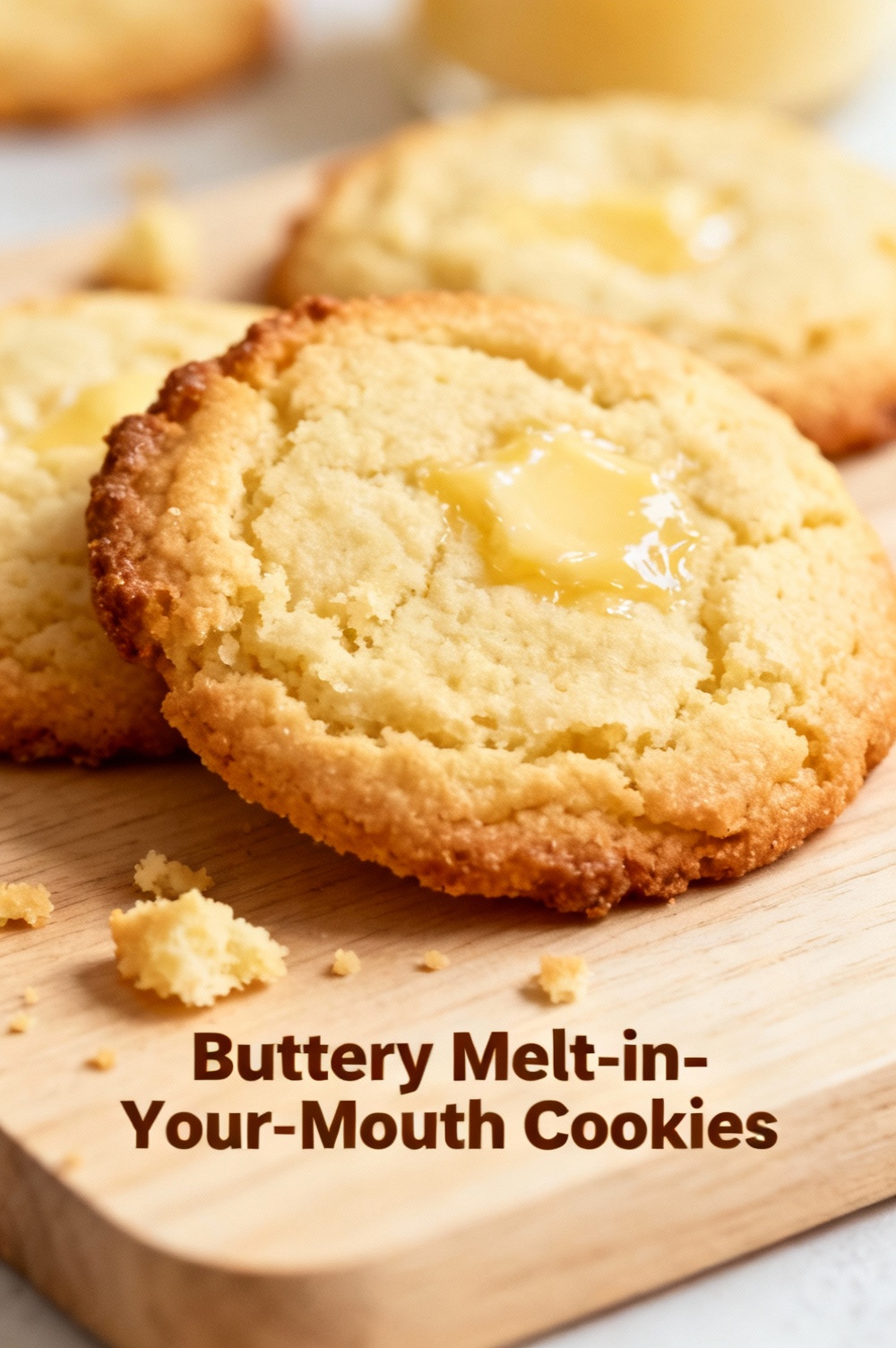
Tender, buttery cookies that practically dissolve — perfect with tea or coffee.
Ingredients
-
{% for item in ingredients %}
- {{ item }}
{% endfor %}
Instructions
-
{% for step in instructions %}
- {{ step }}
{% endfor %}
Nutrition Information
- Calories: 130 kcal
- Cholesterol: 20 mg
- Sodium: 45 mg
- Carbohydrates: 10 g
- Fiber: 0.2 g
- Sugar: 4 g
- Protein: 1 g