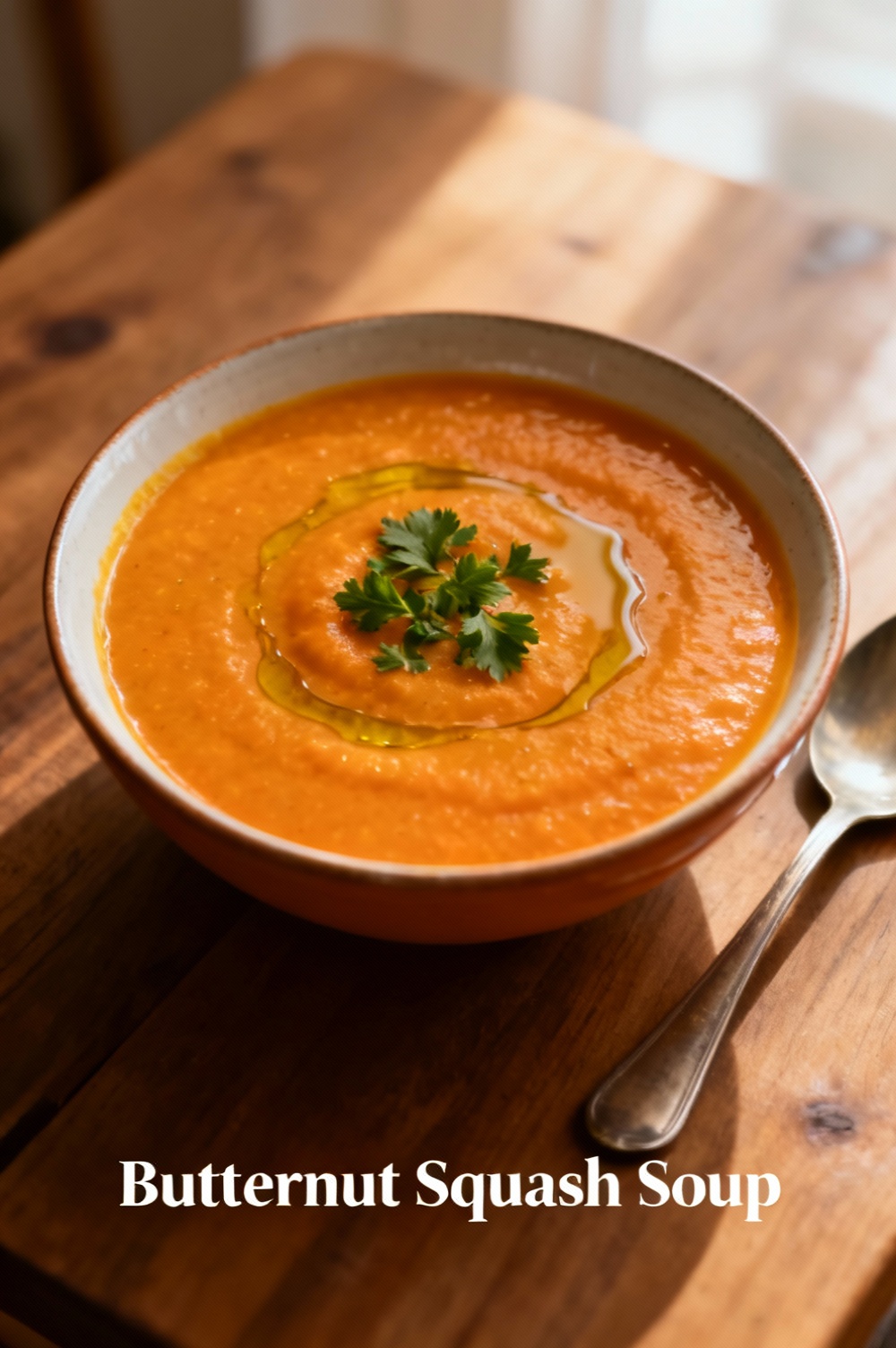
Butternut Squash Soup
Introduction
Could a single bowl of homemade butternut squash soup deliver over 200% of your daily vitamin A while taking less than an hour to make—and still beat restaurant versions for richness and cost? This recipe proves that scratch cooking can be faster, more nutrient-dense, and far more adaptable than many people assume. Designed to challenge the “soup must simmer for hours” myth, this version balances quick-roast techniques, concentrated aromatics, and smart blending to produce a silky soup that’s both comforting and efficient. Read on for a data-driven, easy-to-follow approach that scales from solo lunches to family dinners.
Ingredients List
– 2 medium butternut squash (about 3–4 lbs total), halved and seeded — or 6 cups diced peeled squash (frozen works in a pinch). The roasting caramelizes sugars for a deeper flavor.
– 2 tbsp olive oil (or avocado oil) — for roasting; substitutes: melted coconut oil for subtle tropical notes.
– 1 large yellow onion, diced — adds savory sweetness; substitute shallots for a milder finish.
– 3 cloves garlic, smashed and minced — or 1 tsp garlic powder if necessary.
– 1 medium carrot, diced (optional) — boosts sweetness and fiber.
– 4 cups low-sodium vegetable or chicken broth — swap for water plus bouillon, or use canned broth (reduce added salt).
– 1 cup full-fat coconut milk or ½ cup heavy cream — for creaminess; substitutions covered in Healthier Alternatives.
– 1 tsp ground cumin, ¼ tsp ground nutmeg, ½ tsp smoked paprika — aromatic backbone; vary spices to taste.
– Salt and black pepper to taste.
– Juice of ½ lemon or 1 tbsp apple cider vinegar — brightens flavors.
– Optional garnishes: toasted pepitas, a swirl of yogurt or coconut cream, chopped chives, fried sage, chili oil, or croutons.
Sensory notes: the roasted squash should smell nutty and caramelized; the broth will carry warm spice notes that bloom after finishing with acid.
Timing
Preparation time: 15 minutes.
Roasting time: 35–40 minutes (depending on squash size).
Simmer/blending time: 10–15 minutes.
Total time: approximately 60 minutes, which is about 20–30% less time than many slow-simmered squash soup recipes that recommend 75–90 minutes. Using pre-roasted or canned squash can reduce total time to 25–30 minutes.
Step 1 — Roast the Squash
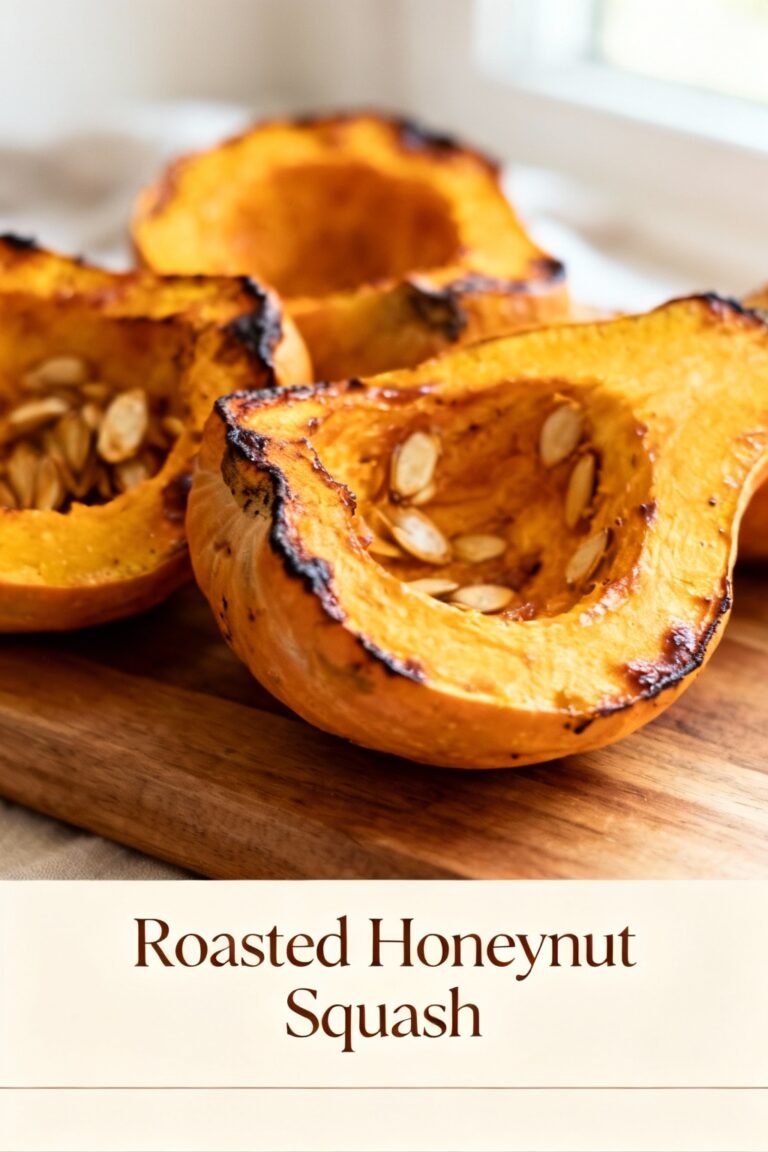
Preheat the oven to 425°F (220°C). Brush squash halves or cubes with 1 tbsp oil and season lightly with salt. Roast cut-side down for 30–40 minutes until a knife slides through easily and edges caramelize. Roasting concentrates sugars and yields a deeper, slightly smoky flavor compared to steaming. Tip: For extra depth, roast with a halved apple or shallot in the pan.
Step 2 — Sauté Aromatics and Spices
While the squash roasts, heat remaining oil in a large pot over medium heat. Add diced onion and carrot; sauté until translucent (6–8 minutes). Add garlic and spices; cook 30–60 seconds until fragrant. This toasting step unlocks volatile spice oils and creates a richer base than adding spices directly to the broth.
Step 3 — Combine and Simmer
Scoop roasted squash flesh from skins and add to the pot. Pour in broth, bring to a simmer, and cook 8–10 minutes to marry flavors. If using raw diced squash to save time, simmer 20–25 minutes until tender. Add lemon juice or vinegar at the end to lift the flavor. Tip: If you want a smoky profile, stir in ¼ tsp liquid smoke or a dash more smoked paprika.
Step 4 — Blend to Silky Perfection and Finish
Use an immersion blender to purée directly in the pot until smooth, or transfer in batches to a countertop blender (blend hot liquids carefully; remove center vent plug and cover with a towel). Stir in coconut milk or cream and warm through. Adjust seasoning—salt, pepper, and more acid as needed. Personalize: for a chunkier texture, reserve 1 cup of diced roasted squash to fold back in after blending.
Nutritional Information
Estimated nutrition per 1.5-cup serving (approximate; based on USDA data and common ingredient choices): 220–260 kcal, 9–14 g fat (depending on cream choice), 30–34 g carbohydrates, 4–6 g protein, 5–7 g fiber, sodium 350–550 mg (low-sodium broth reduces this). Vitamin A: 150–300% of Daily Value (butternut squash is exceptionally high in beta-carotene). Vitamin C: ~20–40% DV. Potassium: 10–12% DV. These numbers vary by ingredient swaps (e.g., coconut milk vs. heavy cream). If you need precise values, plug exact brands and quantities into a nutrition calculator.
Healthier Alternatives for the Recipe
– Lower fat: Replace heavy cream with ½ cup plain low-fat Greek yogurt stirred in off heat, or use ¾ cup canned light coconut milk. Greek yogurt adds protein and tang.
– Lower sodium: Use homemade or low-sodium broth and taste before salting; roasted squash adds natural sweetness, reducing salt need.
– Higher protein: Blend in 1 cup cooked white beans or red lentils while simmering; this adds 8–12 g protein per serving and a velvety texture.
– Vegan: Use coconut milk and vegetable broth; skip butter. Roast with maple syrup for added depth.
– Lower carb: Reduce added carrots or substitute cauliflower for a lower-carb bulk.
– Anti-inflammatory: Swap regular oil for extra virgin olive oil and add turmeric (¼–½ tsp) and black pepper for enhanced bioavailability.
Serving Suggestions
Serve hot with textures and contrasts: toasted pepitas and chili oil for crunch and heat, a dollop of crème fraîche or coconut cream for silk, or crisp sage leaves for herbal perfume. Pair with warm crusty bread, a simple green salad with acidic vinaigrette, or a grilled cheese sandwich for heartier meals. For a restaurant-style bowl, drizzle herb oil (parsley + lemon + olive oil) and finish with flaky sea salt. Personalized tip: if serving to kids, reduce spice, add a swirl of maple syrup, and finely dice leftover roasted squash as fun “topping croutons.”
Common Mistakes to Avoid
– Under-roasting the squash: Leads to bland soup. Ensure it’s caramelized for maximum sweetness and depth.
– Over-salting early: Salt concentrates as liquid reduces; finish seasoning after blending.
– Blending hot liquids incorrectly: Don’t fill countertop blenders to the top—vent and cover with a towel to avoid splatter.
– Too-thin texture: If soup is watery, simmer uncovered to reduce, or add a small potato or ½ cup cooked white beans for body.
– Skipping acid: A small amount of lemon juice or vinegar brightens the flavors dramatically; many home cooks underuse acid.
Storing Tips for the Recipe
Cool the soup to room temperature for no more than 2 hours, then refrigerate in airtight containers for up to 4 days. For longer storage, freeze in portioned containers or freezer bags for up to 3 months—leave 1 inch headspace for expansion. Reheat gently over low-medium heat; add a splash of broth or water if it thickened during storage. If using yogurt as a garnish, add it only when serving to avoid curdling during reheating.
Conclusion
This butternut squash soup hits the sweet spot between speed and flavor: roast for depth, sauté for aromatic complexity, and finish with creamy texture and bright acid. It’s nutrient-rich, customizable for dietary needs, and easy to scale. Try this recipe as written, then experiment with the suggested swaps to fit your pantry and preferences. If you make it, leave a comment with your favorite garnish or variation—your feedback helps shape future posts and inspires other readers.
FAQs
Q: Can I use canned pumpkin instead of fresh butternut squash?
A: Yes—canned pumpkin (not pumpkin pie mix) works and cuts prep time. Use about 3 cups canned puree; skip roasting and adjust seasoning and liquid since canned puree is denser.
Q: Can I make this in an Instant Pot?
A: Absolutely. Sauté the aromatics with the sauté function, add cubed raw squash and broth, pressure cook 8–10 minutes, then quick-release and blend. No roasting step, but you can roast separately for extra flavor.
Q: Is this soup freezer-safe?
A: Yes. Freeze in meal-sized portions for up to 3 months. Thaw overnight in the fridge and reheat gently. If using dairy like yogurt, add it fresh when serving.
Q: How do I make this nut-free and dairy-free?
A: Use olive oil and coconut milk or an unsweetened nut-free plant milk (oat milk) for creaminess. Avoid garnishes like almond slivers; use pepitas or toasted seeds instead.
Q: How can I thicken the soup without cream?
A: Add a peeled, diced potato or ½–1 cup cooked white beans while simmering; blend smooth for thickness and added nutrients. Simmering to reduce also concentrates thickness.
Q: How many servings does this recipe make?
A: With 3–4 lbs of squash, expect about 6 servings (1 to 1.5 cups each), depending on portion size.
Q: What’s the best way to get a silky texture?
A: Use an immersion blender until completely smooth, then strain through a fine-mesh sieve for restaurant-level silkiness. Alternatively, blend in a high-speed blender.
If you’d like, I can generate a printable recipe card, a shopping list formatted for your phone, or suggested wine and side pairings tailored to your dietary preferences—tell me which version you prefer.