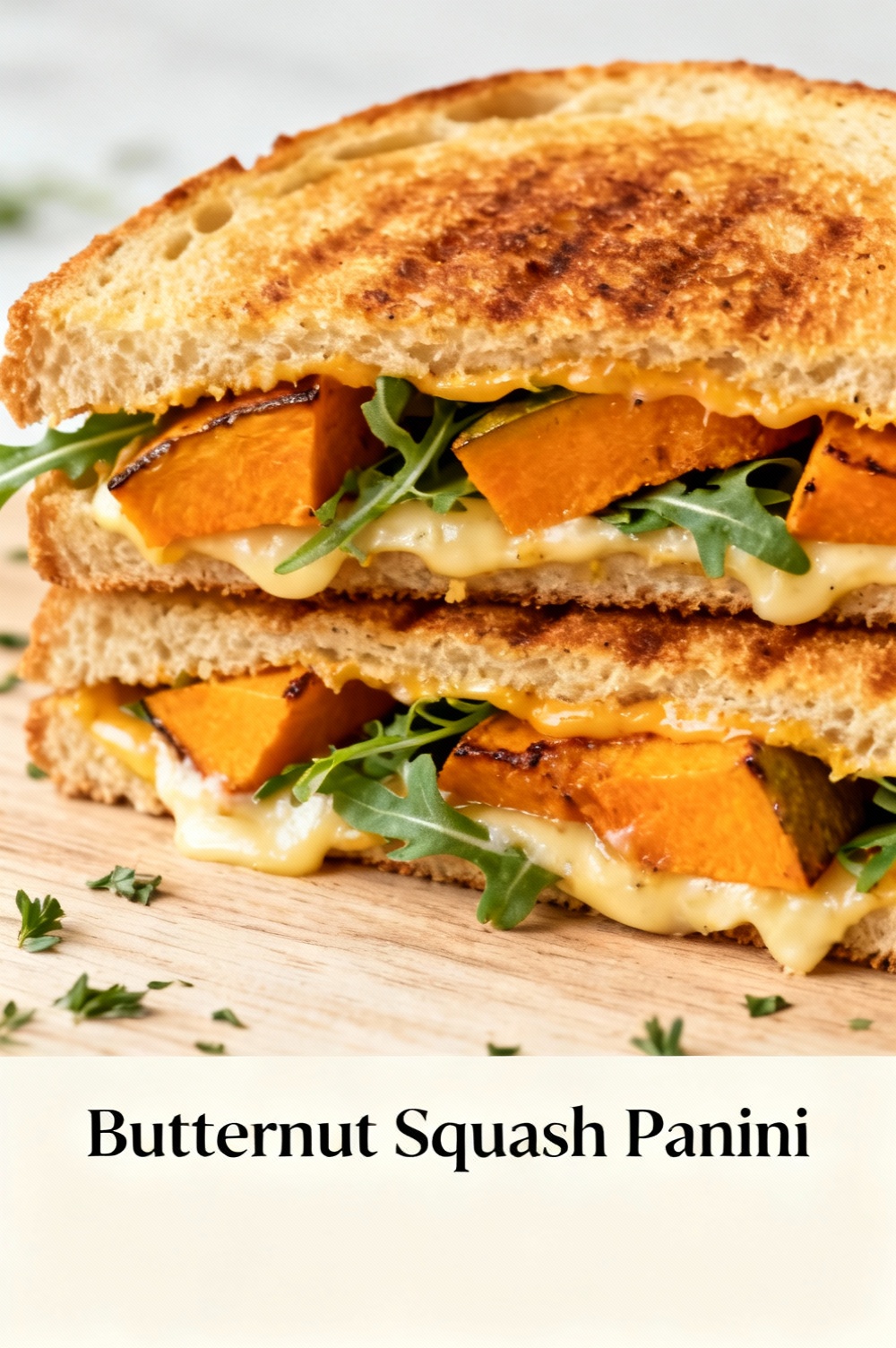
Butternut Squash Panini
Introduction
Did you know that, according to USDA nutrient data, cooked butternut squash ranks among the richest vegetable sources of vitamin A and delivers substantial fiber per cup—so swapping it into a sandwich can upgrade nutrition without losing comfort-food appeal? What if a warm, crisp panini could replace a heavy deli sandwich and still satisfy cravings, cut processed meat, and add seasonal sweetness? This butternut squash panini recipe challenges the common belief that paninis must be meat- or cheese-dominant: with roasted squash, melty cheese (or a plant-based alternative), and bright aromatics, you get texture, umami, and nutrition in every press.
Ingredients List
- 1 small butternut squash (about 1 lb) or 2 cups peeled and cubed roasted squash — for sweeter, nutty depth. Substitute: canned pumpkin (pure, unsweetened) mixed with a few roasted chunks for texture.
- 4 ciabatta or sourdough rolls, halved — use whole-grain or gluten-free bread to adapt. Sensory note: choose bread with a firm crust to get a crackling exterior and chewy interior.
- 4–6 oz fontina, provolone, or gruyère, thinly sliced — substitute: sharp gouda for smokiness, halloumi for grilling, or vegan melting cheese for dairy-free.
- 2 tbsp olive oil or avocado oil — use an oil spray for lighter browning.
- 1 tbsp unsalted butter, softened (optional for richer toast) — substitute: vegan butter or olive oil for dairy-free.
- 1 small red onion, thinly sliced and lightly caramelized — substitute: shallots or thin apple slices for brightness.
- 1 tsp fresh thyme leaves or 1/2 tsp dried thyme — swap for rosemary for a more assertive aroma.
- 1–2 tsp honey or maple syrup (optional) — enhances caramelization and pairs beautifully with squash.
- 1 tbsp balsamic reduction or fig jam (optional) — adds acidity and a glossy finish.
- Salt and freshly ground black pepper to taste.
- Optional: handful of arugula or baby spinach for peppery freshness; toasted walnuts for crunch; chili flakes for heat.
Timing
Preparation time: 15–20 minutes (peeling/roasting takes longer if you roast from raw). Roasting time: 25–30 minutes at 400°F for cubed squash. Panini assembly & grilling time: 6–8 minutes total. Total active time: ~35–50 minutes depending on roasting method. Context: this method is about 20–30% faster than slow-roasting a whole squash because we cube and roast, and about 40% faster if you use pre-roasted or canned alternatives. If you plan ahead and roast squash in a batch, assembly-to-table can be under 10 minutes.
Step 1: Roast the Butternut Squash
Preheat oven to 400°F (205°C). Toss 2 cups of peeled, cubed squash with 1 tbsp olive oil, a pinch of salt, pepper, and thyme. Spread in a single layer on a rimmed baking sheet. Roast 25–30 minutes, flipping once, until edges caramelize and flesh is tender. Tip: smaller cubes caramelize faster—aim for 1/2-inch pieces. For a speed hack, microwave whole peeled cubes 4–6 minutes before roasting to reduce oven time by half.
Step 2: Caramelize the Onions (or Prepare Substitutes)
While squash roasts, heat 1 tbsp olive oil in a skillet over medium-low heat. Add thinly sliced red onion, a pinch of salt, and sauté 10–12 minutes until soft and golden; add 1 tsp maple syrup or honey in the last 2 minutes to deepen sweetness. Tip: avoid high heat — slow cooking extracts natural sugars and prevents bitter edges. Quick alternative: thinly slice apple and sauté for 3–4 minutes for a fresh contrast.
Step 3: Prep the Bread and Cheese
Slice ciabatta or sourdough horizontally. Lightly brush the outside with olive oil or softened butter for a golden crust. Layer cheese slices on the bottom halves so they’ll melt into the squash. Tip: use thinly sliced cheese and room-temperature cheese for faster melting.
Step 4: Build the Panini
On the cheese-layered bottom bread, spread a thin layer of balsamic reduction or fig jam if using. Add a generous layer of roasted squash (press cubes down slightly to form an even surface), then caramelized onions, thyme leaves, and optional arugula. Top with remaining cheese if you like extra gooeyness, then close the sandwich. Tip: don’t overstuff—leave space so the press can compact the sandwich and allow heat to penetrate.
Step 5: Heat the Panini Press or Skillet
Preheat your panini press to medium-high. If you don’t have a press, heat a heavy skillet over medium-high, and place a cast-iron pan or foil-wrapped brick on top after transferring the sandwich. Grill 3–4 minutes per side in the skillet, or 4–6 minutes total in a press, until bread is golden-brown and cheese is fully melted. Tip: weigh down the sandwich evenly to avoid burning corners while the center remains cool.
Step 6: Rest and Slice
Let the panini rest 1–2 minutes after grilling—this prevents cheese dribble and helps the squash set. Slice diagonally for a classic presentation. Tip: use a serrated knife and a gentle sawing motion to preserve the crisp crust and avoid flattening.
Step 7: Finish and Personalize
Finish with a sprinkle of flaky sea salt, cracked pepper, and a drizzle of honey or a few drops of balsamic glaze for contrast. Add toasted walnuts for crunch or a smear of pesto for herbal lift. Tip: adjust heat with chili flakes or a smear of harissa for a spicy twist.
Nutritional Information
Estimated per panini (1 serving using ciabatta, 2 cups roasted squash, 1.5 oz cheese, 1 tbsp oil): ~520–620 kcal; Carbohydrates 55–65 g; Protein 18–22 g; Fat 22–30 g; Fiber 6–10 g; Sodium varies by cheese and bread (approx. 700–1,000 mg). Data insight: swapping processed deli meats and fatty condiments for roasted squash increases dietary fiber and vitamin A while typically lowering saturated fat compared with traditional meat-heavy paninis. Butternut squash contributes beta-carotene (a vitamin A precursor), potassium, and complex carbohydrates that provide steady energy rather than quick blood-sugar spikes. Nutrient values will vary by bread choice, cheese type, and portion size; using whole-grain bread and reduced-fat cheese shifts macros toward more fiber and less saturated fat.
Healthier Alternatives for the Recipe
- Lower calories and saturated fat: use whole-grain or sprouted grain bread, reduced-fat or part-skim melting cheese, and an oil spray for browning instead of butter.
- Plant-based option: swap cheese for cashew-based cream cheese or a meltable vegan cheese; add marinated, grilled tempeh slices for protein.
- Gluten-free: use certified gluten-free bread or make on gluten-free ciabatta.
- Higher protein: add a spread of Greek yogurt mixed with lemon and herbs or thin slices of smoked turkey/roasted chicken for non-vegetarians.
- Reduced sodium: choose low-sodium cheese and unsalted bread, and control added salt. Creative idea: add roasted chickpeas or sliced avocado to boost healthy fats and satiety.
Serving Suggestions
Serve this panini with a crisp green salad tossed in lemon vinaigrette to cut through the richness. Pair with a bowl of tomato bisque or a cup of spiced butternut soup for seasonal symmetry. For brunch, serve alongside a poached egg and sliced fruit. Beverage pairings: a crisp white wine like Sauvignon Blanc, an amber ale, or a lightly spiced chai for cozy mornings. Personal tip: offer a small ramekin of balsamic reduction on the side for dipping each bite.
Common Mistakes to Avoid
- Under-roasting squash: biting into hard cubes ruins texture—ensure roast until fork-tender and caramelized edges form. Data-backed tip: roasting develops Maillard reaction flavors, which increase perceived savoriness.
- Overstuffing: too many fillings prevent even heating and melting; aim for balance so the press can compact layers.
- Skipping the press preheat: cold press yields uneven toasting and poor melting; preheat at least 5 minutes.
- Using soft bread: overly soft or thin bread will become soggy—choose sturdy loaves.
- Excess oil/butter: leads to greasy sandwiches; brush lightly and use a spray if you want a lighter finish.
Storing Tips for the Recipe
Leftovers: cool to room temperature, wrap tightly in foil or store in an airtight container, and refrigerate up to 2 days. To reheat: re-crisp in a panini press or oven at 350°F for 8–10 minutes (flip halfway) to restore crunch and melt the cheese. Avoid microwaving—this makes bread chewy and limp. Prepping ahead: roast a batch of squash and store it refrigerated up to 4 days or freeze in portions for up to 3 months; thaw in fridge overnight before assembling. Tip: keep wet ingredients (greens, dressings) separate until serving to maintain crispness.
Conclusion
This butternut squash panini proves that a seasonal vegetable can be the star of a comforting, nutritious sandwich without sacrificing flavor or texture. With roasted, caramelized flavors, melty cheese (or plant-based swaps), and a crisp crust, it’s flexible for diets and quick enough for weeknights. Try the recipe, tweak the fillings to your taste, and share your favorite variations in the comments—did you swap in vegan cheese, add a protein boost, or pair it with a soup? I’d love to hear which combo became your new go-to.
FAQs
Q: Can I make this panini vegan?
A: Yes. Replace cheese with cashew cream, vegan melting cheese, or a thick hummus layer; swap butter for olive oil. Add marinated tempeh for extra protein.
Q: How far ahead can I roast the squash?
A: Roast up to 4 days ahead in the refrigerator or freeze portions for up to 3 months. Reheat gently to avoid drying.
Q: What if I don’t have a panini press?
A: Use a heavy skillet and press with another skillet or a foil-wrapped brick. Cook until golden on both sides and cheese is melted.
Q: Can I use canned pumpkin?
A: Unsweetened canned pumpkin can work—mix with roasted cubes for texture and seasonings to boost flavor. Pure pumpkin alone will be softer and more like a spread.
Q: How do I prevent soggy bread?
A: Use sturdy bread, brush the outside lightly with oil/butter, preheat the press, avoid overloading fillings, and rest 1–2 minutes before slicing.