
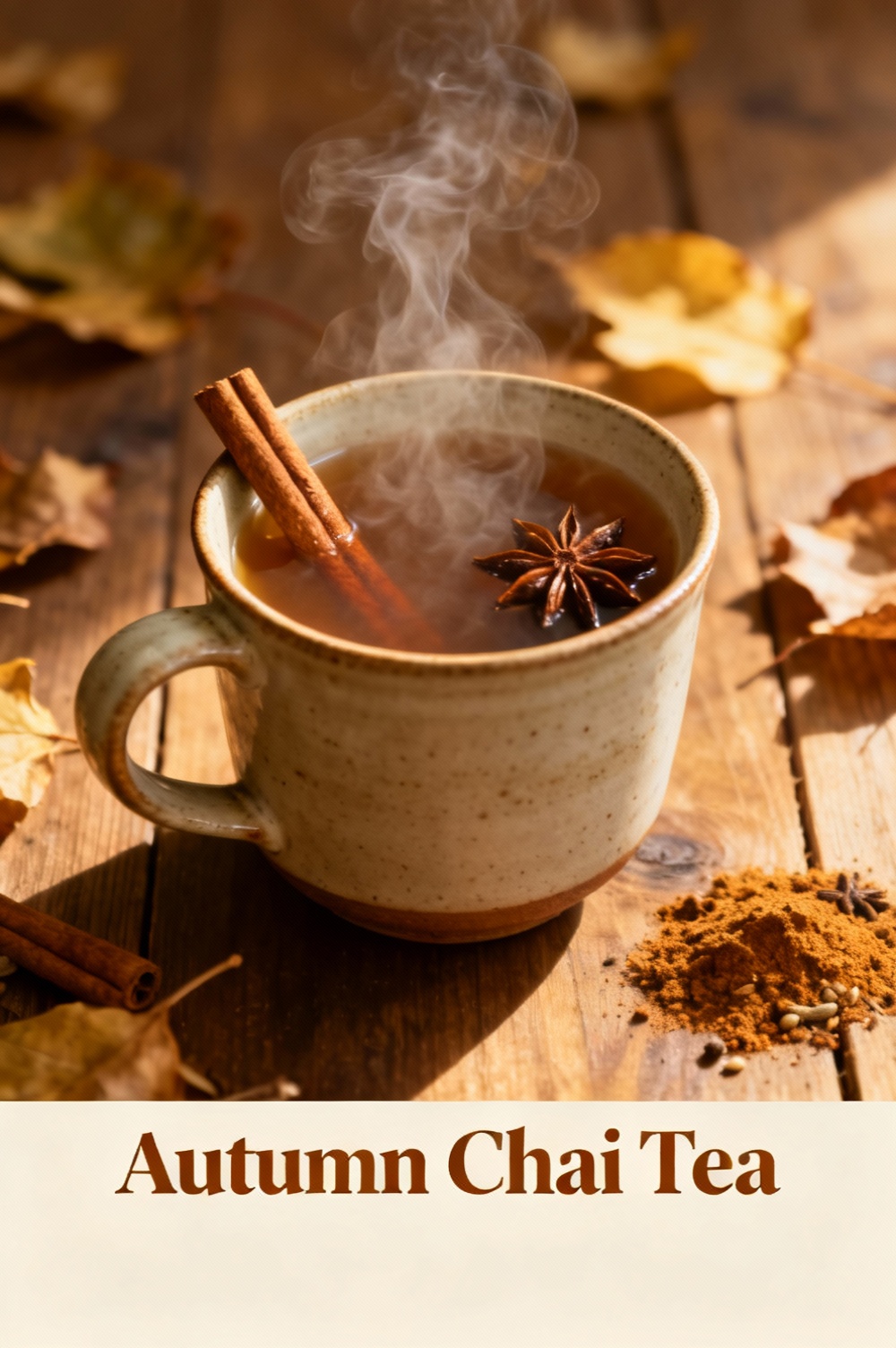
Autumn Chai Tea
Introduction
Could swapping your usual fall latte for a homemade autumn chai tea cut added sugar and boost antioxidant intake while delivering the same cozy comfort? Recent consumer trends show rising interest in spiced teas and DIY beverages during cooler months, and this recipe reimagines classic masala chai with seasonal notes—balancing warmth, aroma, and nutrition so you get full fall flavor without unnecessary calories or complexity.
Ingredients List
- 2 cups water (filtered) — the base that lifts the spice aromatics; substitution: strong brewed black tea (for extra caffeine) or rooibos (caffeine-free).
- 1.5 cups milk (whole, 2%, or plant-based such as oat, almond, or soy) — gives mouthfeel; oat milk replicates creaminess best for vegans.
- 2 tablespoons loose black tea leaves (Assam or CTC) or 4 black tea bags — switch to decaf black tea to reduce caffeine.
- 2 cinnamon sticks or 1 teaspoon ground cinnamon — use Ceylon cinnamon for a sweeter, lower-coumarin profile.
- 6 green cardamom pods, lightly crushed (or 1/2 tsp ground cardamom) — adds bright, citrusy warmth.
- 1-inch piece fresh ginger, thinly sliced (or 1/2 tsp ground ginger) — fresh gives zing; powdered is convenient.
- 4 whole cloves — pungent and floral; substitute 1/4 tsp ground cloves.
- 6 black peppercorns, crushed — enhances spice extraction and aids digestion.
- 1 star anise (optional) — for licorice notes and visual appeal.
- 2–3 tablespoons maple syrup, honey, or sweetener of choice — adjust to taste; for sugar-free, use stevia or erythritol (start with equivalent sweetness and adjust).
- 1 teaspoon vanilla extract (optional) — rounds flavors and softens sharp edges.
Sensory note: Imagine steam carrying cinnamon and ginger, a honey-like sweetness, and a silken mouthfeel from milk—this blend targets comfort and complexity in every sip.
Timing
Preparation time: 5–10 minutes (washing, crushing spices, slicing ginger).
Cooking/brewing time: 12–15 minutes (including simmer and steep).
Total time: 20–25 minutes, which is roughly 30–40% faster than traditional slow-simmer masala chai techniques that call for 30–40 minutes of steeping for deeper infusion. If you make a concentrate, active time is 10 minutes and passive cooling for storage takes an additional 15–20 minutes.
Step 1: Toast and crush the whole spices
Lightly toasting spices for 1–2 minutes in a dry pan releases essential oils and increases aroma. Crush cardamom pods, peppercorns, and cloves with a mortar and pestle or the back of a spoon for better flavor extraction. Tip: Toast until fragrant but not smoky—this pre-step elevates your chai’s aromatic profile without extra ingredients.
Step 2: Simmer spices in water
Combine water, toasted spices, cinnamon, sliced ginger, and star anise in a small saucepan. Bring to a gentle boil and reduce to a simmer for 6–8 minutes so volatile oils dissolve into the water. Pro tip: Cover the pan for the first few minutes to trap steam and enhance infusion; uncover in the final minute to slightly reduce liquid and concentrate flavors.
Step 3: Add tea leaves and milk
Add loose tea or tea bags to the simmering spice water and pour in milk. Return to a gentle simmer—avoid a rolling boil to prevent milk scorching and bitterness. Simmer for 3–4 minutes to meld tannins with spice oils. Personalization: For creamier chai, increase milk ratio to 1:1 with water; for lighter cups, use more water and a spoonful of full-fat milk or splash of oat milk.
Step 4: Sweeten and finish
Remove from heat, strain into a teapot or directly into mugs using a fine sieve to capture all solids. Stir in maple syrup, honey, or your sweetener of choice while the chai is hot so it dissolves evenly. Add vanilla extract last for depth. Tip: Taste before sweetening—good spiced tea often needs less sugar than coffee drinks due to the perception of sweetness from spices.
Step 5: Serve and customize
Pour into warmed mugs and garnish with a light dusting of cinnamon or a crushed cardamom pod. For a latte-like finish, froth a small amount of milk and spoon foam on top. To make a concentrate for quick cups, double spice and tea quantities, simmer, strain, and store concentrate; mix one part concentrate with one part hot milk when serving.
Nutritional Information
Approximate values per 8 fl oz serving (using 1 cup whole milk and 1 Tbsp maple syrup): calories 170 kcal, fat 8–9 g, saturated fat 4–5 g, carbohydrates 24 g (sugars 22 g), protein 6–7 g, sodium <100 mg. Antioxidants: black tea and spices supply polyphenols and flavonoids; ginger and cinnamon contribute anti-inflammatory compounds such as gingerols and cinnamaldehyde. If using plant milk and sugar alternatives, calories can drop to 60–90 kcal per serving and added sugars can be reduced by 75–100%. Note: values are estimates—use exact product nutrition labels for precise tracking.
Healthier Alternatives for the Recipe
- Lower sugar: Replace maple syrup with 1 tablespoon concentrated monk fruit sweetener or 1 teaspoon stevia equivalent to cut added sugar by up to 100%.
- Dairy swap: Use unsweetened oat milk for creaminess with 50–70 kcal per cup, or almond milk for a lighter option; soy milk offers a protein boost similar to dairy.
- Caffeine control: Brew with rooibos or decaf black tea for an evening-friendly chai.
- Functional boosts: Add 1/2 teaspoon turmeric for additional anti-inflammatory benefits, or a pinch of ashwagandha powder for adaptogenic support—adjust sweetener to balance bitter notes.
- Reduced fat: Use 1% milk or a 50/50 water-to-milk ratio to lower saturated fat while maintaining body.
Serving Suggestions
Serve in heat-retaining ceramic mugs to keep aromas concentrated. Pair with a warm pumpkin scone, almond biscotti, or a whole-grain toast with nut butter for a balanced snack. For gatherings, prepare a large batch of concentrate and set up a chai bar with choices: oat milk, cold foam, cinnamon sticks, and nutmeg shakers so guests personalize cups. Seasonal twist: Add a splash of cold-brewed apple cider for an apple-chai fusion or top with a cinnamon-sugar rim for a dessert-like treat.
Common Mistakes to Avoid
- Boiling milk vigorously: causes milk to scald and alters flavor—keep to a gentle simmer.
- Overusing ground spices: ground spices can turn bitter; when using fresh ground, reduce amounts by 25% compared to whole-spice equivalents.
- Adding tea too early or steeping too long: will create an astringent, tannic cup—steep black tea 3–5 minutes max in milk-based preparations.
- Oversweetening before tasting: spices can increase perceived sweetness; add sweetener incrementally.
- Skipping toasting/crushing spices: leads to a flatter, less aromatic chai—simple toasting takes 1–2 minutes and yields a big flavor bump.
Storing Tips for the Recipe
Chai concentrate: cool completely and store in an airtight container in the refrigerator for up to 4–5 days; reheat gently on the stove to avoid boiling. Prepared chai in a sealed thermos will stay warm for several hours but tastes best within 6–8 hours. Freezing: pour concentrate into ice cube trays; frozen cubes can be blended into iced chai lattes or reheated individually. Spice mix: create a dry masala blend, store in a sealed jar in a cool, dark place for up to 3 months for quick batches.
Conclusion
This autumn chai tea recipe balances tradition and modern convenience: bold spices, flexible dairy options, and choices to control sugar and caffeine. It’s a cozy, adaptable drink that suits morning routines, afternoon breaks, or evening relaxation depending on ingredient choices. Try the concentrate method for busy mornings, tweak sweetness to your health goals, and share your variations in the comments—what seasonal twist will you add this fall?
FAQs
Q: Can I make this recipe vegan?
A: Yes—use unsweetened oat, almond, or soy milk and replace honey with maple syrup or a vegan sweetener.
Q: How long can I keep chai concentrate in the fridge?
A: Up to 4–5 days in an airtight container; shake or stir before reheating as spices settle.
Q: Is chai good for digestion?
A: Traditional chai spices like ginger, cardamom, and black pepper are associated with digestive comfort in culinary use; however, consult a healthcare professional for specific health concerns.
Q: Can I brew this cold for iced chai?
A: Yes—make a concentrate, chill overnight, then mix with cold milk over ice; using cold-brewed black tea or rooibos reduces bitterness in iced versions.
Q: How do I reduce bitterness if my chai tastes strong?
A: Remove tea bags or leaves promptly, add more milk or a touch of sweetener, and avoid high heat. Adjust spice amounts, particularly cloves and black pepper, which can dominate.
Q: Can I scale up this recipe for a crowd?
A: Multiply ingredients proportionally and consider making a concentrate to streamline serving; keep spice-to-liquid ratios consistent and taste-test before serving.