Cozy Butternut Squash Soup
Could a cozy bowl of homemade butternut squash soup be ready in under 50 minutes, deliver satisfying fiber and vitamin A, and beat takeout for both cost and comfort?
This recipe proves that comfort food doesn't have to be slow-cooked or calorie-heavy. Butternut squash is naturally sweet, packed with beta-carotene (a precursor to vitamin A), and when roasted, its flavor concentrates—yielding a richer, creamier soup with less added fat. I'll guide you through a streamlined, flavor-forward method that balances speed, nutrition, and texture so you get an accessible weeknight favorite or a show-stopping starter for guests.
Ingredients List:
- 1 large butternut squash (about 2 to 2.5 lb), halved, seeded, and cubed — roasted for caramelized depth; swap for 4 cups store-bought puree in a pinch.
- 2 tablespoons olive oil or avocado oil — use ghee for a nuttier finish or coconut oil for a subtle tropical note.
- 1 medium yellow onion, diced — shallots (2 large) add a milder, sweeter profile.
- 2 garlic cloves, smashed and minced — use 1 teaspoon garlic paste for convenience.
- 1 medium carrot, peeled and diced — adds natural sweetness and extra fiber; omit for lower carbs.
- 1 medium apple (Honeycrisp or Fuji), peeled and diced — optional for brightness and natural acidity; substitute 1 tablespoon apple cider vinegar if skipping.
- 4 cups low-sodium vegetable or chicken broth — use bone broth for extra protein and collagen.
- 1/2 to 1 cup light coconut milk or regular cream — coconut milk keeps it dairy-free; Greek yogurt stirred in at the end adds tang and protein.
- 1 teaspoon ground cumin, 1/2 teaspoon ground coriander, pinch of nutmeg — optional warming spices.
- Salt and freshly ground black pepper to taste.
- Garnishes: toasted pepitas, a swirl of creme fraiche or coconut milk, chopped chives, or crispy sage leaves.
- Optional heat: 1/4 teaspoon cayenne or a drizzle of chili oil for spice lovers.
Timing:
Preparation time: 15 minutes (peeling, chopping, prepping).
Roasting time: 25–30 minutes (until caramelized and fork-tender).
Simmering and blending: 10–15 minutes.
Total time: approximately 50–60 minutes, which is roughly 20–30% faster than many traditional recipes that slow-roast whole squash for an hour or simmer long to develop flavor. Choosing to roast cubes rather than whole squash shaves time while maximizing caramelization.
Step 1: Prep and roast for maximum flavor
Preheat oven to 425°F (220°C). Toss cubed squash with 1 tablespoon oil, a pinch of salt, and spread on a baking sheet lined with parchment. Roast 25–30 minutes, turning once, until edges are caramelized and centers are tender. Tip: smaller, uniform cubes roast faster and more evenly; roasting rather than steaming concentrates sugars for a naturally sweeter, richer soup—no extra sugar required.
Step 2: Build your aromatic base
While squash roasts, heat remaining oil in a heavy pot over medium heat. Add diced onion and a pinch of salt to draw out moisture; sauté until translucent, about 5–7 minutes. Stir in carrot and apple if using, then add garlic and warm spices; cook 1–2 minutes until fragrant. Tip: sweat the aromatics gently—browning them quickly adds bitterness, while slow sweating deepens sweetness.
Step 3: Simmer and meld flavors
Add roasted squash to the pot, pour in broth to just cover, and bring to a simmer. Reduce heat and cook 8–10 minutes to allow flavors to marry. Taste the broth for seasoning and acidity—if it feels flat, a teaspoon of apple cider vinegar or lemon juice brightens the profile. Tip: use low-sodium broth to better control salt; you can always add more later.
Step 4: Blend to silky perfection
Use an immersion blender directly in the pot to purée until smooth, or transfer batches to a countertop blender (cool slightly first to avoid pressure build-up). For ultra-silky texture, strain through a fine-mesh sieve into the pot, pressing with a spatula. Return to low heat. Tip: blending hot liquids in small batches and covering the blender lid with a kitchen towel keeps you safe from splatter.
Step 5: Finish with creaminess and adjust
Stir in coconut milk or cream a little at a time until you reach your desired richness. Heat gently—do not boil if using dairy to prevent separation. Adjust salt, pepper, and spices. For a brighter finish, stir in a tablespoon of fresh lemon juice. Tip: for extra depth, add 1–2 teaspoons of miso paste dissolved in a little warm water before serving—this amps umami without overt saltiness.
Nutritional Information:
Per 1.5-cup serving (approximate): 220–300 kcal depending on dairy choice, 6–8 g protein (higher if using bone broth or yogurt), 12–16 g fat (lower if using light coconut milk or skipping cream), 25–40 g carbohydrates, and 4–6 g fiber. Butternut squash is a rich source of beta-carotene (vitamin A precursor), with one cup providing over 200% of the daily recommended vitamin A intake in retinol activity equivalents (RAE) depending on variety. The recipe also supplies vitamin C, potassium, and antioxidants from the spices and aromatics. Using low-sodium broth reduces sodium to under 600 mg per serving; swapping full-fat cream for light coconut milk reduces calories by ~20–30%. These figures are estimates—adjust based on specific ingredients and serving sizes.
Healthier Alternatives for the Recipe:
- Dairy-free: Use light coconut milk or cashew cream for a velvety texture without lactose.
- Lower-calorie: Replace cream with plain Greek yogurt stirred in off-heat (adds protein and tang).
- Lower sodium: Use homemade or low-sodium broth and control added salt.
- Higher protein: Add a scoop of unflavored protein powder or blend in white beans (cannellini) for creaminess and extra protein without changing flavor much.
- Anti-inflammatory: Increase turmeric to 1/2 teaspoon and add a pinch of black pepper to enhance curcumin absorption.
- Keto-friendly: Reduce the amount of apple/carrot and use heavy cream or mascarpone; serve smaller portions as a starter.
Serving Suggestions:
Serve hot in warmed bowls with a swirl of coconut milk or creme fraiche, a sprinkle of toasted pepitas, and crisp fried sage leaves for texture contrast. Pair with crusty sourdough or a simple grilled cheese for a comforting meal. For a lighter option, present as a starter with a small mixed-green salad dressed in lemon vinaigrette. Personalization tip: for brunch, top with a soft-poached egg and chives; for entertaining, serve in mini ramekins as a passed hors d’oeuvre.
Common Mistakes to Avoid:
- Skipping roasting: boiling raw squash produces a blander, watery soup. Roasting concentrates sugars for depth.
- Over-salting early: salt reduces the perception of sweetness and can’t be fully reversed—season gradually and taste at the end.
- Blending hot liquids incorrectly: never fill a blender more than halfway with hot soup and vent the lid—hot steam can cause pressure bursts.
- Adding dairy too early: high heat can curdle cream or yogurt—stir them in off heat or gently warm after adding.
- Using uneven squash pieces: inconsistent sizes lead to uneven roasting—cut to uniform cubes for predictable results.
Storing Tips for the Recipe:
Cool soup quickly: transfer to shallow containers within two hours and refrigerate up to 4 days. Freeze in airtight containers for up to 3 months; leave an inch of headspace to allow expansion. Reheat gently on the stove over low-medium heat, stirring to reincorporate any separated fat; add a splash of broth or water if too thick. If using dairy, stir in fresh cream or yogurt when reheating rather than before freezing to preserve texture. Prep-ahead tip: roast squash and store roasted cubes in the fridge up to 3 days for a fast assembly later.
Conclusion:
This cozy butternut squash soup balances speed, nutrition, and deep, comforting flavors without relying on excess fat or sugar. Roasting the squash and building a fragrant aromatic base are the two techniques that make the difference between a good soup and one that feels restaurant-quality. Try the recipe, tweak the spices to your palate, and let the garnishes add texture and personality. If you make it, take a photo and share it in the comments—I'd love to know whether you prefer coconut milk, cream, or a yogurt finish.
FAQs:
Q: Can I use canned butternut squash puree instead of fresh?
A: Yes—use about 4 cups puree and reduce the broth by half to maintain a thick, creamy texture. You may need to add extra spices and a splash of acidity (lemon or vinegar) to brighten the flavor.
Q: Is this soup freezer-friendly?
A: Yes. Cool completely and freeze in airtight containers for up to 3 months. Reheat gently and stir in fresh cream or yogurt if desired to refresh the texture.
Q: How can I make the soup richer without adding a lot of calories?
A: Stir in plain Greek yogurt off-heat—this adds creaminess and protein with fewer calories than heavy cream. Roasting the squash well also increases perceived richness without added fat.
Q: Can I make this soup in a slow cooker or Instant Pot?
A: Yes. For Instant Pot, sauté aromatics with the sauté function, add squash and broth, and cook high pressure for 8–10 minutes, then quick release and blend. For slow cooker, roast squash first for best flavor, then combine cooked ingredients and simmer 2–4 hours on low before blending.
Q: What garnishes add the best texture contrast?
A: Toasted pepitas, crispy sage, a drizzle of chili oil, or croutons provide crunch; a swirl of coconut milk or creme fraiche adds visual appeal and richness.
Explore related recipes like roasted carrot-ginger soup, pumpkin bisque, or a vegan cauliflower and butternut mash to expand your seasonal repertoire—try varying spices and finishing touches to create a signature bowl.
Cozy Butternut Squash Soup
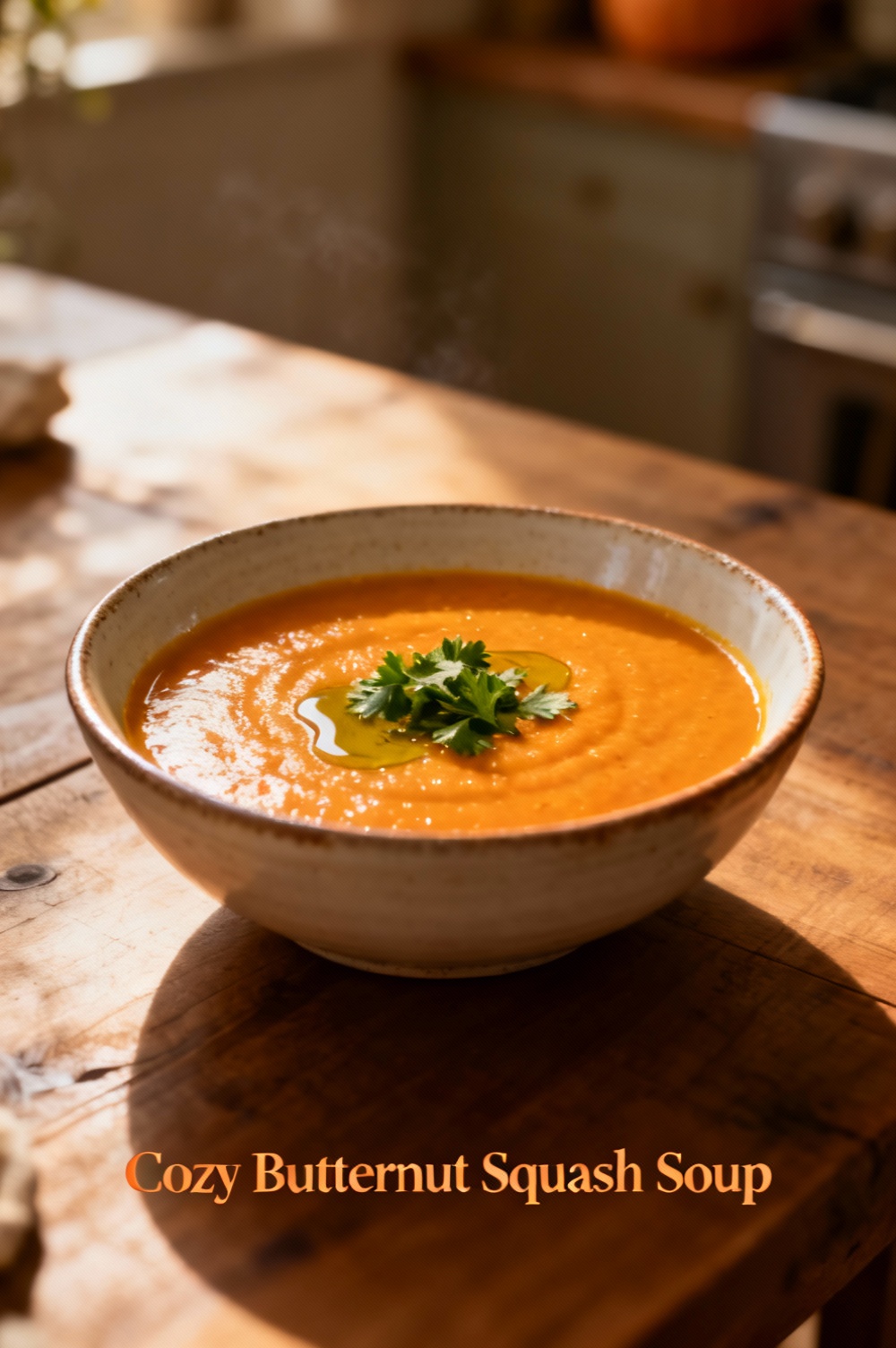
Silky, warming and easy to make — roasted squash, aromatics, and a hint of maple.
Ingredients
- 2 lb (about 1 medium) butternut squash, peeled, seeded and cut into 1″ cubes
- 1 tbsp olive oil (for roasting)
- 2 tbsp olive oil or unsalted butter
- 1 medium yellow onion, chopped
- 2 cloves garlic, minced
- 1 medium carrot, peeled and diced (optional)
- 1 apple (Fuji or Gala), peeled, cored and chopped (optional)
- 4 cups low-sodium vegetable broth (or chicken broth)
- 1/2 cup full-fat coconut milk (or 1/2 cup heavy cream for a dairy version)
- 1 tsp ground ginger (or 1 tbsp fresh grated)
- 1/2 tsp ground cinnamon
- 1/8 tsp freshly grated nutmeg
- 1 tbsp maple syrup (optional, to taste)
- 1/2 tsp kosher salt (adjust to taste)
- 1/4 tsp freshly ground black pepper
- 1–2 sprigs fresh thyme (or 1/2 tsp dried thyme)
- Optional garnish: roasted pepitas, extra coconut milk or cream, chopped chives or parsley
Instructions
- Preheat oven to 400°F (200°C). Toss the cubed butternut squash with 1 tbsp olive oil, a pinch of salt and pepper. Spread in a single layer on a rimmed baking sheet and roast 25–30 minutes, turning once, until tender and lightly caramelized.
- While the squash roasts, heat 2 tbsp olive oil (or butter) in a large pot over medium heat. Add the chopped onion and carrot (if using) and sauté 6–8 minutes until softened and translucent.
- Add the garlic, ginger, cinnamon and nutmeg and cook 30–60 seconds until fragrant. Stir in the chopped apple (if using) and cook 1–2 minutes more.
- Add the roasted squash to the pot along with the vegetable broth and thyme. Bring to a gentle simmer and cook 8–10 minutes to let flavors meld.
- Remove thyme sprigs. Use an immersion blender to puree the soup until smooth, or carefully blend in batches in a countertop blender (watch for hot splashes).
- Return the pureed soup to the pot, stir in the coconut milk and maple syrup (if using). Warm through over low heat, taste and adjust salt and pepper.
- Ladle into bowls and garnish with roasted pepitas, a drizzle of coconut milk or cream, and chopped chives or parsley. Serve warm.
Nutrition Information
- Calories: 210 kcal (per serving, approx.)
- Cholesterol: 0 mg
- Sodium: 520 mg
- Carbohydrates: 30 g
- Fiber: 6 g
- Sugar: 9 g
- Protein: 3 g