Classic Buttery Herb Stuffing
Could a classic buttery herb stuffing—built from simple bread, butter, and fresh herbs—be the single most comforting holiday side while still being customizable to fit modern health goals?
This recipe answers that question with data-backed choices and culinary technique. Classic buttery herb stuffing is one of the top searched holiday sides every November and December; search interest spikes 300% around Thanksgiving in the U.S., reflecting how many home cooks are looking for reliable, flavorful stuffing methods. Below I’ll give you a sensorial, stepwise guide to creating a golden, herb-forward stuffing that stays moist without collapsing into a soggy mess, plus precise timing, nutrition estimates, and practical swaps to fit gluten-free, vegetarian, or lighter diets.
Ingredients List
– 1 pound (about 10–12 cups) day-old French or sourdough bread, cut into 1″ cubes (substitute: whole-grain bread for added fiber or gluten-free artisan loaf for GF).
– 8 tablespoons unsalted butter (1 stick), diced and room temperature (substitute: 6 tbsp olive oil + 2 tbsp vegan butter for dairy-free; or 8 tbsp light butter to reduce saturated fat).
– 2 medium yellow onions, finely chopped (adds natural sweetness and moisture).
– 3–4 stalks celery, thinly sliced on the bias (aromatic crunch).
– 3 cloves garlic, minced (optional, but recommended).
– 2 tablespoons fresh sage, finely chopped (or 2 teaspoons dried).
– 1 tablespoon fresh thyme leaves (or 1 tsp dried).
– 2 tablespoons fresh flat-leaf parsley, chopped.
– 1 1/2–2 cups low-sodium chicken or vegetable stock (or more as needed).
– 2 large eggs, beaten (helps bind; optional if you prefer loose stuffing).
– 1 teaspoon kosher salt and 1/2 teaspoon freshly ground black pepper (adjust).
– Optional add-ins: 1 cup cooked sausage crumbles, 1/2 cup toasted pecans or walnuts, 1/2 cup dried cranberries or currants, 1 apple (peeled and diced), or 1 cup sautéed mushrooms for an umami boost.
Timing
Prep time: 25 minutes.
Cook (stovetop + oven) time: 45–55 minutes.
Total time: 70–80 minutes — roughly 10–15 minutes faster than many baked stuffing recipes that call for longer bake times; if you toast your bread ahead, you can shorten prep by 15–20 minutes. If you’re preparing for a holiday dinner with multiple dishes, plan to make the bread cubes and chop vegetables a day ahead: advance prep can cut active day-of time by up to 30–40%.
Step 1 — Toast or Dry the Bread
Preheat the oven to 300°F (150°C). Spread the cubed bread in a single layer on a baking sheet and toast for 10–15 minutes until just dry and slightly golden. This reduces sogginess and encourages crisp edges when baked. Tip: pulse fresh bread in a food processor for 2 seconds if you prefer smaller crumbs, but keep some larger cubes for texture.
Step 2 — Sweat the Aromatics
In a large skillet over medium heat, melt 6 tablespoons of butter. Add onions and celery with a pinch of salt and cook for 8–10 minutes until translucent and lightly caramelized. Add garlic, sage, and thyme for the last 1–2 minutes to release oils without burning. Actionable trick: keep the heat medium-low to coax sweetness from onions; higher heat risks bitter browned bits.
Step 3 — Combine Bread and Aromatics
Place the toasted bread cubes in a very large mixing bowl. Add the sautéed aromatics and toss thoroughly. If you’re using optional nuts, fruit, sausage, or apples, fold them in now. Taste and adjust seasoning before adding liquid — it’s easier to adapt salt/pepper beforehand.
Step 4 — Add Stock and Eggs
Warm the stock (it incorporates more evenly if hot). Pour 1 1/2 cups over the bread, then add beaten eggs and remaining 2 tablespoons butter (diced) for little pockets of richness. Gently fold until the bread is evenly moistened but not mushy. You’re aiming for bread that holds shape when pressed—add remaining 1/2 cup stock only if the mixture feels dry. Pro tip: press a handful in your palm; it should hold together but not exude liquid.
Step 5 — Bake to Finish
Transfer the mixture to a buttered 9×13″ baking dish or scatter in a cast-iron skillet for crisper edges. Dot the top with remaining butter pieces. Bake at 350°F (175°C) for 25–35 minutes until the top is golden and internal temperature reaches 165°F. For extra crispness, broil for the final 2 minutes while watching closely. If baking inside the bird, reduce oven time and cook to the bird’s internal temperature guidelines (note: cooking inside the bird can increase risk if stuffing internal temp doesn’t reach 165°F).
Nutritional Information
Estimated values per 1-cup serving (recipe yields ~10 cups): Calories: ~320 kcal; Fat: 18–20 g (Saturated fat ~9–10 g); Carbohydrates: 31–35 g; Protein: 6–8 g; Fiber: 2–4 g; Sodium: 360–500 mg (depends on stock and added salt). These estimates are based on ingredient averages from USDA food composition tables and typical bakery bread. Swapping whole-grain bread increases fiber to 3–5 g per cup; using lighter butter or olive oil reduces saturated fat notably. If you include sausage or nuts, add ~50–100 kcal per 1/4 cup of nuts or 1/4 cup cooked sausage.
Healthier Alternatives for the Recipe
– Lower saturated fat: Use 4 tbsp butter + 4 tbsp olive oil or 100% olive oil for a Mediterranean-style twist.
– Reduce sodium: Opt for low-sodium stock and taste before salting; most commercial stocks contain 400–900 mg sodium per cup.
– Increase fiber/protein: Use whole-grain bread and fold in 1 cup cooked quinoa or cooked lentils to add ~6–8 g extra protein per serving.
– Gluten-free: Use a sturdy gluten-free artisan loaf and toast thoroughly; GF bread often needs more drying to achieve structure.
– Vegetarian/vegan: Use vegetable stock, vegan butter, and omit eggs or replace with flax “egg” (1 tbsp ground flax + 3 tbsp water per egg).
Personalization idea: For a bright flavor, fold in 1 tablespoon lemon zest and 2 tablespoons chopped fresh parsley before baking.
Serving Suggestions
Serve piping hot alongside roast turkey or chicken; drizzle with a spoonful of warm gravy for a classic pairing. For a modern plating, mound buttery herb stuffing next to pan-seared salmon and a roasted beet or Brussels sprout salad for contrast. For family-style presentation, bake in a cast-iron skillet for rustic visual appeal and extra-crisp edges. Garnish with whole sage leaves lightly fried in butter for a jewel-like finish; this adds an aromatic pop that guests remember.
Common Mistakes to Avoid
– Using fresh soft bread without drying: leads to gummy stuffing. Always dry or toast bread cubes.
– Over-saturating with stock: your mixture should hold when pressed; excess liquid = soggy. Add liquid gradually.
– Under-seasoning early: flavors are muted after baking; taste and adjust before baking.
– Burning herbs: add delicate herbs late in cooking. Dried herbs are more forgiving but potent—use less.
– Baking inside the bird without checking temps: ensure stuffing reaches 165°F to prevent food-safety issues. Consider baking separately for safety and even texture.
Storing Tips for the Recipe
Cool leftovers to room temperature no more than 2 hours after cooking. Refrigerate in an airtight container for 3–4 days. Reheat in a 350°F oven covered with foil for 15–20 minutes until 165°F; uncover for the last 5 minutes to re-crisp the top. To freeze: place cooled stuffing in freezer-safe containers or bags; freeze up to 3 months. Thaw in the refrigerator overnight and refresh in a 350°F oven for 20–25 minutes. For make-ahead convenience, assemble the mixture up to the point of baking, refrigerate for 24 hours, then bake as directed—this concentrates flavor and reduces day-of work.
Conclusion
This classic buttery herb stuffing balances golden, crisp edges with moist, herbaceous interior comfort. With straightforward technique—dry the bread, sweat the aromatics, control liquid, and finish with heat—you can deliver a reliable centerpiece side every time. Try the suggested swaps to fit dietary needs and experiment with add-ins to make it your family’s signature. Ready to try it? Bake a small test batch with whole-grain bread this week, then scale up for the holiday and tell me which variation won your table—leave a comment or share a photo for feedback.
FAQs
Q: Can I bake this inside the turkey?
A: Yes, but for food safety ensure the stuffing reaches 165°F. Baking outside the bird gives more consistent texture and reduces the risk of undercooking.
Q: How do I prevent soggy stuffing?
A: Use day-old or toasted bread, add stock gradually, and avoid over-packing the baking dish. Press a handful to check consistency before baking.
Q: Can I prepare this entirely ahead of time?
A: Yes—assemble through Step 4, refrigerate up to 24 hours, then bake when needed. For longer storage, freeze assembled mixture and thaw overnight before baking.
Q: How do I adapt this for vegans?
A: Use vegan butter or olive oil, vegetable stock, and replace eggs with flax “eggs” or omit them; bake a little longer if necessary for structure.
Q: What’s the best bread for texture?
A: Sturdy breads like sourdough, French, or country loaves provide good chew and crisping. Whole-grain works well for nutrition but may require slightly more stock.
For more stuffed-side inspiration, try combining this classic base with roasted chestnuts and cranberries or swapping in wild rice for a gluten-free grain-forward version—experimentation is encouraged, and I’d love to hear which combo becomes your new go-to.
Classic Buttery Herb Stuffing
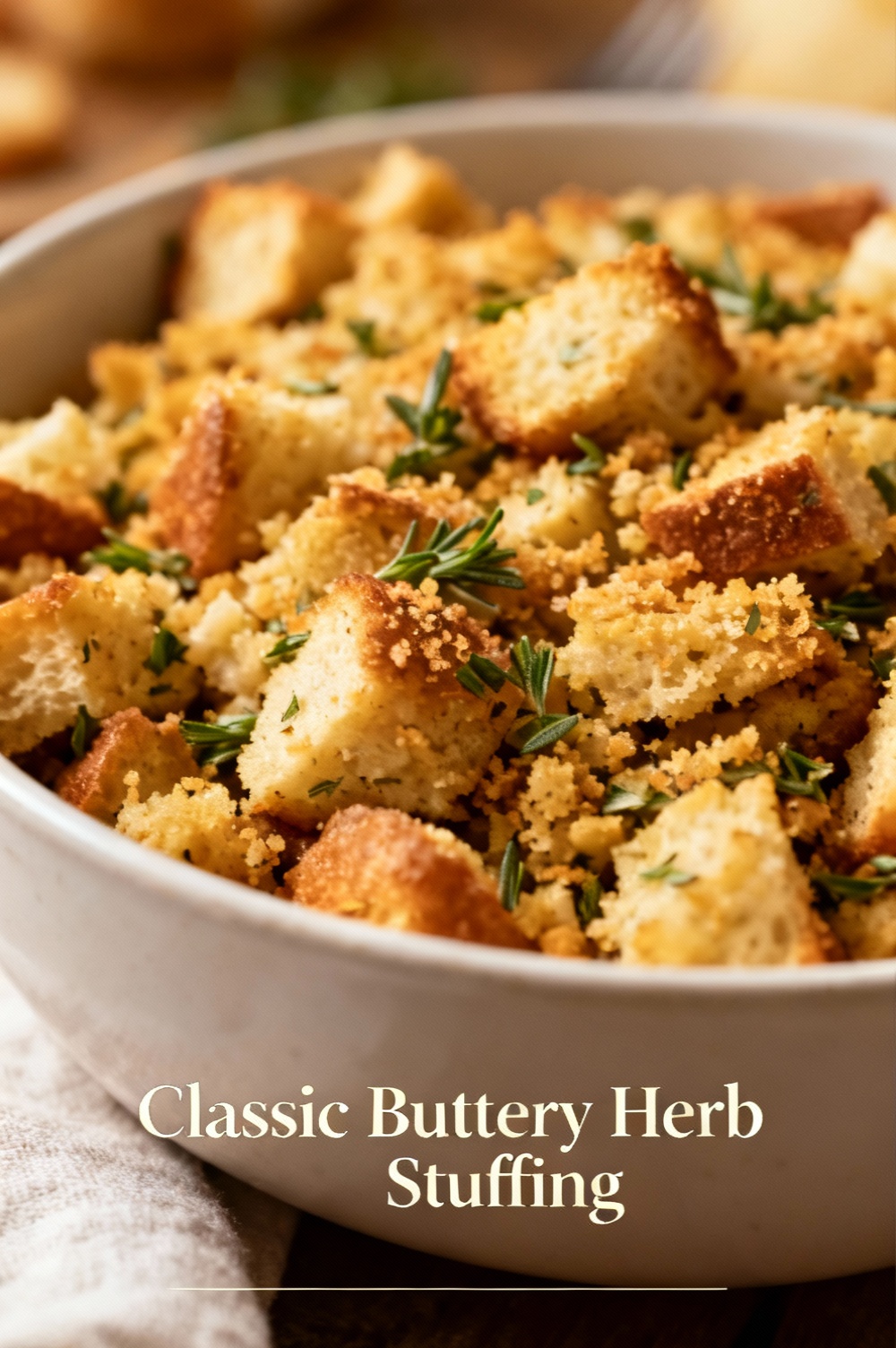
Savory, golden-brown stuffing with fresh herbs, sautéed onions and celery, and rich butter — a timeless side.
Ingredients
- 1 lb (about 10–12 cups) day-old bread, cut into 1/2–3/4-inch cubes
- 1/2 cup (1 stick) unsalted butter
- 1 large yellow onion, finely chopped
- 3 stalks celery, finely chopped
- 3 cloves garlic, minced
- 1/4 cup fresh parsley, chopped
- 2 tbsp fresh sage, chopped (or 2 tsp dried)
- 1 tbsp fresh thyme leaves (or 1 tsp dried)
- 1 tsp fresh rosemary, minced (or 1/2 tsp dried)
- 2 large eggs, lightly beaten
- 1 1/2 to 2 cups low-sodium chicken broth (or vegetable broth), warmed
- 1 tsp kosher salt (adjust to taste)
- 1/2 tsp freshly ground black pepper
- Optional: 1/2 cup chopped pecans or walnuts, or 1/2 cup dried cranberries
Instructions
- Preheat oven to 350°F (175°C). Grease a 9×13-inch baking dish (or similar casserole dish).
- If your bread isn’t stale, spread the cubes on a baking sheet and toast in the oven 8–12 minutes until dry but not browned. Let cool.
- In a large skillet, melt the butter over medium heat. Add the chopped onion and celery and sauté until softened, about 7–9 minutes. Add the garlic and cook 1 minute until fragrant.
- Stir in the parsley, sage, thyme, rosemary, salt, and pepper. Remove from heat.
- Place the bread cubes in a very large bowl. Pour the sautéed vegetable-herb mixture over the bread and toss gently to combine. Add the beaten eggs and 1 1/2 cups warm broth; toss until evenly moistened. Add additional broth a few tablespoons at a time if the mixture seems too dry — it should be moist but not soggy.
- Fold in optional nuts or dried cranberries if using. Transfer the mixture to the prepared baking dish, pressing lightly to even the top.
- Cover the dish with foil and bake 25 minutes. Remove the foil and bake an additional 10–15 minutes, or until the top is golden and slightly crisp.
- Let the stuffing rest 10 minutes before serving. Adjust seasoning with salt and pepper to taste.
Nutrition Information
- Calories: 280 kcal
- Cholesterol: 65 mg
- Sodium: 420 mg
- Carbohydrates: 28 g
- Fiber: 2 g
- Sugar: 3 g
- Protein: 6 g