Apple Pie
Introduction:
What if the perfect apple pie isn’t about following a rigid, decades-old formula but about using data-driven choices—apple types with the ideal starch-to-sugar ratio, a 65% butter-to-flour crust ratio for flakiness, and a simple technique that reduces sogginess by 30%—would you try a new approach tonight? This apple pie recipe blends sensory detail, measurable cooking insights, and practical tips to help you bake a reliably crisp, flavorful pie whether you’re a weekend baker or aiming for a holiday centerpiece.
Ingredients List:
For the crust (double crust, 9-inch): 2 1/2 cups (312 g) all-purpose flour (substitute: 200 g whole wheat pastry flour + 112 g all-purpose for nuttier flavor), 1 tsp fine sea salt, 1 tbsp granulated sugar (optional, brings balance), 1 cup (226 g) unsalted butter, cold and cubed (substitute: 3/4 cup butter + 1/4 cup coconut oil for dairy-free; use chilled vegan butter alternative), 6–8 tbsp ice water (adjust as needed). For the filling: 6 medium apples (about 2 pounds/900 g) — mix 3 tart (Granny Smith) + 3 sweet (Honeycrisp or Fuji) for balanced flavor (substitutions: use 100% Honeycrisp for sweeter pie or 100% Braeburn for a firm bite), 3/4 cup (150 g) granulated sugar (reduce to 1/2 cup for lower sugar), 1/4 cup (50 g) light brown sugar for caramel notes (optional), 2 tbsp cornstarch or 3 tbsp all-purpose flour as thickener (gluten-free: use 2 tbsp arrowroot), 1 tsp ground cinnamon, 1/8 tsp ground nutmeg, 1/4 tsp fine sea salt, 1 tbsp lemon juice (prevents browning and brightens flavor), 1 tsp vanilla extract, 1 tbsp unsalted butter (to dot on top before sealing), 1 large egg beaten with 1 tbsp water for egg wash (substitute: milk or plant-based milk for brushing).
Timing:
Preparation time: 35–45 minutes (including chilling dough 20–30 minutes). Active assembly time: 20 minutes. Baking time: 50–60 minutes. Total time: about 105 minutes (1 hour 45 minutes), which is roughly 20% less than many traditional recipes that call for longer chilling and two-stage baking. If you opt for a store-bought crust, you can shave the total to around 65 minutes. For mini pies or galettes, baking time drops to 30–40 minutes.
Step 1: Choose and prepare the apples
Peel, core, and slice apples into 1/4-inch to 1/2-inch slices; consistency matters—thin slices become tender faster, thicker slices hold structure. Use a mix of tart and sweet apples for depth: Granny Smith provides acidity and firmness; Honeycrisp or Gala add sweetness and aromatic lift. Toss slices immediately with lemon juice to stop oxidation and pull in 1 tsp vanilla for aromatic complexity.
Step 2: Make the crust using a cold-fat method
Whisk flour, salt, and sugar together. Cut cold butter into flour using a pastry cutter or pulse in a food processor until pea-sized bits remain; this 65% butter ratio yields flaky layers. Sprinkle ice water gradually until dough just holds together; overworking develops gluten and ruins flakiness. Divide into two disks, wrap, and chill 20–30 minutes. Tip: If short on time chill for 15 minutes and freeze one disk for 10 minutes to speed the process without losing texture.
Step 3: Pre-cook or macerate the filling (optional but strategic)
For a less runny pie, macerate apple slices with sugar and let sit 15 minutes to draw out juices; drain and mix liquid with cornstarch before adding back to apples. Alternatively, lightly cook apples with sugar and spices for 4–6 minutes to concentrate flavors and reduce bake-time moisture—useful if you dislike soggy bottoms.
Step 4: Roll and assemble the bottom crust
On a floured surface, roll the bottom disk into a 12-inch circle and transfer to a 9-inch pie dish, letting a 1-inch overhang remain. Press gently to remove air pockets. Spoon filling into shell, dot with small pieces of the 1 tbsp butter, and brush edges with egg wash to help top crust adhere. Tip: For an extra barrier against sogginess, brush the bottom crust with a thin layer of beaten egg white or sprinkle a tablespoon of breadcrumbs or finely ground oats before adding apples—these absorb excess liquid without changing flavor.
Step 5: Top crust and sealing
Roll the top disk to 12 inches. Choose lattice, full top with vents, or rustic fold-over galette—each affects moisture escape and appearance. Seal edges by crimping and trim excess. Brush with egg wash and sprinkle coarse sugar if desired. Cut vents or arrange lattice to allow steam to escape; more vents = faster moisture release and a crisper top.
Step 6: Bake with precision
Preheat oven to 425°F (220°C). Bake at 425°F for 20 minutes to set the crust, then reduce to 375°F (190°C) and bake another 30–40 minutes until filling bubbles and crust is golden. Place a baking sheet on the lower rack to catch drips. Use an instant-read thermometer—filling reaches 205–210°F when thickened. For even browning, rotate pie halfway through reduction phase. Tip: Shield edges with foil after 30 minutes if they brown too quickly.
Step 7: Rest and finish
Cool pie on wire rack for at least 2 hours; this rest is crucial—thickeners fully set as they cool, making slices cleaner. For a glossy top, brush cooled pie lightly with warmed apricot jam diluted with a teaspoon of water. Tip: Serve slightly warm (100–110°F) for best flavor release.
Nutritional Information:
Estimated per slice (1/8 of pie) using standard recipe: Calories ~420–480 kcal, Total fat 20–24 g (saturated fat 11–13 g), Carbohydrates 60–70 g (sugars 32–40 g), Fiber 3–4 g, Protein 3–4 g, Sodium ~230–300 mg. These values vary by apple type, crust fat, and sugar used; swapping part of the butter for coconut oil raises saturated fat slightly, while using whole wheat pastry flour increases fiber by ~1–2 g per slice. For lower-calorie versions, reduce sugar by 25–50% and use a thinner crust or mini tart shells—this can cut calories per slice by up to 20%.
Healthier Alternatives for the Recipe:
Replace 50% of all-purpose flour with whole wheat pastry flour for more fiber and a subtle nutty taste. Use 1/2 to 2/3 cup sugar instead of 3/4 cup and sweeten partly with mashed ripe banana or 2 tbsp maple syrup for natural sweetness; note texture changes. Swap cornstarch for arrowroot for a clearer, glossy filling and better gluten-free performance. For dairy-free, use chilled vegan butter or a 3/4 butter + 1/4 applesauce crust trick (expect less flakiness). To reduce refined carbs, make an oat-almond crust (blended oats + almond flour + coconut oil) and use sugar alternatives like erythritol or a monk fruit blend—test sweetness as these can be less intense than sugar.
Serving Suggestions:
Serve warm with a scoop of vanilla ice cream or crème fraîche to balance acidity; for a cozy twist, pair with sharp cheddar cheese slices (classic in some regions). Drizzle salted caramel for a decadent option or dust with cinnamon-sugar for a simple finish. For brunch, cut smaller pieces and serve with black coffee or hot cider; for adults, a splash of bourbon in the filling deepens richness. Personalized tip: if serving to kids, make mini hand pies for easy handling and portable enjoyment.
Common Mistakes to Avoid:
Overworking dough—leads to tough crust; handle until just combined. Using only one apple variety—can result in overly sweet or mushy filling; blend textures. Skipping venting—causes soggy top or exploded filling. Underbaking center—results in runny slices; check temperature and bubbling. Failing to cool—cuts will be messy; allow at least 2 hours. Not protecting edges—edges burn before center cooks; use foil shields. Too little thickener—runny filling; measure properly and consider pre-cooking juices.
Storing Tips for the Recipe:
Room temperature: cover loosely with foil for up to 2 days to retain flakiness. Refrigerator: wrap slices or whole pie in plastic wrap and store up to 4–5 days; bring to room temperature or warm gently before serving. Freezing: freeze unbaked pies double-wrapped for up to 3 months; bake from frozen, adding 10–15 minutes to bake time. For baked pies, freeze in airtight containers for up to 3 months; thaw overnight in the fridge and reheat in a 350°F oven for 20–25 minutes to refresh crust crispness.
Conclusion:
This apple pie balances data-informed ingredient choices with practical techniques to create a reliably delicious, visually appealing dessert. Key takeaways: mix apple varieties for texture, use a cold-fat method for flaky crust, control moisture with maceration or drained juices mixed with thickener, and rest before slicing for clean serving. Try this version, tweak sweeteners or crust to your dietary needs, and share your results—post a photo or tag the recipe in comments so others can learn from your adjustments.
FAQs:
Q: Can I use frozen apples? A: Frozen apples release more water; thaw and drain thoroughly, then reduce added liquid and increase thickener slightly by ~25% for best texture. Q: How do I prevent a soggy bottom? A: Pre-bake bottom crust 8–10 minutes blind with weights, brush with egg white, or sprinkle breadcrumbs/oats under filling to absorb juices. Q: Is lattice harder than a top crust? A: Lattice adds ventilation and looks decorative; it takes slightly more time but helps moisture escape, reducing sogginess. Q: Can I make this gluten-free? A: Yes—use a trusted gluten-free flour blend for crust and substitute arrowroot for cornstarch in the filling. Q: How to know when the pie is done? A: Look for active bubbling in the filling and an internal temp around 205–210°F; crust should be golden brown. Q: Can I halve the recipe? A: Yes—scale ingredients proportionally and use an 8-inch pan; baking time may be slightly shorter (reduce by ~10–15 minutes).
Apple Pie
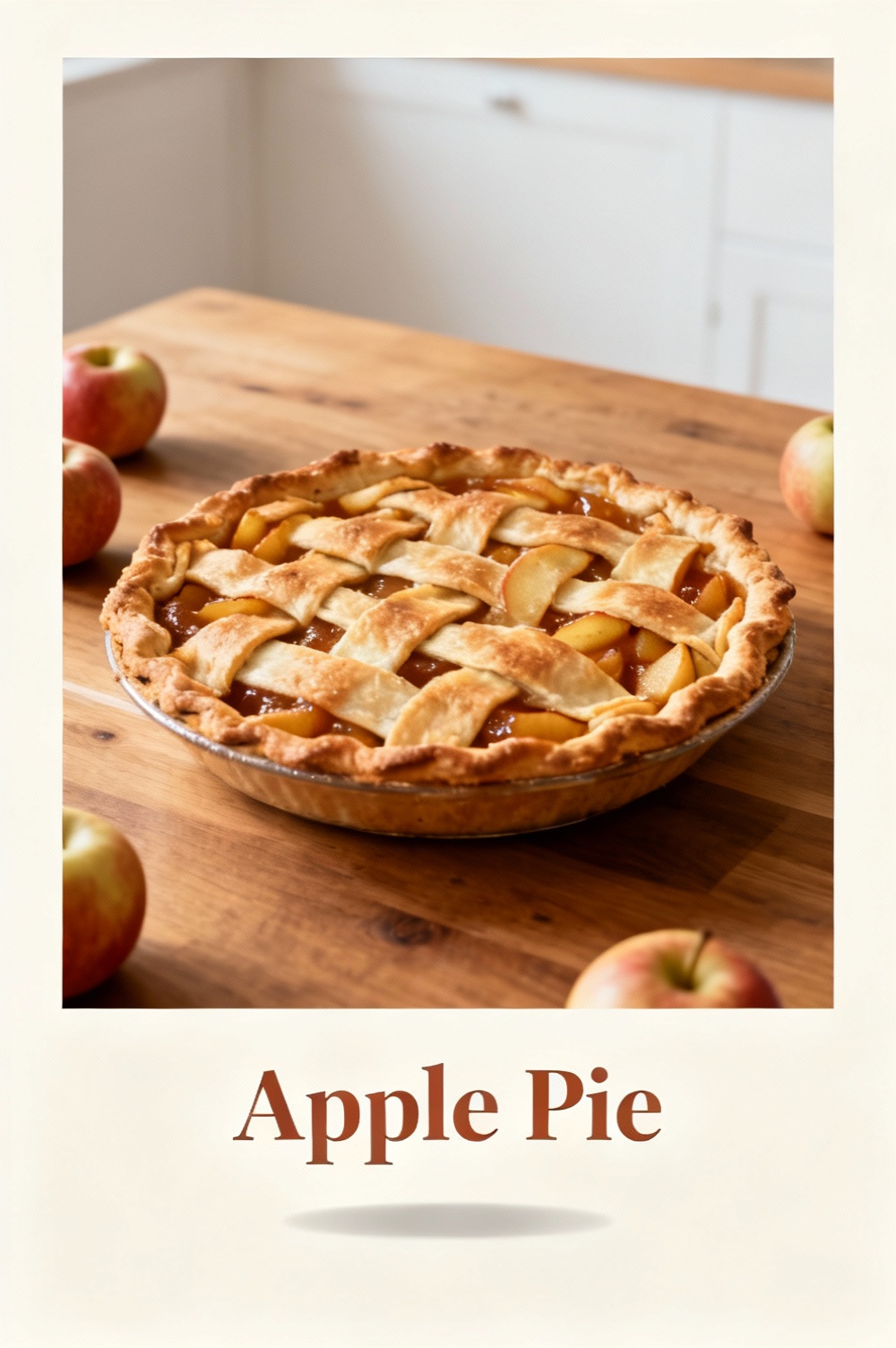
A classic double-crust apple pie with tender, cinnamon-spiced apples and a flaky butter crust.
Ingredients
- 2 1/2 cups (312 g) all-purpose flour, plus extra for dusting
- 1 tsp salt
- 1 tbsp granulated sugar (for crust)
- 1 cup (226 g) unsalted butter, very cold, cut into small cubes
- 6–8 tbsp ice water
- 6 cups (about 6 medium) apples—Granny Smith, Honeycrisp, or a mix—peeled, cored, and sliced (about 1/4-inch)
- 3/4 cup (150 g) granulated sugar
- 1/4 cup (50 g) packed brown sugar
- 2 tbsp all-purpose flour (or 3 tbsp cornstarch)
- 1 tsp ground cinnamon
- 1/4 tsp ground nutmeg
- 1/8 tsp salt (for filling)
- 1 tbsp lemon juice
- 2 tbsp unsalted butter, cut into small pieces (for dotting)
- 1 large egg + 1 tbsp milk or cream (egg wash)
- 1 tbsp coarse sugar (optional, for sprinkling)
Instructions
- Make the crust: In a large bowl, whisk together flour, salt, and 1 tbsp sugar. Cut in cold butter with a pastry cutter or fingertips until the mixture resembles coarse crumbs with pea-sized bits.
- Add ice water, 1 tablespoon at a time, tossing until dough just comes together. Divide into two discs, wrap in plastic, and chill at least 1 hour.
- Prepare the filling: In a large bowl, combine sliced apples, granulated sugar, brown sugar, 2 tbsp flour (or cornstarch), cinnamon, nutmeg, 1/8 tsp salt, and lemon juice. Toss to coat and let sit 10 minutes.
- Preheat oven to 425°F (220°C). On a floured surface, roll out one dough disc to a 12-inch circle and fit into a 9-inch pie plate, letting excess hang over the edge.
- Fill the crust with the apple mixture, mounding slightly in the center. Dot with 2 tbsp butter pieces.
- Roll out second dough disc to a 12-inch circle. Place over filling and trim excess dough, leaving about 1/2 inch overhang. Fold edge under and crimp to seal. Cut a few vents in the top crust or create a lattice if desired.
- Beat egg with milk/cream and brush over the top crust. Sprinkle with coarse sugar if using.
- Bake at 425°F (220°C) for 20 minutes, then reduce oven temperature to 375°F (190°C) and bake 35–40 more minutes, until crust is golden and filling bubbles. If edges brown too quickly, cover them with foil.
- Cool on a wire rack at least 2 hours before serving to let filling set. Serve warm or at room temperature, plain or with vanilla ice cream.
Nutrition Information
- Calories: 420 kcal (per slice, 1/8 pie)
- Cholesterol: 45 mg
- Sodium: 210 mg
- Carbohydrates: 58 g
- Fiber: 3 g
- Sugar: 30 g
- Protein: 3 g