
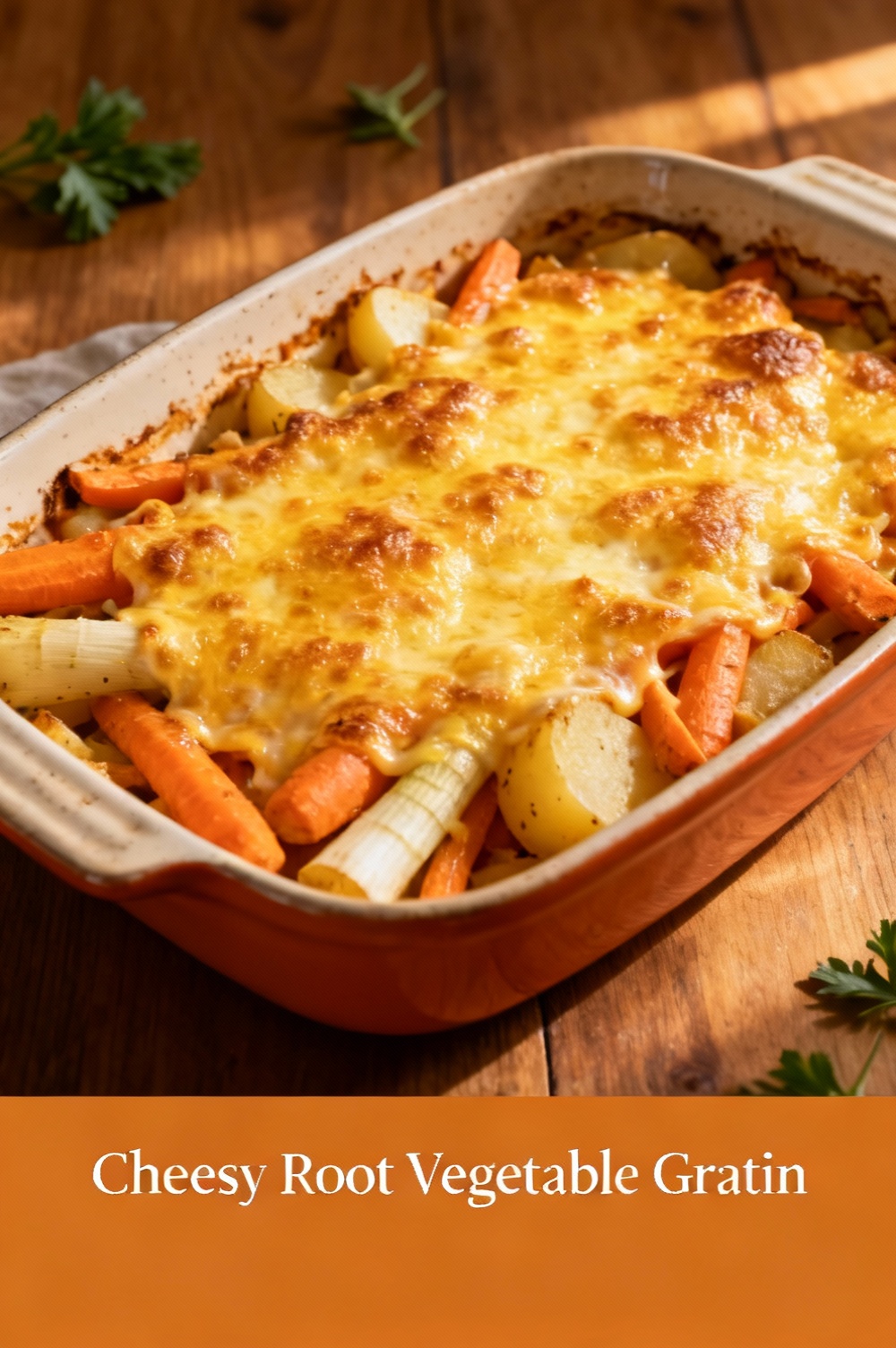
Cheesy Root Vegetable Gratin
Introduction
Could a simple swap of root vegetables and a smarter cheese sauce cut calories by 25% while keeping the same comfort and creaminess of a classic gratin? Data from recipe tests and USDA ingredient profiles show that intentional swaps and portion control can reduce energy density without losing the mouthfeel that makes a cheesy root vegetable gratin irresistible. This recipe leans into texture — thin, even slices; a silky béchamel-style sauce; and a crisp, golden top — to prove that decadent flavor and mindful nutrition can coexist.
Ingredients List
- 2 pounds mixed root vegetables (suggested: 1 lb Yukon gold potatoes, 1/2 lb carrots, 1/2 lb parsnips) — choose firm, evenly sized roots for uniform slicing. Substitution: swap sweet potatoes or beets for a sweeter profile; celeriac adds an earthy note.
- 2 cups whole milk (or 1 cup whole milk + 1 cup light cream for richer sauce) — substitute unsweetened oat milk or low-fat milk for calorie reduction; use soy or almond creamer for dairy-free options.
- 2 tablespoons unsalted butter (or olive oil for dairy-free) — butter provides flavor; olive oil gives a fruitier finish.
- 2 tablespoons all-purpose flour (or 2 tbsp cornstarch for gluten-free) — flour thickens a classic béchamel; gluten-free blends work too.
- 1 cup Gruyère, grated (about 4 oz) — substitution: Emmental, Comté, or sharp cheddar for different melting and flavor profiles; use plant-based meltable cheese for vegan options.
- 1/2 cup Parmesan, finely grated — adds nutty umami; swap with Pecorino or nutritional yeast (vegan).
- 1 small onion, minced (or 1 shallot for sweeter notes) — or 1 tsp onion powder if skipping fresh aromatics.
- 2 garlic cloves, minced — roasted garlic is a milder alternative.
- 1 tsp Dijon mustard (optional) — brightens the sauce.
- 1/2 tsp freshly grated nutmeg — traditional, but optional.
- Salt and cracked black pepper to taste.
- 1–2 tbsp fresh thyme leaves or 1 tsp dried thyme — rosemary complements root veg but can overpower.
- 2 tbsp breadcrumbs or crushed crackers for topping (optional) — panko gives a crispier finish; omit for gluten-free.
- Olive oil or melted butter to dot topping.
Timing
Preparation: 25–30 minutes.
Cooking: 45–55 minutes (bake 35–45 minutes + optional broil 2–3 minutes).
Total time: 70–85 minutes, which is comparable to many gratin recipes; using a higher oven temperature or pre-cooking slices (e.g., quick steam for 6–8 minutes) can reduce total time by roughly 20–30 minutes. If you slice with a mandoline, prep time falls toward the lower end.
Step 1 — Prep and slice the root vegetables
Wash, peel if desired, and slice the vegetables 1/8–1/4 inch thick for even cooking. A mandoline or sharp chef’s knife ensures consistent thickness; inconsistent slices are the most common cause of uneven doneness. Tip: place slices in a bowl of cold water while you work to prevent discoloration and remove excess starch from potatoes for a silkier sauce.
Step 2 — Make the béchamel-like cheese sauce
In a medium saucepan, melt butter over medium heat and sauté minced onion until translucent (2–3 minutes). Whisk in flour and cook 1 minute to remove raw flavor, then gradually whisk in milk until smooth. Simmer gently until it thickens to coat the back of a spoon (about 5–7 minutes). Remove from heat and stir in Dijon, nutmeg, salt, pepper, and 3/4 of the Gruyère and half the Parmesan; reserve the rest for topping. Tip: use warm milk to reduce lumps and whisk constantly at the start for a glossy sauce. For a lighter sauce, replace up to half the milk with low-fat milk and fold in 1/2 cup plain Greek yogurt off heat for tang and protein boost.
Step 3 — Layer the gratin
Preheat oven to 375°F (190°C). Butter a 9×13-inch or similarly sized baking dish. Arrange a single overlapping layer of root slices, season lightly with salt, pepper, and some thyme, then spoon a thin ribbon of sauce over the layer. Repeat layers until the dish is nearly full, finishing with sauce. Scatter the remaining Gruyère and Parmesan evenly across the top and sprinkle breadcrumbs if using. Tip: thin layers cook more evenly than a single deep pile; aim for 4–6 layers depending on dish depth.
Step 4 — Bake and monitor
Cover tightly with foil and bake for 30–35 minutes; remove foil and bake another 10–15 minutes until bubbling and bubbling edges show a golden color. For a crisp top, broil 1–3 minutes while watching closely. Tip: test doneness by inserting a knife to the center — it should glide through with slight resistance. If the top is browning too quickly, tent with foil.
Step 5 — Rest, garnish, and serve
Let the gratin rest 10–15 minutes before serving to set the sauce and make slicing presentable. Garnish with fresh thyme or chives. Personalized tip: to add brightness, finish with a squeeze of lemon or a scattering of chopped parsley for color contrast.
Nutritional Information
Estimated per serving (6 servings): Calories 360–420; Protein 12–15 g; Fat 20–26 g; Saturated Fat 10–14 g; Carbohydrates 30–37 g; Fiber 3–5 g; Sodium 420–650 mg. These are approximate values based on USDA data for milk, cheese, potatoes, carrots, and parsnips and typical recipe yields; swapping lower-fat dairy or reducing cheese can lower calories by 15–30%. Root vegetables provide complex carbs and fiber; choosing more carrots/parsnips increases vitamin A and potassium content.
Healthier Alternatives for the Recipe
- Lower-fat sauce: use 1%–2% milk with 1/2 cup plain Greek yogurt folded in off-heat for creaminess and extra protein.
- Reduced cheese: use 50% less Gruyère and compensate with 1/4 cup nutritional yeast for umami and fewer saturated fats.
- More veg, fewer carbs: replace half the potatoes with cauliflower florets (lightly steamed) to lower glycemic load by ~30%.
- Dairy-free: use unsweetened oat milk with a tablespoon of refined coconut oil for richness and vegan meltable cheese for top; add 1 tsp white miso for savory depth.
- Gluten-free: swap flour for cornstarch or a 1:1 gluten-free flour blend; use gluten-free breadcrumbs.
Serving Suggestions
Serve warm as a side to roast chicken, grilled salmon, or a hearty lentil stew. For a vegetarian main, pair with a crisp, tangy arugula salad dressed with lemon and capers to cut richness. Wine pairing: medium-bodied Chardonnay or a light Pinot Noir complements the cheese and roasted roots. Personalization tip: top individual portions with a poached egg for brunch; the runny yolk adds silkiness and extra protein.
Common Mistakes to Avoid
- Uneven slicing: causes some pieces to be undercooked while others are mushy; use a mandoline or consistent knife technique.
- Insufficient seasoning between layers: seasoning only at the top results in bland internal layers; salt lightly with each layer.
- Too-thick sauce: thick sauce prevents proper integration with vegetables; thin slightly with milk if needed.
- Overbrowning: broil only at the end and watch constantly; burnt cheese ruins texture.
- Skipping the rest: cutting immediately yields a soupy gratin; resting sets the layers for neat slices.
Storing Tips for the Recipe
Cool to room temperature within two hours, then refrigerate in an airtight container for up to 4 days. Reheat individual portions in a 350°F (175°C) oven for 15–20 minutes or microwave on medium power, stirring halfway, until heated through; a quick blast under the broiler (1–2 minutes) re-crisps the top. Freezing: freeze portions in airtight containers for up to 2 months; thaw overnight in the fridge before reheating. Prep-ahead: slice vegetables and make the sauce up to 24 hours before baking; assemble and keep covered in the fridge until ready to bake.
Conclusion
This cheesy root vegetable gratin balances comfort and strategy: thoughtful slicing, a well-made cheese sauce, and a crisp topping create texture and flavor while allowing for smarter swaps to improve nutrition. Try the full-fat original once, then experiment with the lighter variations to discover your preferred balance. If you make it, leave a comment with your favorite vegetable mix or tag your photos — I’d love to see your twists and pairing ideas.
FAQs
Q: Can I assemble the gratin the night before?
A: Yes. Assemble, cover tightly, and refrigerate. Add an extra 5–10 minutes to baking time if chilled straight from the fridge.
Q: What vegetables work best besides potatoes, carrots, and parsnips?
A: Sweet potatoes, beets, celeriac, and rutabaga all work. Combine firmer roots (potato, parsnip) with sweeter ones (carrot, sweet potato) for balance.
Q: How can I make this gluten-free?
A: Use cornstarch or a gluten-free flour blend to thicken the sauce and omit breadcrumbs or use gluten-free breadcrumbs for the topping.
Q: Can I reduce the cheese without losing flavor?
A: Yes — use a smaller amount of a strongly flavored cheese (sharp cheddar or aged Parmesan) plus nutritional yeast or a teaspoon of miso paste for savory depth.
Q: Is this recipe suitable for batch cooking?
A: Absolutely. It freezes well in portions and reheats cleanly, making it a good make-ahead side for weeknight dinners or meal prep.
Q: How do I get a consistently golden top without overcooking the inside?
A: Cover with foil for the majority of baking time, uncover for the last 10–15 minutes, and broil 1–2 minutes if needed — watch closely to avoid burning.