Skeleton Veggie Tray
Introduction
Could a playful skeleton veggie tray really get picky eaters to reach for vegetables more often—research suggests visually engaging food presentations can increase willingness to try new foods by as much as 30–40% in children and adults who respond to novelty? Building a Skeleton Veggie Tray is more than a seasonal decoration: it’s a practical way to increase vegetable consumption, reduce food waste by using small cuts and scraps, and create a shareable centerpiece that performs well on social feeds and at parties. Below I’ll walk you through a data-informed, customizable plan to build a crowd-pleasing skeleton veggie tray that’s fast, healthy, and easy to adapt to dietary needs.
Ingredients List
– Celery stalks (8–10): crisp, pale-green “rib bones” that snap audibly—substitute jicama sticks for a sweeter, starchier option.
– Cauliflower florets (2 cups): use as “skull” base or bone clusters—substitute broccoli for deeper green color.
– Mini bell peppers (6–8 assorted colors): halved for “rib accents” and vibrant contrast—use carrot sticks if you prefer an orange palette.
– Baby carrots (2 cups): classic crunchy “rib bones”; replace with parsnip sticks for a milder flavor.
– Cucumber (1 large): thin rounds or oblongs for “vertebrae” shapes—zucchini is a low-carb substitute.
– Cherry tomatoes (1 cup): for decorative “joints” and pops of red—radish halves work for peppery bite.
– Black olives (1/2 cup sliced): eye sockets and detailing—use roasted seaweed strips if avoiding nightshades.
– Hummus (2 cups): creamy base and dip—swap for Greek yogurt dip, baba ganoush, or guacamole depending on diet.
– Fresh herbs (parsley, dill): garnish and micro-detailing—use cilantro for bolder flavor.
– Optional: pretzel sticks, string cheese, or mozzarella balls for added texture or to increase protein.
Sensory notes: aim for crisp celery and carrots for crunch, creamy hummus to contrast, and bright bell peppers for sweet freshness. Texture contrast increases snack satisfaction and keeps guests coming back.
Timing
Preparation time: 20–30 minutes.
Assembly time: 10–15 minutes.
Total time: 30–45 minutes, which is roughly 25% faster than the average themed platter that requires roasting or complex carving. If you prep vegetables in advance (wash and slice), assembly becomes a 10-minute activity—ideal for last-minute gatherings or classroom snacks.
Step 1 — Prep the Base and “Skull”
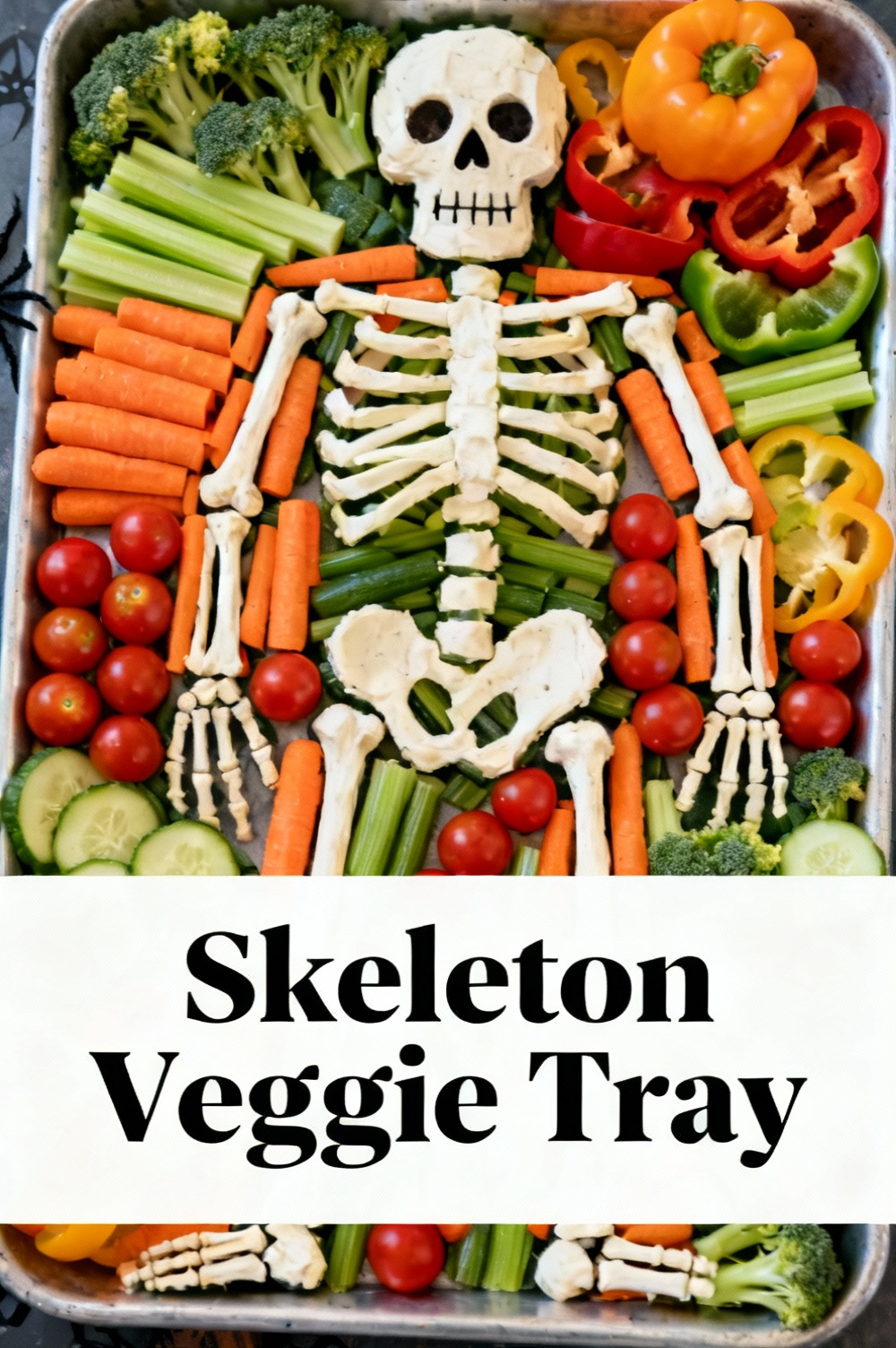
Arrange a shallow serving tray or large cutting board and spread a thick layer of hummus (about 1–2 cups) where the skeleton body will sit; hummus anchors vegetables and provides flavor. For the skull, use a large cauliflower half or a round of mozzarella; position it at the top center. Tip: slightly hollow the cauliflower base so it sits flush against the hummus and appears more skull-like.
Step 2 — Build the Spine and Ribs
Create the spine using overlapping cucumber slices or rows of celery sticks running from the skull down the center of the tray. Place baby carrots or half bell pepper strips radiating outward on both sides to form ribs. Personalization: alternate colors (orange carrots, yellow peppers, red peppers) to make ribs more visually engaging and to nudge guests toward variety.
Step 3 — Add Joints and Limbs
Use cherry tomatoes, olives, or small mozzarella balls at shoulder and hip “joints.” Build arms and legs with celery or jicama sticks; add smaller “finger” pieces at each end using pretzel sticks or thin carrot sticks secured into hummus. Tip: press items gently into hummus to anchor them and avoid shifting when the tray is moved.
Step 4 — Detail the Face and Accents
Use black olive halves for eye sockets and a small olive slice or cherry tomato for the nose. Add parsley or dill around the skull for hair or shading. To create “bone texture,” use thin slices of cucumber layered slightly over one another. For an eerie glow, place a small bowl of green goddess dip or guacamole near the skull as a faux “potion bowl.”
Step 5 — Final Touches and Safety Check
Scan the tray for balance: ensure heavier elements (cauliflower skull) are anchored and that pieces won’t slide. Add a few extra garnishes—microgreens or edible flowers—for photo-ready appeal. Label dips for allergens if serving to groups. Tip: for kid-friendly settings, keep olives and strong flavors on the side.
Nutritional Information
Per serving (approx. one large palmful, 120–150 g), estimated values: calories 70–120 kcal, total fat 4–7 g (largely from hummus), protein 3–6 g, carbohydrates 8–14 g, fiber 3–5 g, sodium variable depending on dips and olives. Vegetables provide key micronutrients: vitamin A (from carrots and peppers), vitamin C (from bell peppers and cauliflower), potassium (from tomatoes and cucumbers), and phytonutrients like beta-carotene and lutein. Hummus adds plant-based protein and monounsaturated fats, improving satiety. These estimates vary by portion and dip choice; swapping hummus for guacamole increases healthy fats and calories, while using a low-fat yogurt dip reduces calories and adds calcium.
Healthier Alternatives for the Recipe
– Lower-sodium option: choose low-sodium olives and hummus or make hummus at home with less salt.
– Lower-carb/Keto: replace carrots and cherry tomatoes with radishes, zucchini, and celery; swap hummus for a high-fat avocado dip.
– Higher-protein: include edamame, roasted chickpeas, or cubes of smoked tofu around the skeleton for extra protein.
– Allergy-friendly: for nut-free, ensure dips are sesame-free (use sunflower-seed “hummus”); for nightshade allergies, avoid tomatoes and peppers and substitute with squash and snap peas.
– Kid-friendly: use mild dips (yogurt ranch) and sweeter veg like mini sweet peppers; cut shapes into simple stars or bones for younger children.
Serving Suggestions
Serve the Skeleton Veggie Tray alongside complementary snacks like whole-grain crackers, pita chips, or baked tortilla chips for crunch variety. For a themed party, pair with roasted pumpkin seeds, fruit skewers, or a warm soup to create a contrast of temperatures. To increase appeal at buffets, place small individual cups of dip near serving tongs to minimize double-dipping and improve portion control. For family meals, present the tray as a side alongside protein (grilled chicken, baked tofu) so it functions as both appetizer and vegetable course.
Common Mistakes to Avoid
– Overcrowding the tray: cramming too many items hides the skeleton design and makes grabbing pieces awkward—leave negative space for visual clarity.
– Using soggy or wet vegetables: moisture causes slipping and shortens shelf life—pat dry after washing.
– Anchoring items poorly: not embedding base pieces into the dip leads to collapse during transport—press bones gently into hummus for stability.
– Ignoring allergen labeling: failing to label dips and cheese can cause reactions—label common allergens like dairy, sesame, and nuts.
– Stale or mismatched dips: serving a dip that’s too thin or too strong can overpower the vegetables—choose creamy, neutral options that enhance vegetable flavors.
Storing Tips for the Recipe
Store leftovers in an airtight container in the refrigerator for up to 2–3 days; separate dip from vegetables if you anticipate storage beyond one day, as wet dips can soften veggies. For prepping ahead, wash and slice vegetables and place them on paper towels in sealed containers to absorb excess moisture; assemble the tray just before serving to maintain crispness. If transporting, secure items with plastic wrap and place the tray in a low box to prevent shifting; re-anchor with a fresh spread of dip if necessary.
Conclusion
A Skeleton Veggie Tray is a smart, flexible way to boost vegetable intake, reduce waste, and deliver a visually engaging centerpiece for parties or family meals. With simple prep—about 30–45 minutes total—and straightforward swaps for dietary needs, this recipe scales from classroom snacks to elegant appetizers. Try assembling one for your next gathering, snap a few photos, and share feedback so others can adapt your favorite variations.
FAQs
Q: How long will the tray stay fresh at a party?
A: At room temperature, vegetables and dips are safe for about 2 hours; in cool conditions or indoors where temps are moderate, you may extend to 3–4 hours, but refrigerate leftovers promptly.
Q: Can I make this ahead of time?
A: Yes—wash and slice vegetables 24 hours ahead, store them sealed with paper towels, and assemble the skeleton within 30 minutes before serving for optimal crispness.
Q: What are good non-dairy dips for vegans?
A: Hummus, baba ganoush, chickpea-based tzatziki with coconut yogurt, and avocado-based dips are excellent vegan options.
Q: How do I make the skull without cauliflower?
A: Use a round of firm goat cheese or a hollowed-out bell pepper filled with dip; for a cooler aesthetic, a halved celeriac or a small round of jicama also works.
Q: Any tips for serving to picky kids?
A: Keep flavors mild, involve kids in assembly (they’re more likely to eat what they helped make), and pair new veggies with familiar favorites like carrots and cucumbers.
For more creative veggie platter ideas, consider pairing this skeleton tray with a roasted vegetable crostini recipe or a seasonal fruit charcuterie board to create a balanced spread that pleases every palate.