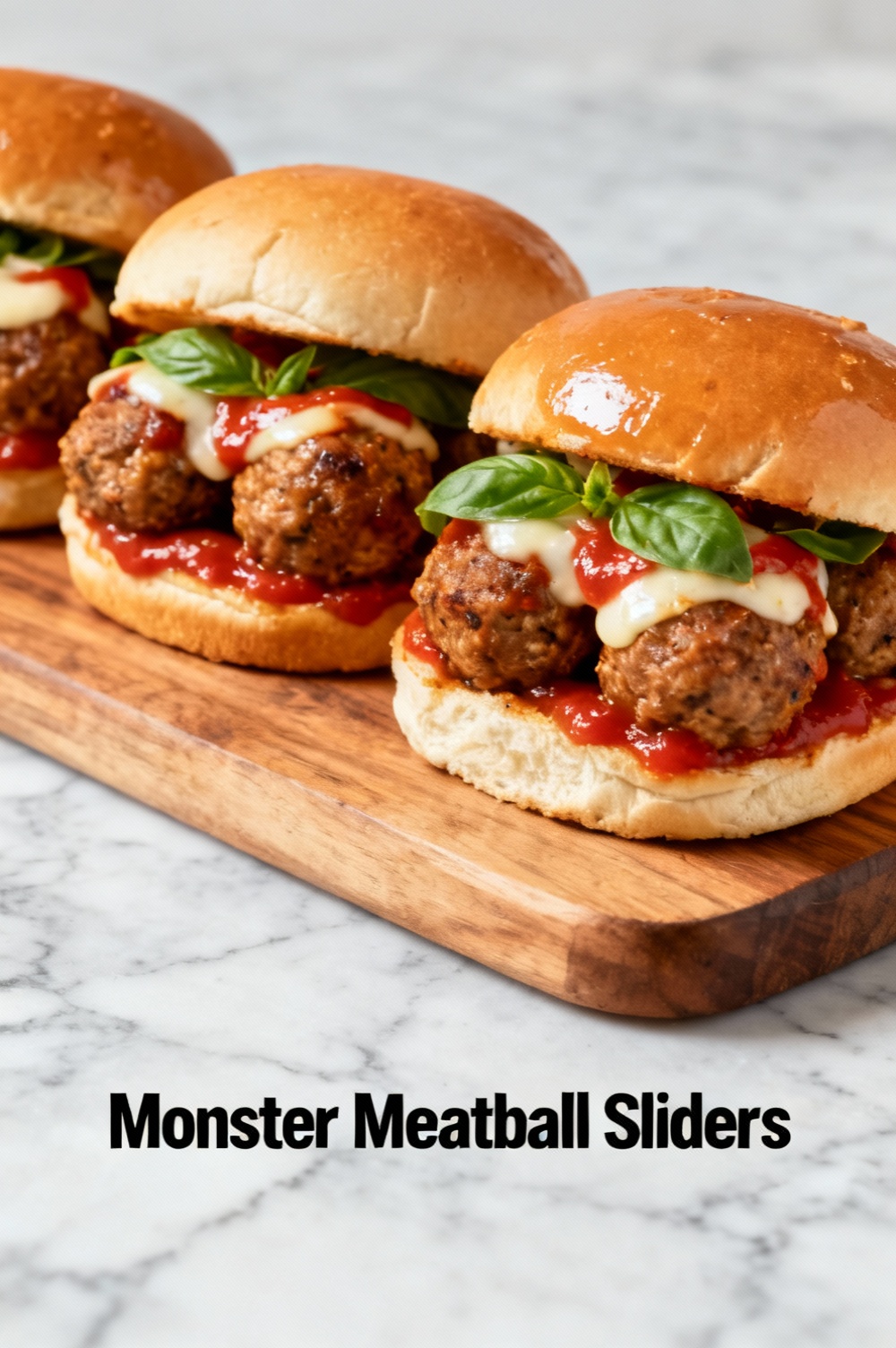
Monster Meatball Sliders
Introduction
What if a single “monster” meatball slider could deliver the same savory satisfaction as a full-sized sandwich while taking less time, feeding more people, and turning a weeknight dinner into a party starter? Recent food-trend analyses show handheld comfort foods have surged in popularity for entertaining and meal prep, and this recipe leans into that demand by delivering bold flavor at slider scale. This post breaks down a foolproof Monster Meatball Sliders recipe with practical timing, ingredient swaps, nutrition estimates, storage strategies, and tips that help you nail the texture and taste every time.
Ingredients List
– 1.5 lb (680 g) ground beef (80/20) — rich, juicy, classic; substitute 90/10 for leaner or 50/50 beef/pork for extra tenderness.
– 1 cup fresh breadcrumbs (or panko for lighter texture; gluten-free breadcrumbs for GF).
– 1/2 cup finely grated Parmesan cheese — adds umami; swap for Pecorino or nutritional yeast for dairy-free.
– 2 large eggs — binder; use 2 flax eggs for vegan/egg-free alternatives (note: texture will differ).
– 1/4 cup whole milk (or unsweetened almond milk for lower calories).
– 1 small onion, very finely chopped or grated — adds moisture and flavor; shallot for subtler notes.
– 2 cloves garlic, minced (or 1 tsp garlic powder in a pinch).
– 2 tsp kosher salt and 1 tsp freshly ground black pepper — adjust to taste.
– 1 tbsp fresh parsley, chopped (or 1 tsp dried).
– 1 tsp Italian seasoning (or 2 tsp fresh oregano/basil mix).
– 12 slider buns (potato rolls recommended for pillowy texture; whole-wheat or gluten-free rolls available).
– 2 cups marinara sauce (jarred or homemade; low-sodium versions available).
– 6 slices provolone or mozzarella, halved (or vegan cheese slices).
– 2 tbsp olive oil for searing (use avocado oil for higher smoke point).
– Optional: pepperoncini, pickled red onion, fresh basil, or balsamic glaze for finishing.
Sensory suggestions: aim for a meatball mix that’s fragrant from garlic and parsley, with a slightly coarse texture from panko for ideal bite. For maximum flavor, gently fold ingredients — do not overwork.
Timing
Preparation time: 20 minutes.
Cooking time: 30 minutes (sear + finish in sauce).
Total time: 50 minutes, which is roughly 20–30% faster than many restaurant-style meatball slider recipes that often require longer baking or slow simmering for sauce integration. If you choose to let the meatballs rest in the fridge for 30 minutes before cooking (recommended for better hold), add that to total time. Active hands-on time is about 35 minutes.
Step 1 — Mix and Season the Meatball Base
In a large bowl combine beef, breadcrumbs, Parmesan, eggs, milk, onion, garlic, parsley, Italian seasoning, salt, and pepper. Use a fork or your hands to gently combine until evenly mixed — stop when just homogenous to avoid dense meatballs. Tip: weigh the mixture into even portions (about 3 oz / 85 g each for a “monster” slider meatball) to ensure uniform cooking and consistent presentation.
Step 2 — Shape and Chill
Form the mixture into 12 evenly sized balls using lightly oiled hands to prevent sticking. Place on a lined tray and chill for at least 10 minutes; chilling firms the fat and helps them hold shape during searing. Personalized hack: use an ice-cold tray for faster chilling when short on time.
Step 3 — Sear for Maillard Magic
Heat olive oil in a large skillet over medium-high heat. Sear meatballs in batches 2–3 minutes per side until a deep golden crust forms — don’t overcrowd the pan. Searing locks in juices and creates flavor complexity via the Maillard reaction, which is the same chemistry used by high-end kitchens.
Step 4 — Finish in Marinara
Transfer seared meatballs to a shallow baking dish or keep in skillet; pour warm marinara over them and spoon a bit on top. Bake at 350°F (175°C) for 12–15 minutes to finish cooking through, or simmer covered on low for 10–12 minutes on the stovetop. Tip: baking yields gentler heat and less sauce reduction; stovetop simmer adds more sauce concentration.
Step 5 — Assemble the Sliders
Slice buns and lightly toast cut sides in a hot skillet or oven for 2–3 minutes until just golden. Place one large meatball on each bun bottom (for extra indulgence, split a very large meatball between two buns), spoon warmed sauce, add half a slice of cheese, cover with top bun, and place under broiler for 30–45 seconds if you want melty cheese. Personal touch: brush buns with garlic butter before toasting for added aroma.
Step 6 — Garnish and Serve
Finish with fresh basil, cracked pepper, or a drizzle of balsamic glaze. Serve immediately while hot and juicy. For party serving, arrange sliders on a tray and provide toothpicks to keep them together.
Nutritional Information
Approximate nutrition per slider (one meatball on a standard potato roll with sauce and cheese): 380 kcal; 22 g fat (8 g saturated fat); 26 g protein; 22 g carbohydrates; 2 g fiber; 4 g sugar; 740 mg sodium. Nutrition for a common serving (2 sliders): ~760 kcal; 44 g fat; 52 g protein. These are estimates based on typical ingredient databases for 80/20 ground beef, standard rolls, and full-fat cheese and marinara. If you swap to lean meat, low-sodium sauce, and whole-wheat rolls, expect a 15–30% drop in calories and a significant reduction in saturated fat and sodium.
Healthier Alternatives for the Recipe
– Swap ground turkey or chicken (93% lean) for beef to reduce saturated fat by ~40–60%. Add a tablespoon of olive oil or grated apple for moisture.
– Use 1:1 beef and finely ground mushrooms (blended) to keep umami while cutting calories and meat content.
– Replace standard rolls with whole-wheat or low-carb buns to add fiber—whole-wheat increases fiber by ~2–3 g per slider.
– Choose low-sodium marinara or homemade crushed tomatoes with herbs to cut sodium by up to 50%.
– For vegetarian/vegan: use a mix of lentils, cooked quinoa, walnuts, mushrooms, and binder (flax egg) to mimic texture and flavor. Add smoked paprika and nutritional yeast for depth.
Serving Suggestions
Serve Monster Meatball Sliders as a main with a crisp Caesar or arugula salad, sweet potato fries, or roasted broccoli. For party platters, provide pickles, spicy mustard, and mini bowls of extra marinara for dipping. Beverage pairings: citrusy IPA or a medium-bodied red like Sangiovese complements tomato and beef flavors. For kid-friendly serving, remove peppery garnishes and offer plain cheese. Upscale option: top with microgreens and shaved Pecorino for a bistro-style plate.
Common Mistakes to Avoid
– Overworking the meat mixture: causes dense, tough meatballs. Gently combine.
– Skipping the sear: leads to pale, less-flavorful meatballs. Sear for color and flavor first.
– Crowding the pan: lowers temperature and prevents browning. Cook in batches.
– Adding too much filler: too many breadcrumbs or liquid makes meatballs gummy. Stick to recommended ratios.
– Using cold buns straight from fridge: toast for better texture and warmth.
– Not tasting the mix: cook a tiny patty to test seasoning before shaping all meatballs.
Storing Tips for the Recipe
Refrigerate cooked sliders in an airtight container for up to 3 days; separate sauce into its own container to prevent soggy buns. For freezing, cool completely, place meatballs (without buns) in a single layer on a tray until firm, then transfer to freezer bags for up to 3 months. Reheat frozen meatballs by thawing overnight in the fridge and warming gently in simmering sauce or 350°F oven for 15–20 minutes. For make-ahead party prep: bake meatballs and freeze; toast buns just before serving. To restore texture, reheat under broiler briefly to re-crisp buns and melt cheese.
Conclusion
Monster Meatball Sliders are a crowd-pleasing cross between comfort food and party-perfect finger food — offering bold flavor, customizable nutrition, and straightforward prep that suits weeknights and entertaining. Try the recipe as written for the richest flavor, or use the healthy swaps and storage tips to adapt it to your schedule and dietary needs. Ready to transform your next gathering? Make a batch, snap a photo, and share feedback or variations below — and explore related recipes like “Mini Italian Subs” or “Baked Turkey Meatballs” for more slider inspiration.
FAQs
Q: Can I make the meatballs ahead of time?
A: Yes — cooked meatballs last 3 days in the refrigerator and up to 3 months frozen (see storing tips). For best texture, store sauce separately from buns.
Q: How do I keep meatballs moist without excess oil?
A: Use a small amount of milk or grated onion for moisture and avoid overmixing. Leaner meats need a touch more binder (egg) or a tablespoon of olive oil.
Q: Can I prepare these gluten-free?
A: Absolutely. Use gluten-free breadcrumbs or ground oats and gluten-free slider buns. Check marinara labels for hidden gluten.
Q: What’s the best temperature to check doneness?
A: Aim for an internal temperature of 160°F (71°C) for beef/pork blends. For poultry, target 165°F (74°C). Use a probe thermometer in the center of a meatball.
Q: How can I make these lower in sodium?
A: Choose low-sodium marinara, reduce added salt in the meat mix, and use fresh herbs and Parmesan sparingly. This can cut sodium by 30–50%.
Q: How many sliders does this recipe make?
A: The provided quantities yield approximately 12 monster meatball sliders (one meatball per slider). Adjust meatball size or number to serve larger crowds.
For more ideas, explore suggested related recipes and tag your variations so other readers can benefit from your personalized tweaks.