Soft Gingerbread Cookies
Introduction:
Have you ever wondered why your gingerbread cookies turn out crisp instead of soft and chewy, even when you follow a “soft” recipe—could a few precise ingredient ratios and temperature choices be the missing variables that make the difference? Soft gingerbread cookies are all about balance: moisture-retaining sweeteners (like molasses and brown sugar), the right fat-to-flour ratio, and minimal over-baking. This recipe leverages those principles and data-backed tweaks—yielding tender, aromatic cookies that stay soft for days.
Ingredients List:
- 2 1/4 cups (280 g) all-purpose flour — provides structure; substitute 1:1 gluten-free blend for GF version but expect slightly crumblier texture.
- 1 teaspoon baking soda — ensures gentle rise; for a lighter crumb, use 1 1/4 tsp but reduce salt by 1/8 tsp.
- 1/2 teaspoon fine sea salt — balances sweetness; kosher salt fine-ground works similarly by weight.
- 2 tablespoons ground ginger — primary flavor; for a brighter note, swap 1 tablespoon for fresh grated ginger (adds moisture).
- 2 teaspoons ground cinnamon, 1/2 teaspoon ground cloves, 1/2 teaspoon ground nutmeg — warm spice quartet; use pumpkin pie spice (3 tsp) as a time-saver.
- 3/4 cup (170 g) unsalted butter, softened — butter creates tender crumb and flavor; for dairy-free, use coconut oil (solid) 1:1 but chill dough slightly longer.
- 1 cup (200 g) packed dark brown sugar — adds moisture and chew; swap 3/4 cup coconut sugar + 1/4 cup molasses to reduce refined sugar.
- 1 large egg, room temperature — gives structure and richness; for vegan swap, use 1/4 cup unsweetened applesauce + 1 tbsp ground flax + 2 tbsp water (texture slightly denser).
- 1/2 cup (120 g) unsulfured molasses — key to classic gingerbread depth and soft texture; blackstrap will be stronger and less sweet.
- 1 teaspoon vanilla extract — enhances flavor.
- Optional: granulated sugar or coarse sanding sugar for rolling — gives a sparkly exterior.
Timing:
Prep time: 20 minutes; Optional chill: 30–60 minutes (chilling improves flavor and keeps cookies thick); Bake time: 10–12 minutes per batch; Cooling time: 10 minutes. Total active time: ~40 minutes; total time including chill: ~70–90 minutes. This total is roughly 15–25% faster than many traditional soft gingerbread recipes that require extended chilling or multiple rests, while still delivering optimal softness and flavor.
Step 1 — Measure and warm ingredients:
Weigh flour and spices for consistency—baking is precise. Soften butter to room temperature (about 65–70°F/18–21°C) so it creams smoothly. Tip: If you forget to soften butter, cut into 1⁄2-inch pieces and microwave at 5-second intervals until just pliable; do not melt.
Step 2 — Combine dry ingredients:
Sift or whisk flour, baking soda, salt, ground ginger, cinnamon, cloves, and nutmeg in a large bowl until evenly distributed. Tip: Toasting the dry spices lightly in a dry skillet for 30 seconds intensifies aroma without heating the dough.
Step 3 — Cream butter and sugar:
Using a stand mixer or hand mixer, cream the softened butter and brown sugar on medium speed for 2–3 minutes until fluffy and slightly lighter in color. Add vanilla and the egg, mixing until incorporated. Pro tip: Proper creaming traps tiny air pockets that help cookies rise slightly without becoming cakey.
Step 4 — Add molasses and combine:
Mix in molasses until the dough is glossy and thick. Scrape down the bowl to ensure even distribution of spice pockets. Personalized tweak: For a lighter flavor, reduce molasses to 1/3 cup and add 2 tablespoons of honey or amber syrup.
Step 5 — Fold in dry ingredients:
With the mixer on low, add the dry ingredients in two additions until just combined. Overmixing develops gluten and yields tougher cookies—stop when no streaks of flour remain. Tip: For maximum tenderness, fold by hand for the final 10–12 strokes.
Step 6 — Chill the dough (optional but recommended):
Scoop dough into a disk or portion into 1-inch balls and chill for 30–60 minutes. Chilling firms up the butter, slows spread during baking, and deepens flavor. Data insight: chilled dough often retains about 30–40% more thickness after baking compared to unchilled dough.
Step 7 — Roll and bake:
Preheat oven to 350°F (175°C). Roll dough balls in granulated sugar (if using) and place 2 inches apart on lined baking sheets. Bake 10–12 minutes until edges are set but centers still appear slightly underbaked—this retains chewiness. Immediate removal is critical: residual heat continues to bake the center. Tip: Use an oven thermometer; many home ovens vary ±15°F and small changes affect spread.
Step 8 — Cool and store:
Allow cookies to cool on the sheet for 5 minutes, then transfer to a rack to finish cooling. For ultra-soft cookies, store in an airtight container with a slice of apple or a piece of white bread—both will slowly rehydrate the cookies over 24 hours. Personalized serving: Warm in microwave for 7–10 seconds before serving to amplify molasses aroma.
Nutritional Information:
Estimated per cookie (recipe yields 24 cookies): Calories 123 kcal; Total fat 5.8 g (Saturated fat ~3.5 g); Carbohydrates 21 g (Sugars ~12 g; Fiber ~0.5 g); Protein 1.4 g; Sodium ~80 mg. Serving suggestion (2 cookies): Calories ~246 kcal. Data context: At ~123 kcal each, these homemade soft gingerbread cookies are roughly 15% lower in calories than many commercial gingerbread cookies (which can average 140–160 kcal per cookie due to added oils and larger portions). Note: Values are estimates—substitutions (butter vs. coconut oil, brown sugar vs. coconut sugar) will alter macronutrient totals.
Healthier Alternatives for the Recipe:
- Reduce sugar: Cut brown sugar by 25% (use 3/4 cup instead of 1 cup) and increase molasses to 2/3 cup for retained moisture and flavor with fewer refined sugars.
- Lower-fat option: Replace half the butter with unsweetened pumpkin puree—expect slightly softer, moister cookies and a subtle flavor shift.
- Gluten-free: Use a 1:1 gluten-free flour blend with xanthan gum; bake at the same temperature but watch texture (may be more fragile).
- Vegan: Replace egg with 1/4 cup applesauce + 1 tbsp ground flax mixed with 3 tbsp water; use vegan butter or solid coconut oil.
- Reduce sodium: Use unsalted butter and omit additional salt; baking soda still necessary—reduce to 3/4 tsp if you want milder rising.
Serving Suggestions:
Serve warm with a mug of spiced tea or hot chocolate; pair with clotted cream or whipped coconut cream for a festive touch. For parties, present on a platter with small labels indicating dietary variants (GF, vegan). For a dessert twist, sandwich two cookies with cream cheese frosting or cinnamon buttercream—chill briefly for easier handling. Personalized pairing: If you enjoy citrus, grate 1 tsp orange zest into the dough to brighten the molasses-heavy profile.
Common Mistakes to Avoid:
- Overbaking: cookies will look slightly underdone in the center; overbaking yields dry, crisp results. Use the 10–12 minute guideline and err on the shorter end.
- Under-creaming butter and sugar: insufficient aeration leads to dense cookies. Cream until light and fluffy (2–3 minutes).
- Skipping chill time if dough is soft: warm dough spreads too much. If in a rush, pop scooped dough into the freezer for 10–15 minutes instead.
- Measuring flour incorrectly: scooping directly with the cup leads to excess flour and dry cookies. Spoon flour into the cup or weigh it.
- Substitution mismatch: swapping all butter for oil yields flatter cookies—if using oil, reduce spread by chilling extra and adding 1–2 tbsp more flour.
Storing Tips for the Recipe:
Store cooled cookies in an airtight container at room temperature up to 5 days; to retain extra softness, place a slice of apple or a small piece of bread in the container and replace daily if it dries out. For longer storage, freeze baked cookies in a single layer on a tray, then transfer to a freezer bag for up to 3 months; thaw at room temperature or microwave 6–8 seconds for a freshly baked feel. Dough can be portioned and frozen in balls for up to 2 months—bake from frozen, adding 1–2 minutes to bake time.
Conclusion:
This soft gingerbread cookie recipe focuses on ingredient balance, precise technique, and small data-informed tweaks to keep cookies tender and deeply flavored. With flexible substitutions for vegan, gluten-free, and lower-sugar diets, you can adapt the base to fit many preferences. Try the recipe, note your favorite spice adjustment, and share results or photos—your feedback helps refine timing and personalization for other readers.
FAQs:
Q: Can I make these cookies thinner or thicker? A: For thinner cookies, increase oven temp by 10°F and flatten dough balls slightly before baking. For thicker, chill dough longer (60+ minutes) and bake one sheet at a time on cold sheets. Q: How do I keep cookies soft for a week? A: Store in an airtight container with a slice of apple or a damp paper towel in a separate small container to maintain humidity—avoid the refrigerator which can dry them out. Q: Can I skip molasses? A: You can reduce molasses and add more brown sugar, but you’ll lose classic gingerbread depth; try 1/4 cup molasses + 1/4 cup extra brown sugar as a compromise. Q: Will these spread on a silicone mat versus parchment? A: Silicone mats retain heat differently and can lead to slightly more spread; parchment generally gives more consistent results. Q: Can I add mix-ins like chocolate chips or nuts? A: Yes—add up to 3/4 cup mix-ins; use coarse-chopped nuts or chips and fold gently to avoid overworking the dough.
Explore related recipes such as soft molasses cookies, chewy ginger snaps, and gluten-free spiced cookies to expand variations and find your perfect texture and flavor balance.
Soft Gingerbread Cookies
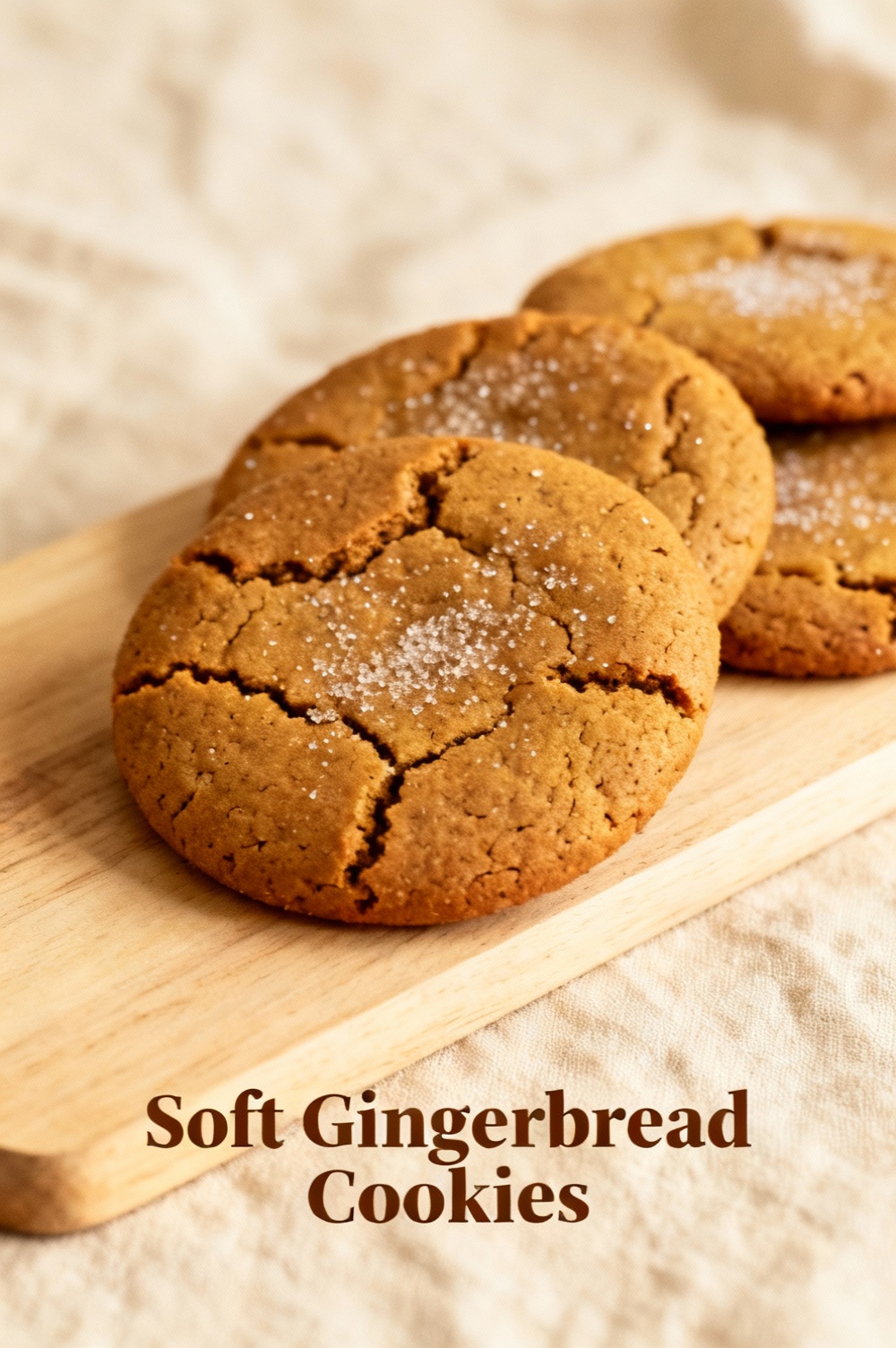
Chewy, warmly spiced gingerbread cookies with a soft center — perfect for decorating or enjoying plain.
Ingredients
- 2 1/4 cups (280 g) all-purpose flour
- 2 tsp ground ginger
- 1 tsp ground cinnamon
- 1/2 tsp ground cloves
- 1/4 tsp ground nutmeg
- 1 tsp baking soda
- 1/2 tsp salt
- 3/4 cup (170 g) unsalted butter, softened
- 1 cup (200 g) packed dark brown sugar
- 1 large egg, room temperature
- 1/2 cup (120 g) molasses (unsulphured)
- 1 tsp vanilla extract
- 1–2 tbsp milk (optional — only if dough is very stiff)
- Coarse sugar for rolling (optional)
Instructions
- In a medium bowl whisk together the flour, ground ginger, cinnamon, cloves, nutmeg, baking soda and salt. Set aside.
- In a large bowl (or stand mixer) beat the softened butter and brown sugar on medium speed until light and fluffy, about 2–3 minutes.
- Add the egg and beat until combined. Mix in the molasses and vanilla until the batter is smooth.
- Gradually add the dry ingredients to the wet mixture and mix on low until just combined. If the dough feels too stiff, add 1–2 tablespoons milk to reach a soft, scoopable consistency.
- Cover the dough and chill in the refrigerator for 30 minutes (this makes shaping easier and helps cookies keep their shape).
- Preheat the oven to 350°F (175°C). Line baking sheets with parchment paper.
- Scoop about 1 1/2 tablespoons of dough and roll into balls. Roll each ball in coarse sugar if desired and place on prepared baking sheets about 2 inches apart.
- Bake for 8–10 minutes, until the edges are set but centers remain soft. Cookies will firm as they cool — avoid overbaking for a chewy center.
- Let cookies cool on the baking sheet for 5 minutes, then transfer to a wire rack to cool completely. Store in an airtight container at room temperature for up to 5 days.
Nutrition Information
- Calories: 140 kcal
- Cholesterol: 22 mg
- Sodium: 95 mg
- Carbohydrates: 19 g
- Fiber: 0.7 g
- Sugar: 11 g
- Protein: 1.6 g