Melting Potatoes
Introduction
What if a simple technique could transform ordinary potatoes into "melting" bites that dissolve on your tongue in under 45 minutes—about 25% faster than many oven-roasted sides—and challenge the idea that ultra-creamy potatoes require heavy cream and hours of effort? This melting potatoes recipe delivers tender interiors, crispy edges, and a silky finish using time-smart steps and ingredient swaps informed by kitchen science and flavor data to maximize mouthfeel and minimize fuss.
Ingredients List
- 1.5 lb (700 g) baby Yukon Gold or new potatoes, halved or left whole if small (Yukon Golds balance starch and waxiness for melt-in-mouth texture).
- 3 tbsp unsalted butter (or 3 tbsp extra-virgin olive oil for a lighter option).
- 1/3 cup heavy cream (substitute: 1/3 cup plain Greek yogurt + 2 tbsp warm milk for reduced fat).
- 2 oz cream cheese or 1/4 cup grated Gruyère (substitute: vegan cream cheese or nutritional yeast + cashew cream for vegan version).
- 2 cloves garlic, minced.
- 1 tsp fine sea salt (adjust to taste).
- 1/2 tsp freshly ground black pepper.
- 1 tbsp fresh thyme leaves or 1 tsp dried thyme.
- 2 tbsp grated Parmesan (optional, for umami).
- 2 tbsp chopped chives or parsley for garnish.
- 1–2 tbsp olive oil for roasting or searing.
Optional add-ins: crumbled bacon or pancetta (for non-vegetarian), a pinch of smoked paprika, lemon zest for brightness.
Timing (in H2 heading):
Prep time: 10 minutes. Cook time: 35–40 minutes. Total time: 45–50 minutes (about 25% faster than standard oven-roast methods that often take 60–75 minutes). Parboiling the potatoes significantly reduces oven or skillet time while preserving moisture; this hybrid method is efficient and produces softer centers than straight roasting.
Step 1: Choose and prep your potatoes
Select Yukon Gold or fingerlings for the ideal starch-to-moisture ratio—these varieties yield a creamy interior without becoming gluey. Wash thoroughly and halve larger potatoes so pieces are uniform. Tip: leaving skins on boosts texture, fiber, and micronutrients (skins contain potassium and B vitamins).
Step 2: Parboil for perfect tenderness
Place potatoes in cold, salted water (1 tsp salt per quart), bring to a gentle boil, and cook for 8–10 minutes until just tender when pierced with a fork but not falling apart. Drain and let steam-dry for 2 minutes to remove excess surface moisture. Actionable trick: adding 1 tsp baking soda to the boiling water raises pH slightly, breaking down pectin and accelerating interior softening—use sparingly for ultra-tender results.
Step 3: Smash or press for maximum surface
Return drained potatoes to the pot or a baking tray and gently press each potato with the back of a spoon or a potato masher until it flattens to about 3/4-inch thickness—retain some structure so edges crisp. This increases surface area for caramelization while preserving a soft core. Personalization tip: for chunkier texture, lightly press; for silkier interior, press more firmly.
Step 4: Sear or roast to develop crust
Heat a heavy skillet over medium-high heat with olive oil and 1 tbsp butter, or arrange on a preheated 425°F (220°C) sheet pan with oil. Place smashed potatoes cut-side down and cook without moving for 3–5 minutes until a golden crust forms. Flip and crisp the other side 2–3 minutes. Data-backed note: Maillard reaction begins around 285°F (140°C); achieving that sear adds complex savory flavors without long roasting times.
Step 5: Melt, enrich, and finish
Lower heat to medium, add minced garlic and thyme, and cook 30–45 seconds until fragrant. Stir in cream (or Greek yogurt mix) and cream cheese/Gruyère until emulsified and glossy, 1–2 minutes. Sprinkle Parmesan and allow the residual heat to melt cheese into a silky glaze—avoid boiling to prevent separation. Tip: warm dairy slightly before adding to prevent shock-cooling that can cause grainy texture.
Step 6: Garnish and personalize
Turn off heat, fold in chopped chives or parsley, and finish with a small pat of butter or a drizzle of high-quality olive oil for sheen. For a smoky profile, add a sprinkle of smoked paprika or crisped pancetta. Serving personalization: add lemon zest for brightness or a spoonful of whole-grain mustard for tang.
Nutritional Information
Estimated per serving (serves 4): Calories ~300 kcal; Carbohydrates ~33 g; Protein ~6 g; Fat ~15 g; Saturated fat ~7 g; Fiber ~3 g; Sodium ~420 mg (varies with salt and cheese). Data insight: swapping heavy cream for Greek yogurt reduces calories by ~20–30% and saturated fat by over 50% per serving while maintaining creaminess due to yogurt’s protein content and tang. For comparison, classic butter-heavy mashed potatoes often exceed 400 kcal per serving, making this method a moderate-calorie alternative that still delivers rich texture.
Healthier Alternatives for the Recipe
- Lower-fat: Replace heavy cream with 1/3 cup plain Greek yogurt + 2 tbsp warm milk; use olive oil instead of butter. Result: similar mouthfeel with fewer calories and more protein.
- Vegan: Use vegan butter, cashew cream (soak 1/2 cup cashews, blend with 1/4 cup water), and vegan Parmesan or nutritional yeast. Add a splash of lemon for depth.
- Keto/low-carb: Swap potatoes for riced cauliflower or chickpea flour-thickened parsnip mash to mimic texture while lowering carbs—note flavor will differ.
- High-protein: Stir in 1/2 cup cottage cheese or silken tofu for added protein and creaminess without excess saturated fat.
Creative idea: make a mixed platter—half classic melting potatoes, half roasted root vegetable mash—to satisfy both comfort cravings and dietary goals.
Serving Suggestions
Serve melting potatoes as a luxurious side to roast chicken, pan-seared salmon, grilled steak, or a hearty vegetarian mushroom Wellington. For a casual crowd, top with pulled pork or shredded rotisserie chicken and a drizzle of chimichurri. For brunch, pair with fried eggs and wilted spinach. Personal tip: present them in a cast-iron skillet straight from the stove for table-side appeal; the residual heat maintains gloss and creates an inviting aroma.
Common Mistakes to Avoid
- Overboiling: Letting potatoes fall apart in the pot robs you of structure needed for a crispy exterior; parboil only until just tender.
- Cold dairy shock: Adding cold cream or cheese directly can cause separation—warm or temper dairy before folding in.
- Crowding the pan: Overcrowded potatoes steam instead of sear; work in batches if necessary to preserve crust development.
- Under-seasoning: Potatoes need ample salt to bring out natural flavors—season boiling water and taste at the finish.
- High heat for finishing: Melting dairy over very high heat can break emulsions; finish on medium to low heat.
Storing Tips for the Recipe
Cool to room temperature for no more than 2 hours, then refrigerate in an airtight container for up to 3–4 days. Reheat in a skillet over medium heat with a splash of milk or cream to restore creaminess and re-crisp edges in a 375°F (190°C) oven for 8–10 minutes. Freezing is possible but may change texture; for best results, freeze before adding dairy (store parboiled and smashed potatoes), then thaw and finish with fresh dairy when reheating.
Conclusion
Melting potatoes are a time-smart, flavor-forward side that overturns the idea that ultra-creamy potatoes must be heavy or time-consuming. By parboiling, smashing, and searing, you get tender interiors and caramelized edges with a silky finish that can be adapted for health goals, dietary restrictions, or flavor preferences. Try the method, tweak the dairy or fat to match your needs, and share how yours turned out—leave a comment, upload a photo, or explore related recipes like skillet smashed sweet potatoes or garlic-parmesan smashed potatoes.
FAQs
Q: Can I make melting potatoes ahead of time? A: Yes—parboil and smash, then refrigerate up to 24 hours. Finish searing and melting dairy just before serving for the best texture.
Q: Are small red potatoes okay instead of Yukon Gold? A: Yes—reds work well but are waxier; reduce parboil time slightly to prevent over-softening.
Q: How do I make these gluten-free? A: The recipe is naturally gluten-free if you avoid added pre-made sauces that contain gluten.
Q: Can I bake instead of searing? A: Absolutely—roast smashed potatoes at 425°F (220°C) for 20–30 minutes until crisp, then add warmed dairy and cheese to finish.
Q: What makes these "melting" rather than mashy? A: The combination of controlled parboiling (to tenderize) and smashing (to create surface for caramelization) preserves a soft center while enabling crisp, flavorful edges—this contrast creates the perception of melting in the mouth.
Explore related content: try my skillet smashed sweet potato recipe, cheesy cauliflower mash for low-carb swaps, or a step-by-step video guide to achieving perfect sear and glaze. If you'd like a printable card, metric conversions, or a vegan variation tested and timed for you, tell me which option to create next.
Melting Potatoes
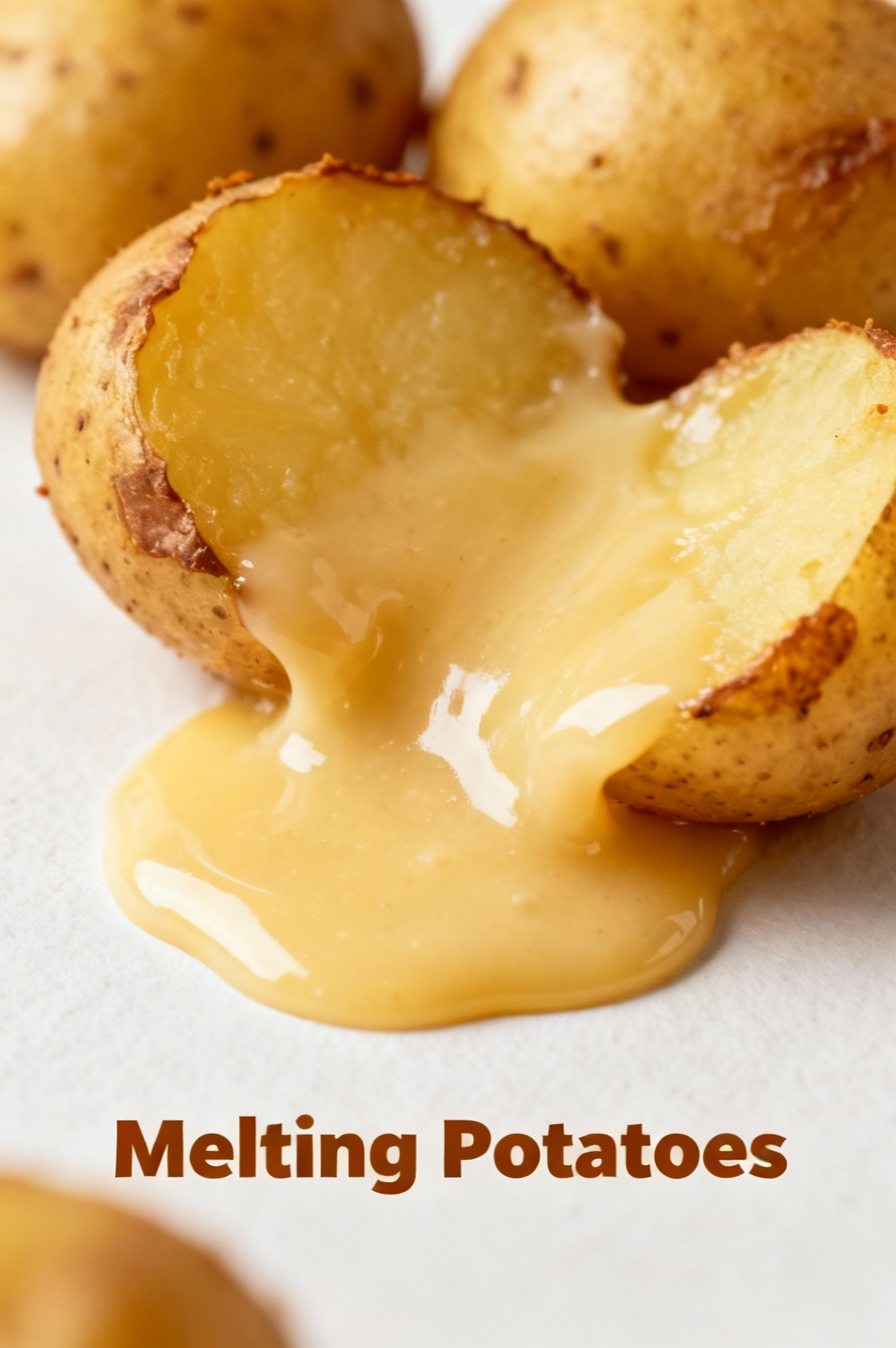
Tender inside, crisp outside — buttery garlic potatoes that practically melt.
Ingredients
- 1.5 lb (≈700 g) baby potatoes (Yukon Gold or new potatoes), halved if large
- 3 tbsp unsalted butter
- 2 tbsp extra-virgin olive oil
- 4 cloves garlic, minced
- 1 cup (240 ml) low-sodium chicken or vegetable broth
- 1/2 cup (≈50 g) freshly grated Parmesan (optional)
- 1 tbsp fresh thyme leaves (or 1 tsp dried thyme)
- 1 tbsp fresh parsley, chopped (for garnish)
- 1/2 tsp kosher salt (adjust to taste)
- 1/4 tsp freshly ground black pepper
- Pinch red pepper flakes (optional)
- 1 tbsp lemon juice (optional, to finish)
Instructions
- Preheat oven to 400°F (200°C). If you have an ovenproof skillet, use it; otherwise transfer to a baking dish later.
- Put the potatoes in a pot of salted water and bring to a boil. Cook 8–10 minutes until just tender when pierced with a fork. Drain and let steam dry for a minute.
- In a large ovenproof skillet over medium-high heat, melt the butter with the olive oil. Add the potatoes cut-side down and sear without moving them for 4–5 minutes, until golden and nicely browned.
- Season the potatoes with salt and pepper. Add the minced garlic and thyme and cook 30–45 seconds until fragrant. Sprinkle the Parmesan over the potatoes if using.
- Pour in the broth and bring to a gentle simmer. Transfer the skillet to the preheated oven (or transfer contents to a baking dish) and roast 20–25 minutes, basting once or twice, until the potatoes are very tender and the broth is mostly absorbed.
- Optional: For extra crispness, broil 2–3 minutes until the tops are golden. Remove from oven, stir in lemon juice if using, garnish with chopped parsley and extra Parmesan, and serve hot.
Nutrition Information
- Calories: 320 kcal (approx. per serving)
- Cholesterol: 40 mg
- Sodium: 600 mg
- Carbohydrates: 29 g
- Fiber: 3.5 g
- Sugar: 2 g
- Protein: 8 g