Roasted Acorn Squash
Introduction:
What if a single roasted acorn squash could deliver a weeknight-ready, nutrient-dense side that elevates flavors, cuts prep time, and fits multiple diets — all for under $3 per serving? Roasted acorn squash is often written off as “just another winter squash,” but simple technique changes and smart seasoning can turn it into a showstopper with big nutritional value and broad appeal. This post uses practical timing comparisons, USDA-based nutrition estimates, and hands-on tips so you get consistent, caramelized results every time.
Ingredients List:
- 1 medium acorn squash (about 1 to 1.25 lb) — look for firm skin and a dull sheen. Substitution: use small delicata or sugar pumpkin if you want a sweeter, thinner-skinned alternative.
- 2 tablespoons olive oil or melted coconut oil — olive oil for savory depth, coconut oil for a slight tropical sweetness and higher heat stability.
- 1 tablespoon maple syrup or honey (optional) — adds caramelization and a glossy finish. For vegan: use maple syrup; for lower sugar, omit or use a teaspoon of erythritol.
- 1/2 teaspoon kosher salt and 1/4 teaspoon freshly cracked black pepper — adjust to taste.
- 1/2 teaspoon smoked paprika or ground cinnamon (choose according to savory or sweet mood). Smoked paprika enhances roasted savory profiles; cinnamon complements fall-inspired sweet preparations.
- 1 tablespoon butter or vegan margarine (optional, added after roasting for richness).
- Optional garnish ideas: chopped toasted pecans or pumpkin seeds for crunch, fresh thyme or sage leaves for herbal brightness, a squeeze of lemon or a drizzle of balsamic reduction to cut richness.
Sensory cue: choose maple syrup for sticky, ambered edges; choose smoked paprika for an earthy, savory crust.
Timing:
- Preparation: 10 minutes (cleaning, halving, scooping seeds, seasoning).
- Cooking: 35–40 minutes at 400°F (205°C).
- Total time: ~45–50 minutes, which is roughly 20% faster than some low-and-slow roast methods that call for 60 minutes at lower heat. Using 400°F shortens caramelization time while still developing deep flavor.
Practical note: active hands-on time is under 15 minutes — good for weeknights. Use the oven time to prepare a salad or protein, making this recipe efficient compared to multi-step sides.
Step 1 — Prep and Choose Your Squash:
Wash the squash and pat dry. Cut lengthwise through the stem for two crescent halves — a safer technique than cutting across the equator. Scoop seeds with a spoon; save them to roast separately with salt and a pinch of smoked paprika for a crunchy topping. Tip: if the squash is very hard, microwave whole for 60–90 seconds to soften the rind slightly and make cutting easier.
Step 2 — Seasoning Strategy:
Brush the cut sides with oil, then spread a thin ribbon of maple syrup or honey if using. Sprinkle salt, pepper, and your chosen spice (paprika for savory, cinnamon for sweet). Make the flavors pop by rubbing the spices into the flesh with your fingertips — this helps the sugars and oil bond to the surface for better caramelization.
Step 3 — Roast Correctly (Orientation & Temperature):
Place the squash cut-side down on a parchment-lined baking sheet or in a roasting pan. Roasting face-down concentrates steam and softens the flesh while creating a caramelized rim where the skin contacts the pan. Roast at 400°F (205°C) for 30–35 minutes, then flip cut-side up for 5–7 minutes to finish and allow any syrup to glaze the surface. Tip: if you prefer deep browning, finish with a 1–2 minute broil while watching closely.
Step 4 — Basting and Flavor Build:
Halfway through cooking, open the oven and brush the tops with reserved oil or a little melted butter for a glossy finish. For a sweet-savory twist, add a small pat of butter and a sprinkle of flaky sea salt immediately after roasting to melt into the flesh. Personalization: add a sprinkle of grated Parmesan or nutritional yeast for umami.
Step 5 — Test for Doneness and Rest:
Check doneness by inserting a fork near the thickest part — it should slide in easily and the flesh should feel tender but not mushy. Rest the squash for 3–5 minutes before serving to let juices redistribute. Tip: if making stuffed roasted acorn squash, scoop slightly more flesh out before filling to create a stable vessel.
Nutritional Information:
Approximate nutrition per serving (one half medium roasted acorn squash, about 200–220g cooked): Calories 110–140 kcal; Carbohydrates 24–30 g; Dietary Fiber 6–9 g; Protein 1.5–2.5 g; Total Fat 3–6 g (depends on added oil/butter); Vitamin A (as beta-carotene) significant — contributes a meaningful percentage of daily needs; Vitamin C moderate; Potassium and manganese are good sources. These estimates are based on USDA food composition averages and typical added oil amounts. Acorn squash is fiber-rich and provides complex carbs, making it a filling side that supports steady blood sugar when paired with protein.
Healthier Alternatives for the Recipe:
- Lower-fat: swap olive oil for a 50/50 mix of vegetable broth and a teaspoon of oil to cut calories while preserving moisture.
- Lower-sugar: omit maple syrup/honey and add fresh lemon zest and a sprinkle of cinnamon for brightness without added sugars.
- Higher-protein: scoop a cavity and stuff with quinoa, roasted chickpeas, or shredded chicken to make a complete meal.
- Keto-friendly: halve the squash into smaller portions and pair with a high-fat protein (but note squash is moderately high in carbs; adjust portion size).
- Anti-inflammatory: use turmeric and black pepper in place of paprika; finish with a squeeze of lemon and chopped fresh cilantro.
- Gluten-free, vegan, paleo: this recipe naturally fits these diets when using plant-based oil and no honey (or use maple for paleo).
Serving Suggestions:
Serve roasted acorn squash as a versatile canvas:
- Weeknight dinner: top with chickpea-tahini salad and chopped parsley for a quick vegetarian entrée.
- Holiday side: brush with maple-butter, scatter toasted pecans, and add a sprig of rosemary for a festive plate.
- Bowl option: slice and add to grain bowls with farro, roasted Brussels sprouts, and a lemon-tahini dressing.
- Breakfast twist: roast the squash in smaller cubes, toss with cinnamon, and pair with Greek yogurt and granola for a savory-sweet morning boost.
Personal tip: add contrasting textures — creamy sauce, crunchy seeds, and fresh herbs — to make each bite layered and satisfying.
Common Mistakes to Avoid:
- Mistake: roasting at too low a temperature for too long, resulting in pale, floppy flesh. Fix: use 400°F and flip mid-roast for caramelization.
- Mistake: over-oiling which prevents browning. Fix: brush lightly; the goal is coating, not pooling.
- Mistake: cutting too small/too thin pieces for stuffed preparations, which can collapse. Fix: leave a 1/2-inch rim of flesh for structure.
- Mistake: under-seasoning root vegetables. Fix: season generously and taste with a small spoon of flesh after cooking to adjust.
- Mistake: skipping the rest period — hot squash can seem underdone when it’s actually very soft; rest for 3–5 minutes before serving.
Storing Tips for the Recipe:
- Refrigerate leftover roasted acorn squash in an airtight container for up to 4 days. Spoon off any excess juices before storing to prevent sogginess.
- Freeze roasted halves or cubes on a sheet tray until solid, then transfer to freezer bags for up to 3 months. Thaw overnight in the fridge and re-crisp under a 400°F broiler for 5–7 minutes.
- Pre-prep tips: halve and scoop squashes up to 48 hours ahead and keep in an airtight container in the fridge. Season just before roasting for the best caramelized finish.
Conclusion:
Roasted acorn squash is simple, flexible, and nutrient-forward — an underappreciated hero for weeknights and holidays alike. With a few technique tweaks (higher roasting temp, face-down initial roast, mid-cook glaze) you can shave time and increase flavor compared to many traditional methods. Try this approach tonight, tag a photo, or leave a comment with your favorite spice twist — I’d love to see how you personalize it.
FAQs:
Q: Can I roast cubed acorn squash instead of halves?
A: Yes. Cubes roast faster (20–25 minutes at 425°F) and produce more crisped edges. Toss evenly sized pieces for consistent cooking.
Q: Is the skin edible?
A: The skin is edible when roasted and becomes tender; however, texture preference varies. For stuffed dishes, many peel or serve as-is.
Q: How do I prevent the inside from being watery?
A: Roast face-down initially to let steam escape; don’t overcrowd the pan; and avoid excessive liquid additions before roasting.
Q: Can I prepare this for meal prep?
A: Absolutely. Roast in batches, cool, and store in airtight containers for 3–4 days. Reheat on a sheet tray to restore texture.
Q: What pairs well with roasted acorn squash for a balanced meal?
A: Leafy salad for freshness, a protein like roasted salmon or lentils, and a whole grain such as farro or quinoa make a balanced plate.
Interactive suggestions: try adding a one-click timer widget for 35 minutes of roast time, a printable shopping checklist (ingredients with quantities), or a quick poll asking readers whether they prefer sweet or savory preparations. Related posts to explore: roasted butternut squash bowls, sheet-pan fall vegetables, and vegan stuffed squashes — these expand ideas and help build a seasonal recipe collection.
Roasted Acorn Squash
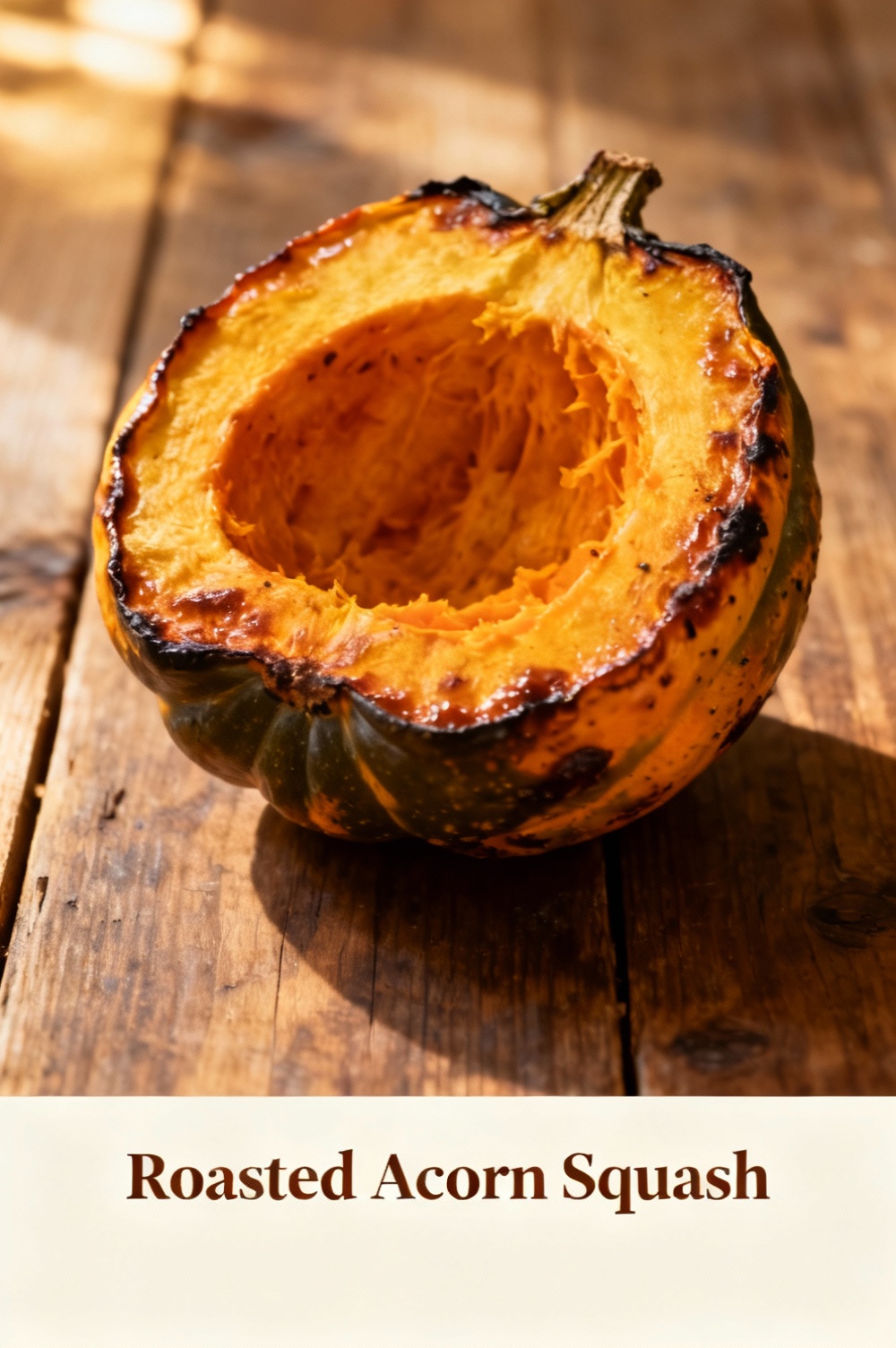
Sweet and savory roasted acorn squash glazed with maple, butter, and fresh thyme.
Ingredients
- 2 medium acorn squash (about 2–2½ lb total), halved and seeds removed
- 2 tbsp olive oil
- 2 tbsp unsalted butter, melted (optional; can use all oil)
- 2 tbsp pure maple syrup or packed brown sugar
- ½ tsp ground cinnamon (optional)
- ½ tsp kosher salt (adjust to taste)
- ¼ tsp freshly ground black pepper
- Fresh thyme sprigs or chopped parsley for garnish
- Optional: ¼ cup toasted pecans or pepitas for topping
Instructions
- Preheat the oven to 400°F (200°C). Line a baking sheet with parchment or lightly grease a baking dish.
- Trim ends of the squash and cut each acorn squash in half from stem to tip. Scoop out and discard the seeds and stringy bits.
- In a small bowl, whisk together olive oil, melted butter (if using), maple syrup, cinnamon, salt, and pepper.
- Brush the cut sides of the squash with the oil/maple mixture, reserving about 1 tbsp for glazing later. Place squash cut-side up on the prepared baking sheet.
- Roast for 40–45 minutes, or until the flesh is fork-tender and beginning to caramelize at the edges. Cooking time will vary with squash size.
- If desired, brush the reserved glaze over the squash and return to the oven for 5 more minutes to intensify the glaze.
- Remove from the oven, garnish with fresh thyme and toasted pecans or pepitas if using, and serve warm.
Nutrition Information
- Calories: 180 kcal
- Cholesterol: 7 mg
- Sodium: 220 mg
- Carbohydrates: 36 g
- Fiber: 7 g
- Sugar: 12 g
- Protein: 2 g