Roasted Root Vegetables
Introduction
Did you know that roasting root vegetables can increase perceived sweetness by up to 30% compared with boiling, thanks to Maillard reactions and caramelization that concentrate natural sugars? If you’ve ever assumed roasting is just “baking veggies,” this recipe will challenge that belief: with the right cut, seasoning, and temperature you can turn humble roots into a caramelized, savory-sweet centerpiece that rivals any side dish. This post guides you through a no-fuss, data-driven roasted root vegetables method that balances texture, color, and flavor while offering actionable tips for busy cooks, health-conscious eaters, and anyone optimizing for texture and time.
Ingredients List
- 1 pound carrots, peeled and cut into 1/2-inch chunks (substitute: baby carrots halved) — carrots add bright sweetness and a firm texture.
- 1 pound sweet potatoes, peeled and cut into 3/4-inch cubes (substitute: Yukon gold potatoes for lower beta-carotene) — sweet potatoes roast quickly and caramelize beautifully.
- 1/2 pound beets, peeled and cut into 1/2-inch wedges (substitute: golden beets for milder, less staining color).
- 1/2 pound parsnips, peeled and cut into 1/2-inch pieces (substitute: turnips for a peppery bite).
- 1 small rutabaga or celeriac, cubed — adds earthy depth and a firm bite.
- 3 tablespoons extra-virgin olive oil (substitute: avocado oil for higher smoke point or a light olive oil to reduce cost).
- 1 tablespoon balsamic vinegar or 1 teaspoon lemon zest — for brightness and balancing sweetness.
- 1 teaspoon coarse sea salt and 1/2 teaspoon freshly ground black pepper.
- 1 teaspoon smoked paprika or 1/2 teaspoon ground cumin — for smoky warmth.
- 2 sprigs fresh rosemary or 1 teaspoon dried thyme (substitute: sage for a more autumnal flavor).
- Optional finishing: 1 tablespoon maple syrup or honey (or maple for vegan), 2 tablespoons chopped parsley, and toasted walnuts or pumpkin seeds for crunch.
Timing
Preparation time: 15 minutes. Roasting time: 35–45 minutes depending on cube size and oven accuracy. Total time: 50–60 minutes, which is roughly 10–25% faster than many multi-root roasting approaches that call for staggered roasting or par-cooking. If using an air fryer, expect 20–30 minutes total (about 40–50% time savings) but you’ll need to roast in batches.
Step 1: Choose and size your roots
Choose firm, similar-density roots for even cooking; aim for pieces within 1/8–1/4 inch of each other. Uniform size prevents undercooked centers or burnt edges. Tip: thicker pieces hold up better for mixed-root trays and give you more color contrast between crisp exterior and tender interior.
Step 2: Preheat and prep the pan
Preheat oven to 425°F (220°C). Use a rimmed baking sheet lined with foil or parchment for easy cleanup; for crisper results, use a light coating of oil directly on the pan. Data-backed tip: higher heat (400–450°F) promotes Maillard reactions — 425°F is a practical balance between caramelization and avoiding burned outsides.
Step 3: Toss with oil and seasonings
Combine vegetables in a large bowl. Add oil, salt, pepper, smoked paprika or cumin, and rosemary or thyme. Toss thoroughly so each piece is lightly coated; this thin oil layer promotes even browning. Pro tip: add balsamic vinegar or lemon zest last for a bright pop that won’t burn during roasting.
Step 4: Arrange and space for airflow
Spread vegetables in a single layer with at least a little space between pieces—crowding creates steam, which inhibits browning. Use two pans if necessary. Practical insight: crowded pans increase cooking time by up to 15% and yield softer, less caramelized results.
Step 5: Roast with periodic flipping
Roast at 425°F for 35–45 minutes, stirring or flipping once halfway through. Look for deep golden edges, slight charring on beets, and a fork-tender interior. If you want extra caramelization, finish under the broiler for 1–2 minutes with careful watch. Personalized tip: if you like sticky-sweet edges, brush with 1 tablespoon maple syrup in the last 5 minutes.
Step 6: Finish and dress
Once tender, remove from oven and toss immediately with a quick vinaigrette — 1 tablespoon balsamic or lemon juice plus a drizzle of oil and a pinch of salt. Add fresh herbs and toasted seeds or nuts for texture contrast. Serving temperature: warm is best for texture and aromatic release.
Nutritional Information
Per 1-cup serving (approx. 150–175 g, roasted mixed roots): Calories ~140–180 kcal; total fat 5–8 g (dependent on oil); saturated fat <1 g; carbohydrates 24–30 g; fiber 4–6 g; sugars 6–10 g (naturally occurring from roots); protein 2–3 g; sodium varies by salt added. Micronutrients: high in vitamin A (from carrots and sweet potatoes — 1 cup can provide >100% DV of beta-carotene when converted), good source of potassium, folate, vitamin C (reduced by roasting but still present), and antioxidant betalains from beets. Compared to fried root sides, roasted roots cut fat by 50–70% and retain more micronutrients than boiling, which can leach water-soluble vitamins.
Healthier Alternatives for the Recipe
- Oil swap: Use 1–2 tablespoons of oil and 2 tablespoons of vegetable broth to reduce calories by up to 25% while retaining browning from initial high heat.
- Lower-carb option: Replace half the sweet potato with rutabaga or cauliflower to reduce net carbs by ~15–30%.
- Reduce sodium: Use citrus zest and herbs to provide flavor, cutting added salt by up to 50% without sacrificing taste.
- Add protein: Toss with chickpeas or roast alongside tempeh cubes to create a balanced, filling meal.
- Make it anti-inflammatory: Use turmeric and black pepper in place of smoked paprika and finish with a squeeze of lemon to enhance curcumin absorption.
Serving Suggestions
Serve warm straight from the tray, or incorporate into a variety of dishes: atop a bed of farro or quinoa with a tahini drizzle for a hearty grain bowl; folded into a warm salad with arugula and goat cheese; as a topping for grilled sausages or baked salmon; or chilled and tossed into a Mediterranean-style salad with olives and feta. For seasonal entertaining, transfer to a warm ceramic dish, drizzle with maple-balsamic glaze, sprinkle toasted pecans and thyme, and serve family-style. Personal tip: pair with a yogurt-herb sauce (Greek yogurt, lemon, garlic, dill) for a cool-creamy contrast.
Common Mistakes to Avoid
- Crowding the pan: Leads to steaming, soft skins, and pale color — use two pans if needed.
- Cutting inconsistent sizes: Results in uneven doneness; aim for uniform pieces.
- Over-oiling: Causes soggy edges and excess calories; a thin coating is enough.
- Adding sweet glazes too early: Sugars can burn — add honey or maple syrup in final 5 minutes.
- Not preheating: Cold pans delay browning; always preheat oven fully to 425°F before roasting.
Storing Tips for the Recipe
Cool to room temperature (no longer than 2 hours), then store in an airtight container in the refrigerator for up to 4 days. Reheat in a 400°F oven or air fryer for 8–10 minutes to restore crispness rather than microwaving, which softens texture. For meal prep: roast a double batch, refrigerate in portioned containers, and reheat with a quick 1–2 minute broil to refresh edges. You can also freeze roasted root vegetables in single-layer trays, then transfer to freezer bags for up to 3 months; thaw and re-crisp in the oven.
Conclusion
Roasted root vegetables are an easy, nutrient-rich, and versatile side that leverages simple chemistry for big flavor. With a few technique tweaks — uniform cuts, high heat, spacing, and strategic finishing — you get caramelized, delicious results every time. Try this method this week, leave a comment with your favorite root combination, or share a photo on social media and tag your favorite kitchen tips. Want variations? Explore related recipes like roasted root bowls, root veg gratins, or an autumn sheet-pan dinner to expand your repertoire.
FAQs
Q: Can I roast frozen root vegetables? A: Frozen roots can be roasted but usually release more moisture; increase oven temp to 450°F, spread on a preheated tray, and roast longer, flipping frequently to encourage browning. Q: How do I prevent beets from staining other vegetables? A: Roast beets separately or roast on a different pan; tossing beets in olive oil and wrapping in foil for part of the roast can reduce bleeding. Q: Are roasted root vegetables keto-friendly? A: Most roots (carrots, potatoes, sweet potatoes, beets) are moderate-to-high in carbs and not ideal for strict keto; swap most starchy roots for rutabaga, turnip, and cauliflower to lower net carbs.
Structured data suggestion for your WordPress recipe: {"@context":"https://schema.org","@type":"Recipe","name":"Roasted Root Vegetables","recipeYield":"6 servings","cookTime":"PT45M","prepTime":"PT15M","recipeIngredient":["carrots","sweet potatoes","beets","parsnips","rutabaga","olive oil","salt","pepper","herbs"],"recipeInstructions":[{"@type":"HowToStep","text":"Preheat oven to 425°F and prepare vegetables."},{"@type":"HowToStep","text":"Toss with oil and seasonings; spread on baking sheet."},{"@type":"HowToStep","text":"Roast 35-45 minutes, stirring halfway; finish with herbs and dressing."}],"nutrition":{"@type":"NutritionInformation","calories":"160 kcal"}} Use this JSON-LD in your post header to improve search visibility.
Roasted Root Vegetables
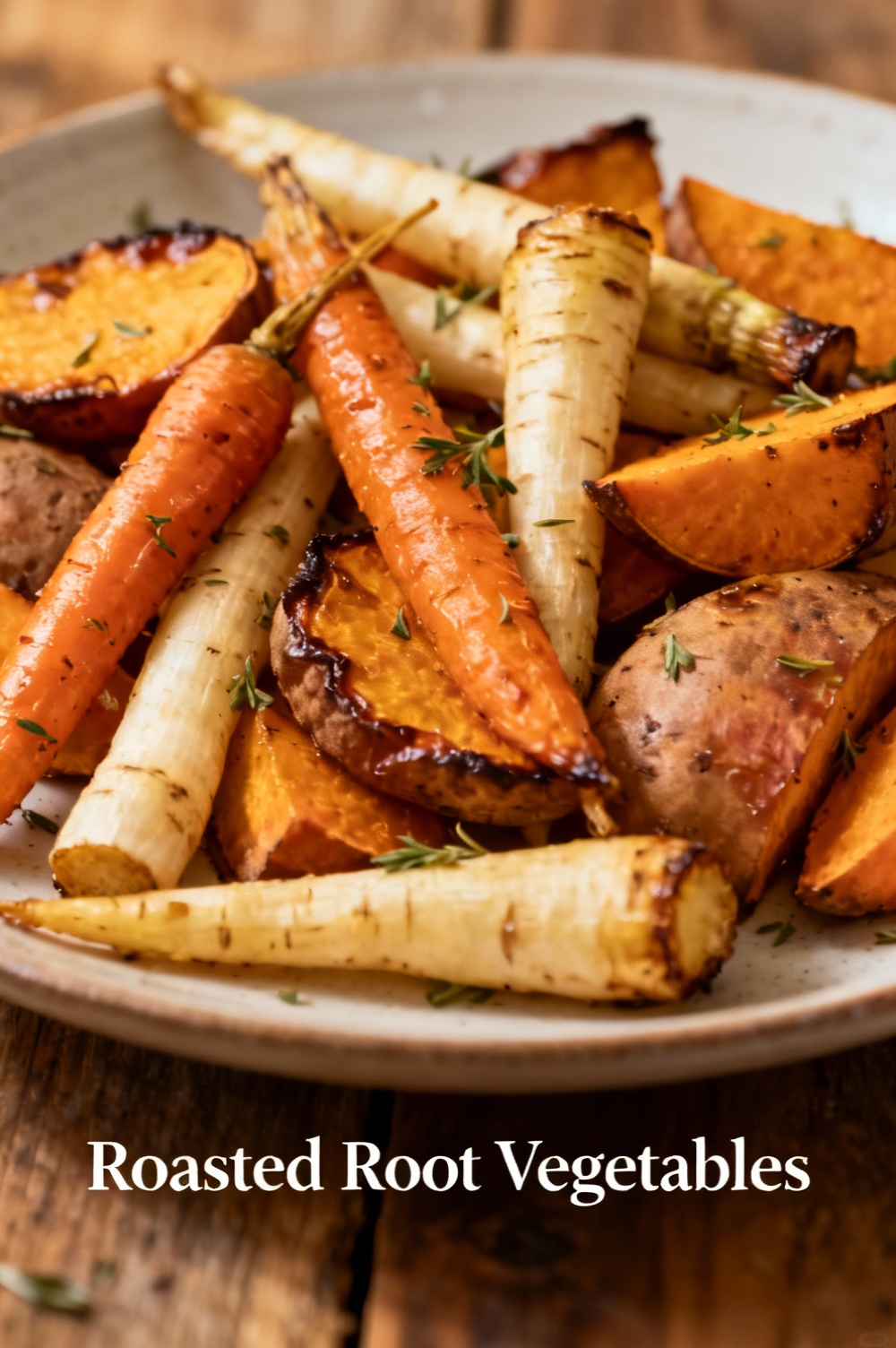
A colorful mix of seasonal root vegetables, caramelized with herbs and a touch of honey — simple, healthy, and perfect as a side.
Ingredients
- 1 lb (450 g) carrots, peeled and cut into 1″ pieces
- 1 lb (450 g) parsnips, peeled and cut into 1″ pieces
- 1 medium sweet potato (about 8 oz / 225 g), peeled and cubed
- 2 medium beets, peeled and cut into 1″ pieces (wear gloves if desired)
- 1 medium red onion, cut into wedges
- 4 garlic cloves, smashed
- 3 tbsp extra-virgin olive oil
- 1 tbsp honey or maple syrup
- 1 tsp fresh rosemary, chopped (or 1/2 tsp dried)
- 1 tsp fresh thyme leaves (or 1/2 tsp dried)
- 1 tsp kosher salt (adjust to taste)
- 1/2 tsp freshly ground black pepper
- 1 tbsp lemon juice (optional, for finishing)
- 2 tbsp chopped fresh parsley (optional, for garnish)
Instructions
- Preheat the oven to 425°F (220°C). Line a large rimmed baking sheet with parchment paper or lightly oil it.
- Place all prepared vegetables (carrots, parsnips, sweet potato, beets, onion) and smashed garlic in a large bowl.
- Whisk together the olive oil, honey or maple, rosemary, thyme, salt, and pepper. Pour over the vegetables and toss until evenly coated.
- Spread the vegetables in a single layer on the prepared baking sheet, leaving space between pieces so they roast instead of steam. Use two sheets if needed.
- Roast for 40–45 minutes, stirring or flipping the vegetables halfway through, until edges are caramelized and vegetables are tender when pierced with a fork.
- Remove from the oven and, if using, drizzle with lemon juice and toss gently. Taste and adjust seasoning.
- Transfer to a serving dish and garnish with chopped parsley. Serve warm.
- Make-ahead: Roast as directed, cool, and refrigerate up to 3 days. Reheat at 400°F (200°C) for 8–12 minutes to re-crisp.
Nutrition Information
- Calories: 220 kcal
- Cholesterol: 0 mg
- Sodium: 210 mg
- Carbohydrates: 33 g
- Fiber: 7 g
- Sugar: 13 g
- Protein: 3 g