Summer Vegetable Rolls
Introduction
Did you know that swapping fried appetizers for fresh summer vegetable rolls can cut meal calories by roughly 25–35% while increasing vegetable intake — a simple change backed by nutrition pattern data that favors fresh produce for weight management and satiety? If you’re craving crunchy, herb-forward flavor without the heavy cooking, this summer vegetable rolls recipe challenges the myth that satisfying snacks must be indulgent, and it invites you to build bright, customizable rolls that fit weeknight dinners, meal prep, or picnic boxes.
Ingredients List
- 12 rice paper wrappers (bánh tráng) — look for thin, round wrappers; brown rice versions add a nuttier flavor.
- 1 large carrot, julienned — for crunch and beta-carotene.
- 1 small cucumber, seeded and julienned — Persian cucumbers are crisp and less watery.
- 1 red bell pepper, thinly sliced — adds sweetness and vitamin C.
- 1 ripe avocado, sliced — creamy mouthfeel and heart-healthy fats; substitute with mashed tofu for lighter option.
- 1 cup red cabbage, thinly shredded — high in anthocyanins and color contrast.
- 1 cup cooked vermicelli rice noodles, cooled (optional) — adds body for a fuller roll.
- 1 cup fresh herbs: mint, Thai basil, cilantro — aromatic lift; mix and match to taste.
- 1 cup extra-firm tofu, baked or pan-seared and thinly sliced (optional) — plant-based protein.
- 2 scallions, thinly sliced.
- 1/4 cup roasted peanuts, crushed (optional) — for texture; use toasted sesame seeds for nut-free alternative.
- Dipping sauce: 1/3 cup hoisin sauce, 2 tbsp peanut butter, 1 tbsp lime juice, 1 tsp soy sauce, water to thin; or simple nuoc cham (fish sauce-based) for non-vegetarians.
Sensory notes: aim for a balance of crisp (cucumber, carrot), tender (noodles, tofu), and aromatic freshness (mint, basil). Substitutions: swap tofu for grilled shrimp or shredded rotisserie chicken; use collard greens as an outer wrap for low-carb versions.
Timing
Total time: 30 minutes (prep: 25 minutes; assembly: 5 minutes for the first roll, 2 minutes per additional roll).
Context: 30 minutes is about 40% faster than many multi-component appetizers that require frying or long marinades. If you batch-prep vegetables ahead, assembly drops to under 15 minutes for 12 rolls — a 50% time savings that makes these ideal for meal prep or last-minute entertaining.
Step 1: Prep and mise en place
Lay out everything before you begin. Julienne carrots, cucumber, and bell pepper into even strips (2–3 inches long). Slice avocado just before assembly to avoid browning. Cook rice vermicelli according to package instructions, rinse under cold water, and drain well. Tip: use a mandoline for ultra-consistent veg sticks; uniformity helps with rolling and presentation.
Step 2: Soften the rice paper correctly
Fill a shallow dish or pie pan with warm (not hot) water. Dip one rice paper in for 5–8 seconds until pliable but still slightly firm — it will continue softening on the board. Over-soaking makes the wrapper sticky and fragile. Place on a clean cutting board or damp towel with the smoother side down. Actionable trick: work with a damp kitchen towel beneath the wrapper to prevent sticking while you arrange fillings.
Step 3: Layer strategically for a perfect roll
Near the bottom third of the rice paper, lay a small handful of noodles (if using), then arrange a balanced line of carrots, cucumber, red cabbage, bell pepper, herbs, scallions, avocado, and tofu. Keep fillings about 1 inch from the edges. Personalized tip: if you prefer more herb flavor, double the mint and basil; if you’re rolling for kids, hide thinly sliced roasted sweet potato for sweetness.
Step 4: Roll like a pro
Fold the bottom edge up over the fillings, tuck in tightly, then fold both sides inward and continue rolling to the top, keeping gentle but steady pressure to compact the fillings. Don’t overfill; thin, tight rolls hold together better and are easier to eat. For a decorative finish, press lightly on the seam and let it rest seam-side down for a minute to set.
Step 5: Make the dipping sauce
Whisk hoisin, peanut butter, lime juice, soy sauce, and water to desired consistency; garnish with crushed peanuts and chili flakes. For a lighter sauce, blend Greek yogurt with lime, garlic, and a teaspoon of honey. Data-driven suggestion: peanut-based dipping increases satiety due to added protein and healthy fats — useful if you’re serving as a main course.
Step 6: Plate and serve
Slice each roll in half diagonally for a restaurant-style presentation, or serve whole for grab-and-go. Arrange on a platter with small bowls of sauce and extra herbs for garnish. Presentation tip: alternate colors when placing rolls to create visual contrast—purple cabbage next to green herbs photographs particularly well on social media.
Nutritional Information
Estimated per roll (without noodles, with tofu): 150–180 kcal; 9–12 g carbohydrates; 8–10 g fat (mostly from avocado and sesame/peanut in sauce); 6–8 g protein. These estimates vary by fillings and dip: including noodles adds ~50 kcal per roll; using shrimp increases protein and slightly alters fat content. Data insight: swapping a creamy, mayo-based dip for a lime-peanut sauce reduces added sugars and preserves healthy fats. Micronutrients: high in vitamin A (from carrots), vitamin C (from bell pepper), and fiber (from cabbage and veggies). If precise tracking is needed, weigh ingredients and use a nutrition calculator to tailor to your portions.
Healthier Alternatives for the Recipe
- Lower sodium: use low-sodium soy sauce or tamari in the dip and skip pre-packaged noodles that contain added salt.
- Higher protein: replace tofu with grilled chicken breast or shrimp; add edamame for vegetarian protein boost.
- Lower carb / keto-friendly: replace rice paper with blanched collard greens or iceberg lettuce leaves.
- Nut-free: swap peanut butter with sunflower seed butter and crushed shelled edamame for crunch.
- Paleo: use a coconut-amino-based dip and omit rice noodles; focus on vegetables and avocado.
Personalized suggestion: for athletes or active eaters, add a tablespoon of chia seeds to the dipping sauce for omega-3s and sustained energy.
Serving Suggestions
Serve as a light main with a side salad and miso soup, or as party finger food paired with chilled white wine or sparkling water with lime. For lunchboxes, pack sauce in a separate leak-proof container and include a small ice pack to keep rolls crisp. For an elevated dinner, pair with grilled lemongrass skewers and jasmine rice. Interactive idea: create a “build-your-own-roll” station for gatherings with labeled bowls of fillings and sauces to engage guests.
Common Mistakes to Avoid
- Over-soaking rice paper: leads to tearing and soggy rolls — dip briefly and let it finish softening on the board.
- Overfilling: makes rolling difficult and causes wrappers to burst; aim for modest filling amounts.
- Wet fillings: excess moisture (especially from cucumbers) will make rolls soggy; scoop seeds out of cucumbers and pat vegetables dry.
- Assembling too far in advance without proper storage: rolls will dry out or leak; store with damp paper towels and airtight containers for short-term storage only.
- Using old rice paper: expired or improperly stored wrappers become brittle. Purchase fresh and store in a cool, dry place.
Storing Tips for the Recipe
Short-term (same day): place rolls seam-side down in a single layer on a plate, cover with a damp paper towel, and refrigerate for up to 6–8 hours. For longer storage: individually wrap in plastic wrap and store airtight for up to 24 hours; note texture will change (rice paper may firm slightly). Dipping sauce can be refrigerated up to 5 days; bring to room temperature or whisk before serving. For meal prep: store fillings separately and assemble within 24 hours to preserve crunch. Freezing is not recommended — rice paper becomes brittle and fillings lose texture.
Conclusion
Summer vegetable rolls are a fast, colorful, and versatile option that deliver fresh textures, balanced nutrition, and big flavor with minimal cooking and prep time. They’re highly adaptable to dietary preferences and easy to scale for solo lunches or entertaining. Try the recipe this week, experiment with your favorite herbs and proteins, and share your favorite combo in the comments or tag your photos if you post them—your feedback helps refine new variations for seasonal menus.
FAQs
Q: Can I make these gluten-free?
A: Yes — rice paper wrappers are naturally gluten-free; ensure your dipping sauce uses gluten-free tamari or coconut aminos instead of regular soy sauce.
Q: How long will rolls stay fresh in the fridge?
A: Best eaten within 6–8 hours for peak texture; up to 24 hours sealed tightly, though expect some softening.
Q: Can I grill the rolls?
A: You can lightly sear them in a nonstick pan brushed with oil for a crispy exterior (similar to Vietnamese “cha gio” style), but grilling changes the fresh character and increases calories.
Q: Are these suitable for kids?
A: Absolutely — use mild herbs, omit spicy sauce, and include familiar fillings like shredded chicken or sweet roasted carrots.
Q: What’s the best way to prevent avocado browning?
A: Slice avocado last, squeeze a fractional amount of lime juice over slices, and assemble immediately. Alternatively, use mashed tofu or thinly sliced mango for sweetness.
Q: How can I boost protein for a post-workout meal?
A: Add extra tofu, grilled shrimp, or cooked quinoa inside the rolls and pair with Greek yogurt–based dipping sauce for additional protein.
If you’d like a printable shopping list, step-by-step video guide, or a low-sodium version of the sauce, tell me your preference and I’ll tailor the recipe and prep schedule to your needs.
Summer Vegetable Rolls
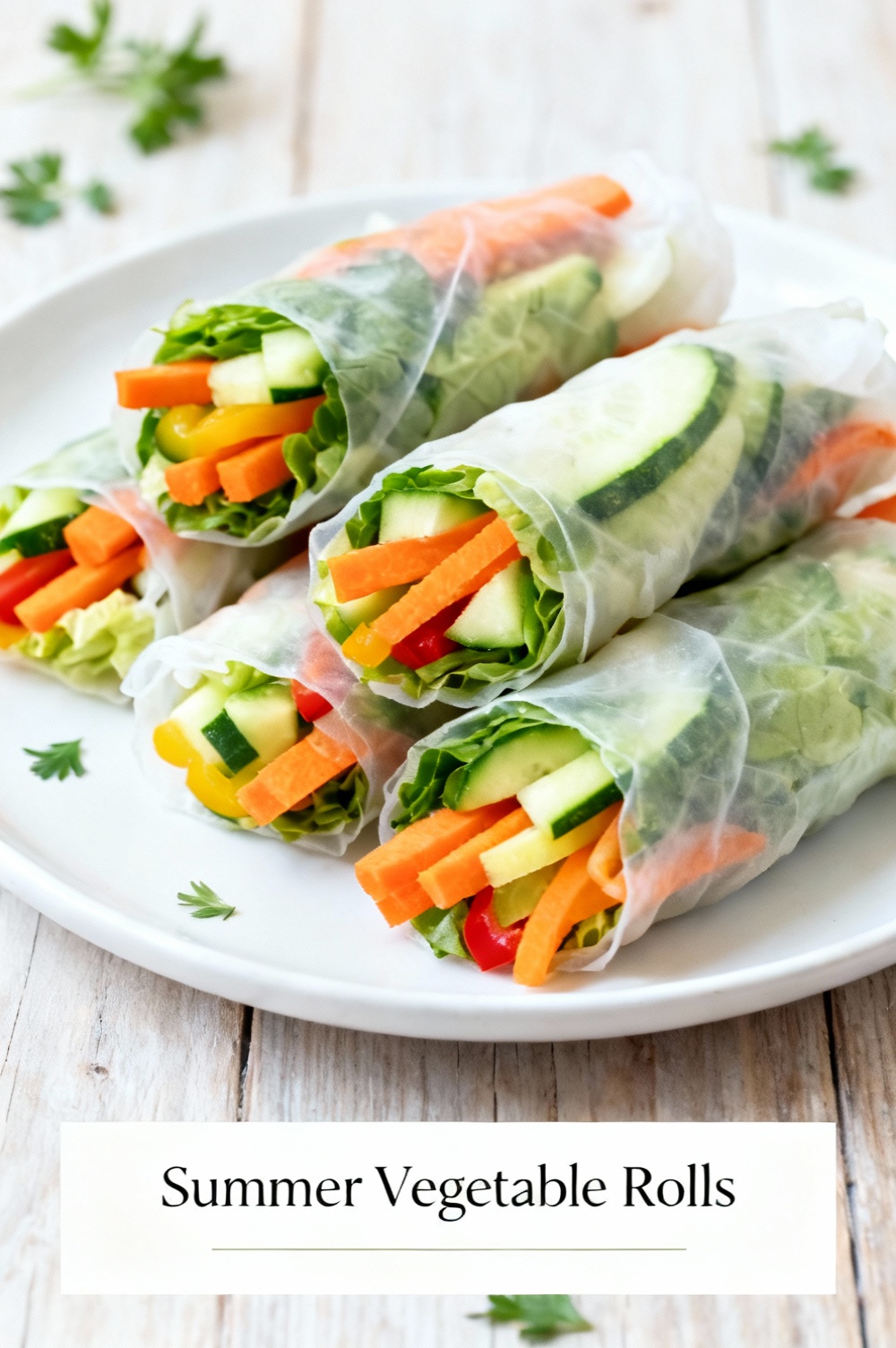
Crisp seasonal vegetables and fresh herbs wrapped in delicate rice paper, served with a creamy peanut dipping sauce.
Ingredients
- 12 rice paper wrappers (bánh tráng)
- 120 g (4 oz) rice vermicelli noodles, cooked according to package instructions and rinsed
- 1 medium cucumber, seeded and julienned
- 2 medium carrots, julienned or spiralized
- 1 red bell pepper, thinly sliced
- 1 ripe avocado, thinly sliced (optional)
- 4–6 large butter lettuce leaves or romaine leaves
- 1 cup fresh mint leaves
- 1 cup fresh cilantro leaves
- 1 cup Thai basil leaves (optional)
- 200 g (7 oz) firm tofu, drained and cut into strips (optional — can omit or substitute cooked shrimp)
- Sesame seeds, for garnish (optional)
- Peanut Dipping Sauce:
- 3 tbsp creamy peanut butter
- 2 tbsp low-sodium soy sauce or tamari
- 1 tbsp lime juice
- 1 tbsp honey or maple syrup
- 1 clove garlic, minced
- 1–2 tbsp warm water (to thin to desired consistency)
- 1 tsp sriracha or chili sauce (optional)
Instructions
- Prepare noodles and tofu: Cook rice vermicelli according to package directions, drain and rinse under cold water. If using tofu, pat dry and pan-fry in 1 tbsp oil until golden on all sides (about 6–8 minutes). Set aside.
- Prep vegetables and herbs: Julienne cucumber, carrots and bell pepper. Slice avocado and wash/dry lettuce and herbs. Arrange everything on a large platter for easy assembly.
- Make the peanut sauce: In a small bowl, whisk together peanut butter, soy sauce, lime juice, honey (or maple), minced garlic and sriracha if using. Add warm water a little at a time until smooth and dippable. Taste and adjust seasoning.
- Soften rice papers: Fill a shallow dish or pie plate with warm water. Working one at a time, submerge a rice paper for 8–12 seconds until pliable but not overly soft, then transfer to a clean damp tea towel or cutting board.
- Assemble rolls: On the softened rice paper, place a lettuce leaf near the edge closest to you. Top with a small handful of rice vermicelli, a few strips of cucumber, carrot, bell pepper, a couple of tofu strips (or shrimp), a few herb leaves and a slice of avocado if using. Fold the sides in, then roll tightly from the lettuce edge to enclose filling. Repeat with remaining wrappers and fillings.
- Serve: Cut rolls in half if desired, sprinkle with sesame seeds and serve immediately with the peanut dipping sauce. Keep unserved rolls covered with a damp towel to prevent drying.
- Make-ahead tip: Prepare all fillings ahead and store separately. Soften and assemble just before serving for best texture.
Nutrition Information
- Calories: 260 kcal
- Cholesterol: 0 mg
- Sodium: 420 mg
- Carbohydrates: 34 g
- Fiber: 7 g
- Sugar: 7 g
- Protein: 9 g