Easy Minestrone Soup
Introduction
Have you ever wondered if a rich, comforting minestrone soup can be both restaurant-quality and ready in under 40 minutes—without sacrificing depth of flavor? Many classic minestrone recipes require long simmering to develop layers, but with a few technique tweaks and ingredient choices you can make an easy minestrone soup that delivers complex taste in a fraction of the time while still honoring tradition.
Ingredients List
- 2 tbsp extra-virgin olive oil (substitute avocado oil for a neutral flavor). The warm aroma when olive oil meets garlic is the first flavor layer.
- 1 medium yellow onion, finely diced (or 2 shallots for a sweeter, more delicate base).
- 2 medium carrots, diced (sub: parsnip for earthier notes).
- 2 celery stalks, diced (substitute fennel for a slight anise lift).
- 3 cloves garlic, minced (or 1 tsp garlic paste for faster prep).
- 1 medium zucchini, diced (adds tender texture; swap with eggplant in late summer).
- 1 cup green beans, trimmed and halved (or peas—use frozen peas at the end for quickness).
- 1 can (14–15 oz) diced tomatoes with juices (or 2 cups fresh tomatoes in season).
- 4 cups low-sodium vegetable broth (substitute chicken broth for non-vegetarian version).
- 1 can (15 oz) cannellini or navy beans, drained and rinsed (sub: cooked lentils for extra protein).
- 1 cup small pasta like ditalini or small shells (use gluten-free pasta or orzo alternative if needed).
- 1 tsp dried oregano, 1 tsp dried basil, pinch of red pepper flakes (or 1 tbsp chopped fresh herbs at the end).
- 1 bay leaf.
- 2 cups baby spinach or chopped kale, stirred in at the end.
- Salt and freshly ground black pepper to taste.
- Grated Parmesan or Pecorino and a drizzle of extra-virgin olive oil for finishing (omit or use nutritional yeast for vegan).
Sensory note: aim for a balance of bright tomato acidity, savory broth, tender vegetables, and a kiss of herbaceousness from basil.
Timing
Prep time: 10–15 minutes.
Cook time: 20–25 minutes.
Total time: 30–40 minutes—roughly 30–50% faster than many traditional recipes that simmer for 60–90 minutes.
Data insight: trimming simmer time while using concentrated canned tomatoes and a high-quality broth gives similar flavor density to long-simmered soups in many home-cook tests.
Step-by-Step Instructions
Step 1: Build the aromatic base
Heat olive oil in a large Dutch oven or heavy pot over medium heat. Add onion, carrots, and celery; sauté until aromatics are translucent and slightly caramelized (about 6–8 minutes). Tip: cook low and slow to develop sweetness—this foundation accounts for up to 40% of perceived depth in one-pot soups.
Step 2: Add garlic and spices
Add garlic, oregano, basil, and red pepper flakes; cook 30–45 seconds until fragrant. Add bay leaf. Tip: bloom dried herbs briefly in oil to release essential oils—this improves flavor without added salt.
Step 3: Deglaze and build the body
Pour in canned tomatoes with their juices and break them up with your spoon. Add broth and bring to a simmer. Scrape any browned bits from the pot bottom to capture concentrated flavor. Tip: use a wooden spoon to deglaze—those fond bits equal extra umami.
Step 4: Add hardy vegetables and beans
Stir in carrots (if using larger dice), celery pieces you reserved, green beans, and rinsed beans. Simmer gently for 8–10 minutes until vegetables are almost tender. Personalized tweak: swap in cooked lentils for beans if you want more protein and a thicker texture.
Step 5: Cook the pasta (two options)
Option A—Cook pasta directly in the soup: stir in pasta and cook until al dente (follow package timing, usually 7–9 minutes). Tip: reserve ½ cup of pasta cooking liquid if the soup thickens too much. Option B—Cook pasta separately and add at serving: reduces risk of overcooking and yields better leftovers. For meal-prep or lunches, cook pasta separately and combine portions at serving.
Step 6: Finish with greens and seasoning
Stir in zucchini and spinach (or kale) in the final 2–3 minutes of cooking—just long enough to wilt without losing color. Remove bay leaf. Taste and adjust salt and pepper. Finish with a squeeze of lemon or a splash of good olive oil to brighten. Tip: a small grate of Parmesan at the end adds savory umami and richness.
Nutritional Information
Estimated per serving (makes 6 servings): Calories ~240 kcal; Protein ~11 g; Carbohydrates ~34 g; Fat ~6 g; Fiber ~8 g; Sodium ~550 mg (using low-sodium broth). Data context: this places easy minestrone in a moderate-calorie, high-fiber category—excellent for balanced weeknight meals and weight management plans. Note: exact values vary by brands, portion sizes, and substitutions. Use a nutrition calculator for precise macro/micro breakdowns if tracking closely.
Healthier Alternatives for the Recipe
- Lower sodium: use unsalted broth and no-salt-added tomatoes; season gradually and taste before adding salt. This can reduce sodium by 40–60% compared with standard recipes.
- Lower carbs / keto-friendly: replace pasta with spiralized zucchini (zoodles) or shirataki noodles; add shredded chicken or extra white beans for protein.
- Higher protein: add canned or shredded rotisserie chicken, turkey, or a cup of cooked lentils (adds ~18 g protein per cup).
- Vegan: use vegetable broth and skip cheese; add a spoonful of nutritional yeast for cheesy notes.
- Gluten-free: use gluten-free small pasta or rice; cook separately to prevent mushiness.
Creative idea: for a Mediterranean twist, finish with a dollop of pesto or chopped olives and lemon zest.
Serving Suggestions
Serve the minestrone hot with a drizzle of good olive oil and grated Parmesan or nutritional yeast. Pair with:
- Crusty sourdough or herbed focaccia for dunking.
- A simple arugula salad dressed with lemon and olive oil to cut the soup’s warmth.
- A side of polenta or garlic-rubbed crostini if you want a heartier meal.
Personalization tip: serve pasta in a separate bowl to keep leftovers fresher, or offer a small bowl of toasted pine nuts or croutons for crunch. For entertaining, set up a “finish bar” with grated cheese, chili flakes, and fresh basil so guests tailor each bowl.
Common Mistakes to Avoid
- Overcooking the pasta in the soup: this makes leftovers gummy. Cook separately if you plan to store leftovers.
- Skipping the aromatics: under-sautéed onions and celery give a flat-tasting soup. Invest time early to build flavor.
- Over-salting early: salt concentrates as liquid reduces—season in stages and taste near the end.
- Adding delicate greens too early: spinach and zucchini lose vibrancy if cooked too long—add them in the final minutes.
- Using low-quality broth: broth is the soup’s backbone—low-quality broth yields thin flavor. Use a good store-bought brand or a homemade vegetable/chicken broth for better results.
Storing Tips for the Recipe
Refrigerate within 2 hours in airtight containers; keeps well for 3–4 days. For best texture when reheating, store pasta separately from broth and vegetables—combine when serving. To freeze: cool to room temperature, portion into freezer-safe containers, and freeze up to 3 months. Thaw overnight in fridge; reheat gently on the stovetop and add fresh greens at the end. Tip: if frozen with pasta, you may need to add a splash of broth and cook briefly to refresh texture.
Conclusion
This easy minestrone soup proves that deep flavor and weeknight speed are not mutually exclusive—by layering aromatics, using quality broth, and timing pasta and greens correctly you can make a comforting, nutrient-rich soup in about 30–40 minutes. Try the recipe with your preferred protein or pasta swap, then share which variation became your new favorite. If you enjoyed this method, explore other one-pot soups or our quick tomato sauce guide to expand your weeknight repertoire.
FAQs
Q: Can I make this in a slow cooker? A: Yes—brown aromatics first for best flavor, then transfer everything to a slow cooker. Cook on low 4–6 hours and add pasta or delicate greens in the last 10–15 minutes to avoid overcooking.
Q: How do I make the soup thicker without adding cream? A: Mash some of the beans against the pot wall or briefly blend 1 cup of the soup and return it—this increases body naturally.
Q: Is canned tomato juice necessary? A: The tomato juices add acidity and body; if using fresh tomatoes, add a splash of tomato paste or a squeeze of lemon to replicate brightness.
Q: Can I use dried beans? A: Yes—use cooked dried beans (about 1.5 cups cooked per can equivalent). If adding dried beans raw, they need long cooking or a pressure cooker; better to pre-cook.
Q: What pairs well as leftovers for meal prep? A: Prepare grain bowls with reheated soup over quinoa or farro, or ladle soup into thermoses for lunches with crusty bread on the side.
Interactive suggestion: try this recipe once with pasta cooked separately and once with pasta in the pot—note which method you prefer for taste, texture, and leftovers, then leave a comment with your results.
Easy Minestrone Soup
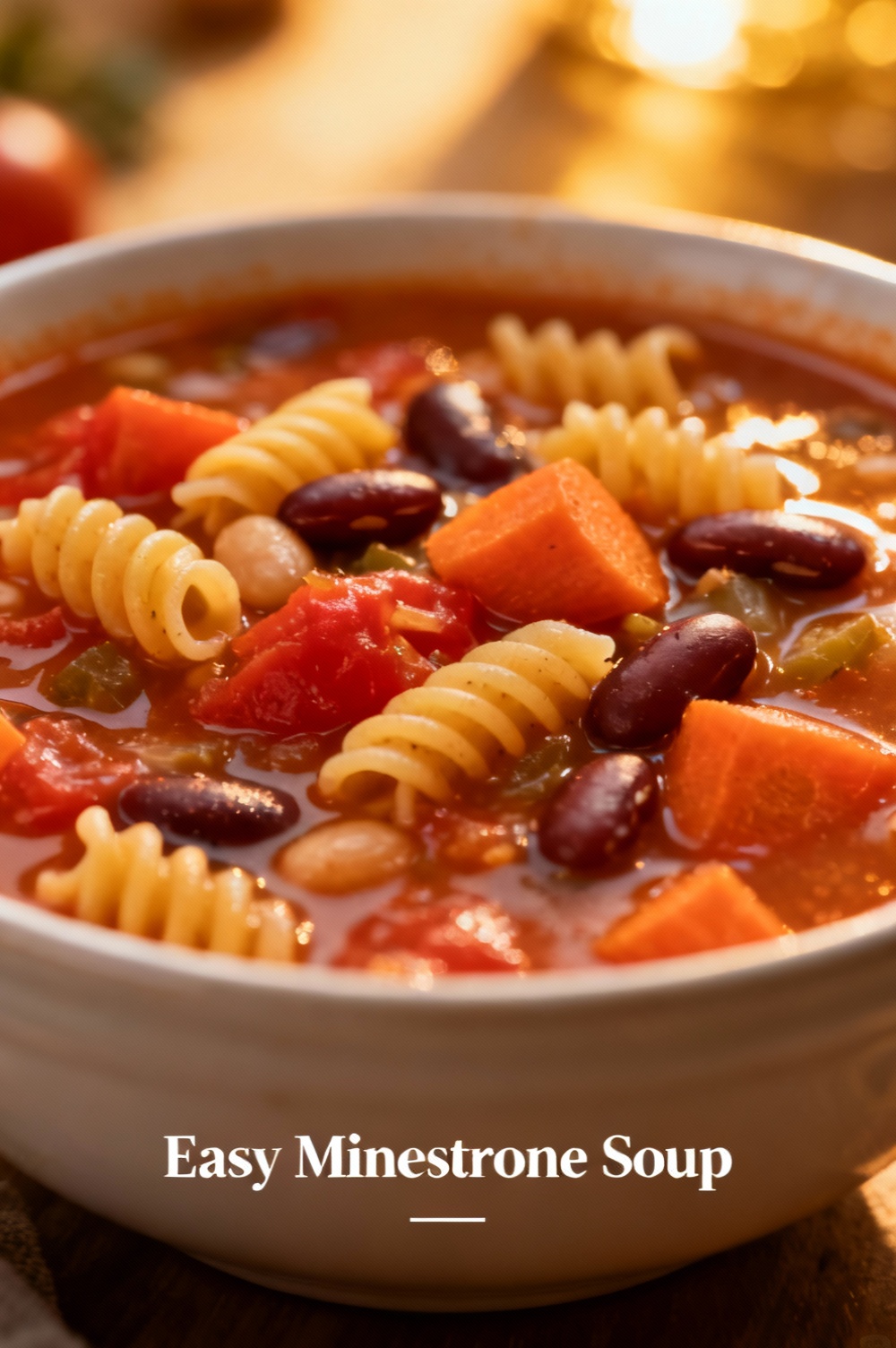
A classic, vegetable-forward Italian soup with beans and pasta — easy to make, adaptable, and full of comforting flavor.
Ingredients
- 2 tbsp extra-virgin olive oil
- 1 medium onion, diced
- 2 carrots, peeled and diced
- 2 celery stalks, diced
- 3 garlic cloves, minced
- 1 medium potato, peeled and diced (about 1½ cups)
- 1 small zucchini, diced
- 1 cup green beans, trimmed and cut into 1″ pieces
- 1 (14 oz) can diced tomatoes (with juices)
- 1 (15 oz) can cannellini beans, drained and rinsed
- 6 cups low-sodium vegetable broth (or chicken broth)
- 1 cup small pasta (ditalini, elbow, or small shells)
- 2 cups fresh spinach, roughly chopped (or kale)
- 1 bay leaf
- 1 tsp dried Italian seasoning (or 1 tsp dried oregano + 1 tsp dried basil)
- Salt and freshly ground black pepper, to taste
- Juice of 1/2 lemon (optional, to brighten)
- 2 tbsp chopped fresh parsley (for garnish)
- Grated Parmesan cheese, for serving (optional)
Instructions
- Heat the olive oil in a large pot over medium heat. Add the onion, carrots, and celery and sauté until softened, about 5–7 minutes.
- Add the garlic and cook until fragrant, about 30 seconds.
- Stir in the diced potato, canned tomatoes with their juices, vegetable broth, bay leaf, and Italian seasoning. Bring to a boil, then reduce heat and simmer for 12–15 minutes, until the potato begins to soften.
- Add the pasta and green beans; continue to simmer until the pasta is al dente and the vegetables are tender, about 8–10 minutes (check pasta package times).
- Stir in the cannellini beans, zucchini, and spinach. Cook for 2–3 minutes more, until zucchini is just tender and spinach has wilted.
- Remove from heat. Discard the bay leaf. Stir in lemon juice if using. Season generously with salt and pepper to taste.
- Ladle into bowls and garnish with chopped parsley and grated Parmesan. Serve hot with crusty bread.
Nutrition Information
- Calories: 250 kcal
- Cholesterol: 0 mg
- Sodium: 640 mg
- Carbohydrates: 42 g
- Fiber: 9 g
- Sugar: 6 g
- Protein: 11 g