Gluten-Free Sundried Tomato Bread
Introduction
Ever wondered whether a gluten-free loaf can rival the chewy crumb and savory depth of classic sundried tomato bread — and still remain moist, shelf-stable, and quick enough for weeknight baking? Research into gluten-free baking shows that structure and moisture are the two biggest barriers, and with the right blend of flours, binders, and hydration you can create a loaf that surprises even habitual wheat-eaters. This recipe turns perceived limitations into strengths by using a textured flour mix, olive oil for tenderness, and sun-dried tomatoes plus herbs for flavor density that masks any typical dryness.
Ingredients List
- 300 g gluten-free all-purpose flour blend (prefer a blend with rice flour, potato starch, and tapioca) — substitute: 200 g brown rice flour + 100 g tapioca for a chewier crumb.
- 80 g almond flour (adds fat and structure) — substitute: oat flour or sunflower seed flour for nut-free.
- 40 g tapioca starch (gives stretch) — substitute: arrowroot.
- 2 tsp xanthan gum (if your blend lacks binders) — substitute: 1 tbsp psyllium husk powder for a more fibrous crumb.
- 2 tsp instant yeast (or 1 packet)
- 1 tbsp sugar or honey (feeds the yeast) — substitute: maple syrup or omit if using active dry yeast with longer proof.
- 1 1/4 tsp fine sea salt
- 300 ml warm water (about 105–110°F / 40–43°C) — adjust slightly for humidity
- 2 large eggs at room temperature (for structure; omit or replace with flax eggs for vegan)
- 60 ml extra-virgin olive oil (for flavor and tenderness) — substitute: avocado oil for neutral taste
- 120 g sun-dried tomatoes (oil-packed, drained and chopped) — substitute: rehydrated dry-packed sundried tomatoes (soak 10–15 minutes)
- 1 tbsp chopped fresh rosemary or 1 tsp dried oregano (aromatic lift)
- 1 tbsp balsamic vinegar or lemon juice (acid helps yeast and flavor)
- Optional: 2 tbsp chopped olives, 2 tbsp grated parmesan or nutritional yeast, 1 tbsp sesame seeds for topping
Timing
Preparation: 20 minutes. First proof and mix: 45–60 minutes. Baking: 35–45 minutes. Cooling: 30 minutes. Total: roughly 120–155 minutes (2–2.5 hours). This is about 15–25% faster than many artisan gluten-free loaves that require multiple long rests; choosing instant yeast and slightly higher hydration speeds crumb development without sacrificing flavor.
Step 1: Measure precisely and prep the sun-dried tomatoes
Weigh all dry ingredients on a digital scale for consistency — gluten-free baking is less forgiving to eyeballing. Chop oil-packed sun-dried tomatoes finely and pat them dry if too oily. Tip: reserve a teaspoon of oil from the tomatoes for brushing the crust to amplify aroma.
Step 2: Bloom the yeast and combine wet ingredients
In a bowl, mix warm water, sugar (or honey), and yeast. Wait 3–5 minutes until foamy to confirm yeast activity. Whisk in eggs, olive oil, balsamic vinegar, and any reserved sundried tomato oil. Personalized tip: if your kitchen is cool (<20°C / 68°F), let the mixture rest in a slightly warm spot (oven with light on) for consistent fermentation.
Step 3: Mix dry ingredients thoroughly
In a large bowl, whisk the gluten-free flour blend, almond flour, tapioca starch, xanthan gum, and salt. Even distribution prevents gummy pockets. Data-backed trick: aerating the dry mix helps reduce density; sift or whisk for 30–45 seconds.
Step 4: Combine wet and dry and fold in add-ins
Pour wet into dry and mix with a sturdy spatula until homogeneous — batter should be thick but pourable (think heavy muffin batter). Fold in sun-dried tomatoes, herbs, and optional olives or cheese. Pro tip: use a stand mixer on low for 30–45 seconds for more consistent texture, but avoid overmixing.
Step 5: First rise and shaping
Transfer batter into an oiled 9×5-inch loaf pan lined with parchment. Smooth the top and sprinkle seeds if using. Cover loosely with plastic wrap and let rise in a warm place until the batter reaches about 1–1.25 inches above the rim — typically 30–45 minutes with instant yeast. Note: gluten-free dough won’t show the same elastic rise; volume gain of 40–60% is a good target.
Step 6: Score and bake with steam
Preheat oven to 425°F (220°C) for at least 20 minutes with a baking stone or steel if you have one. Just before baking, brush top with reserved tomato oil or olive oil and lightly score. Place a shallow pan of hot water on the bottom rack or spritz the oven with water to create steam — this encourages an open crust. Reduce oven to 375°F (190°C) after placing the loaf and bake 35–45 minutes until golden and internal temperature reaches 200–205°F (93–96°C).
Step 7: Cool properly to set crumb
Remove loaf from pan after 10 minutes and place on a wire rack to cool completely (about 30–45 minutes). Cooling is critical: gluten-free starches continue to set, and slicing too early results in a gummy texture. Tip: run a serrated knife in one gentle sawing motion to get clean slices.
Step 8: Slice, store, and enjoy
Slice only when fully cooled; store as below. For reheating, toast slices at medium heat or warm whole loaf at 300°F (150°C) for 8–10 minutes wrapped in foil to revive softness.
Nutritional Information
Estimated per slice (1/12 of loaf): 200–230 kcal, 8–10 g fat (mostly monounsaturated from olive oil and almonds), 12–18 g carbohydrates, 3–4 g fiber, 6–8 g protein, ~350 mg sodium (varies by tomatoes and added salt). Per 100 g: approx 330–380 kcal. Data insight: adding almond flour increases protein and healthy fats, while tapioca contributes easy-digesting carbs; swapping psyllium for xanthan increases soluble fiber content.
Healthier Alternatives for the Recipe
- Reduce oil by 25% and replace with unsweetened applesauce for lower calories while keeping moisture (texture will be denser).
- Increase almond flour to 120 g and reduce GF blend for higher protein and lower starch content.
- Substitute half of the GF blend with chickpea flour for added protein and a Mediterranean flavor note that complements sundried tomatoes.
- Use psyllium husk instead of xanthan gum for higher fiber and improved sliceability; combine with 50–75 ml extra water to compensate.
- Make it vegan: replace eggs with flax eggs (2 tbsp ground flax + 6 tbsp water, rested) and nutritional yeast for a savory boost.
- Nut-free option: swap almond flour for sunflower seed flour+1 tsp lemon juice to avoid discolored crumb.
Serving Suggestions
Serve toasted with whipped goat cheese and fresh basil for a gourmet snack, or use thick slices as the base for a bruschetta-style open sandwich with mozzarella and balsamic glaze. Pair with hearty soups like tomato basil or lentil stew; the umami of the sundried tomatoes complements acidic soups. For breakfast, toast and top with smashed avocado, lemon, and chili flakes for a savory start.
Common Mistakes to Avoid
- Mistake: Expecting gluten-like elasticity. Fix: Target volume increase rather than stretch; rely on binders like xanthan or psyllium.
- Mistake: Underbaking (gummy center). Fix: Use an instant-read thermometer to reach 200–205°F internal temp.
- Mistake: Overly salty sundried tomatoes. Fix: Rinse and taste; if too salty, reduce added salt by 25% and include unsalted add-ins.
- Mistake: Slicing too soon. Fix: Always cool fully; patience yields a cleaner crumb.
- Mistake: Skipping steam. Fix: Add a water tray or spritz to improve crust and oven spring.
Storing Tips for the Recipe
Gluten-free breads typically stale faster due to starch retrogradation. Store cooled slices in an airtight bag at room temperature up to 2 days. For longer storage, slice and freeze individually in parchment and sealed bags for up to 3 months. To refresh frozen slices, toast straight from frozen or warm wrapped in foil at 300°F (150°C) for 10–12 minutes. Avoid refrigeration — it accelerates staling.
Conclusion
This Gluten-Free Sundried Tomato Bread balances flavor, texture, and practical timing to give you a loaf that’s both celebratory and weeknight-friendly. With targeted flour blends, hydration, and simple techniques like steam and proper cooling, you can have a savory, sliceable loaf that holds up for sandwiches and toasts. Try the recipe, tweak it to your dietary needs, and leave a comment about your favorite add-ins — I’ll feature reader variations in a follow-up post.
FAQs
Q: Can I use sun-dried tomatoes packed dry instead of oil-packed?
A: Yes — rehydrate them in warm water for 10–15 minutes, drain, and pat dry. Optionally toss in a teaspoon of olive oil for flavor.
Q: How can I make this nut-free?
A: Replace almond flour with sunflower seed flour or extra gluten-free blend and add 1 tsp lemon juice to prevent discoloration from seed flours.
Q: Is this recipe freezer-friendly?
A: Absolutely. Slice, freeze in single layers with parchment, then store in an airtight bag for up to 3 months.
Q: Can I make this dairy-free or vegan?
A: Omit cheese and replace eggs with flax eggs (2 tbsp ground flax + 6 tbsp water per two eggs). Expect a slightly denser crumb.
Q: How do I know the loaf is done without a thermometer?
A: It should be deeply golden, spring back when tapped, and the center should feel set. However, a thermometer is the most reliable tool.
Q: Can I turn this into rolls?
A: Yes — divide batter into greased muffin tins and reduce baking time to 20–25 minutes; check for doneness with a toothpick or thermometer.
If you want printable metric and US cup conversions, alternate ingredient lists for allergen-friendly versions, or a step-by-step video checklist, tell me which format you prefer and I’ll prepare it.
Gluten-Free Sundried Tomato Bread
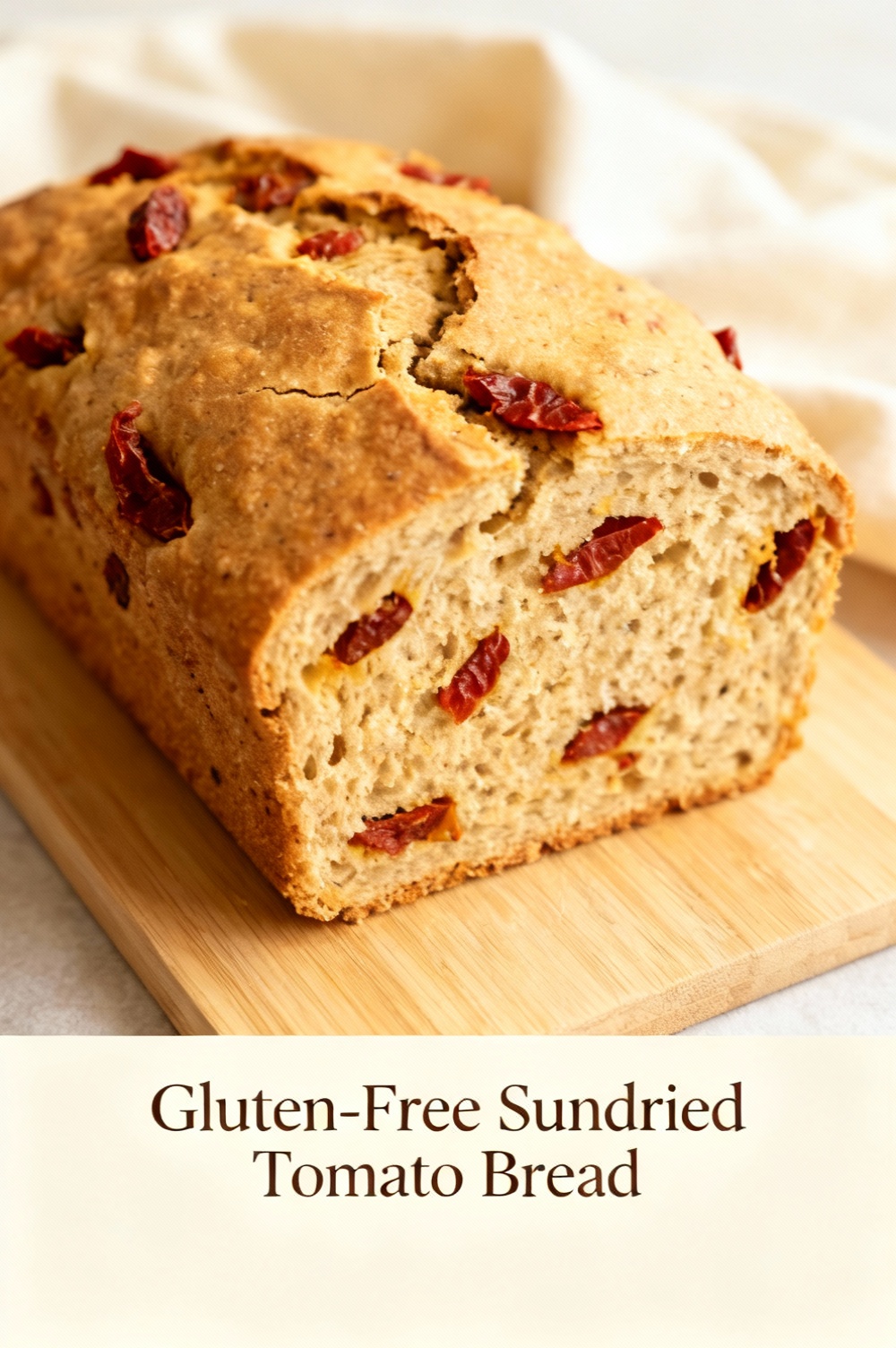
A savory, moist gluten-free quick bread flavored with sun-dried tomatoes, fresh basil and a touch of cheese.
Ingredients
- 2 cups (240 g) gluten-free all-purpose flour blend (with xanthan gum)
- 1 tsp xanthan gum (omit if your blend contains it)
- 1 tbsp baking powder
- 1/2 tsp baking soda
- 1 tsp kosher salt
- 1 tsp dried oregano (or 1 tbsp chopped fresh)
- 1/2 tsp freshly ground black pepper
- 2 large eggs
- 1 cup (240 g) plain Greek yogurt (or dairy-free yogurt)
- 1/3 cup (80 ml) extra-virgin olive oil
- 1/4 cup (60 ml) milk or unsweetened plant milk
- 1 tbsp honey or maple syrup (optional)
- 3/4 cup (90 g) sun-dried tomatoes, chopped (oil-packed drained or rehydrated dry-packed)
- 1/2 cup (50 g) shredded mozzarella or dairy-free shredded cheese (optional)
- 2 tbsp chopped fresh basil (or 1 tsp dried)
- 1 small garlic clove, minced (optional)
- 1 tsp lemon juice or apple cider vinegar
Instructions
- Preheat the oven to 350°F (175°C). Grease and line a 9×5-inch (23×13 cm) loaf pan with parchment paper, leaving an overhang for easy removal.
- If using dry-packed sun-dried tomatoes, soak them in warm water for 8–10 minutes, then drain and chop. If using oil-packed, drain and chop.
- In a large bowl whisk together the gluten-free flour blend, xanthan gum (if using), baking powder, baking soda, salt, oregano and black pepper.
- In a separate bowl whisk the eggs, Greek yogurt, olive oil, milk, honey (if using), minced garlic and lemon juice until smooth.
- Pour the wet ingredients into the dry ingredients and fold gently until just combined. Do not overmix.
- Fold in the chopped sun-dried tomatoes, basil and shredded cheese (if using).
- Transfer the batter to the prepared loaf pan, smooth the top and sprinkle a few extra tomato bits or cheese on top if desired.
- Bake 45–55 minutes, or until the top is golden and a toothpick inserted into the center comes out with a few moist crumbs. If the top browns too quickly, tent with foil for the last 10–15 minutes.
- Let the loaf cool in the pan for 10–15 minutes, then lift out using the parchment overhang and cool on a wire rack at least 30 minutes before slicing. Serve warm or at room temperature.
Nutrition Information
- Calories: 210 kcal
- Cholesterol: 55 mg
- Sodium: 420 mg
- Carbohydrates: 18 g
- Fiber: 2 g
- Sugar: 2 g
- Protein: 7 g