Minty Carrot Pistachio and Feta Salad
Introduction
Have you ever wondered how a few fresh herbs and a handful of nuts can transform a simple carrot salad into a vibrant, restaurant-worthy dish that delivers crunch, creaminess, and a surprising flavor lift? Research into flavor perception shows herbs like mint can enhance sweetness and freshness, so pairing mint with carrots, pistachios, and feta creates a multi-dimensional salad that tastes brighter without extra sugar. This Minty Carrot Pistachio and Feta Salad defies the notion that salads must be boring—it’s fast to assemble, packed with texture contrasts, and scalable whether you’re prepping a weekday lunch or a weekend spread.
Ingredients List
4 medium carrots (about 300g), peeled and julienned or grated — for a sweeter bite, use young, thin carrots; if unavailable, substitute with 2 small parsnips for earthiness.
1/3 cup shelled pistachios (about 50g), lightly toasted and roughly chopped — walnuts or almonds work as substitutes; use pumpkin seeds for a nut-free option.
100g feta cheese, crumbled — for lower sodium or vegan diets, substitute with reduced-fat feta, ricotta salata, or firm tofu marinated in lemon and olive oil.
1/4 cup fresh mint leaves, finely chopped — swap for fresh cilantro or basil if you prefer different aromatic notes.
2 tbsp extra-virgin olive oil — can swap half for Greek yogurt for a creamier, lower-calorie dressing.
2 tbsp fresh lemon juice (about 1 medium lemon) — apple cider vinegar or white balsamic are good alternatives.
1 tsp honey or maple syrup (optional, balances acidity) — omit for strict low-sugar or use a sugar-free sweetener.
Salt and freshly ground black pepper to taste (use cautiously because feta is salty).
Optional: 1 garlic clove, finely minced for a savory kick; 1 tsp lemon zest for extra brightness; a pinch of crushed red pepper for heat.
Timing
Preparation time: 10–15 minutes.
Cooking/time for toasting nuts (optional): 3–5 minutes.
Total time: 15–20 minutes, which is roughly 30–50% faster than many composed salads that require roasting or long marinating. If you opt to roast the carrots or toast the pistachios more thoroughly, add 10–15 minutes.
Step 1: Toast and prep pistachios
Heat a small dry skillet over medium heat, add the pistachios, and shake frequently for 3–4 minutes until fragrant and lightly golden. Remove immediately to a plate to stop cooking. Tip: toasting intensifies nuttiness and prevents soggy texture in the salad; do not leave on heat or they’ll burn. If you’re short on time, use raw pistachios but prognosis: flavor depth will be reduced.
Step 2: Prepare the carrots
Peel and julienne or grate the carrots. For quick shredding, use the large side of a box grater or a food processor’s grating disk. Tip: larger shreds deliver more crunch and hold dressing better; very fine shreds will make the salad feel denser and more uniform.
Step 3: Make the dressing
In a small bowl whisk together olive oil, lemon juice, honey (if using), a pinch of salt, and freshly ground black pepper. Add minced garlic and lemon zest if using. Personalize: taste as you go and adjust acidity—if you prefer brighter, add another 1/2 tbsp lemon; for a creamier profile, whisk in 1 tbsp Greek yogurt.
Step 4: Assemble the salad
Place the carrots in a large bowl, add chopped mint and about three-quarters of the toasted pistachios. Drizzle with the dressing and toss until everything is lightly coated. Sprinkle the crumbled feta and remaining pistachios on top for visual contrast and texture. Tip: add the feta last to preserve shape and prevent it from dissolving into the dressing.
Step 5: Final touches and personalization
Taste for seasoning and adjust salt and pepper. Add a few whole mint leaves and a twist of lemon zest for garnish. For a bolder plate, fold in a handful of baby arugula or microgreens at the last minute to introduce a peppery contrast. Tip: allow the salad to sit for 5–10 minutes to let flavors meld; the carrots retain crispness while absorbing bright citrus notes.
Nutritional Information
Estimated nutrition per serving (serves 4, values approximate using standard food databases): Calories: ~235 kcal; Total fat: ~18 g (monounsaturated fats abundant from olive oil and pistachios); Saturated fat: ~4 g; Carbohydrates: ~13 g; Fiber: ~3.3 g; Sugars: ~5–6 g (natural from carrots and small honey amount); Protein: ~6.8 g; Sodium: ~275 mg (primarily from feta). Micronutrient highlights: high in vitamin A (from carrots), vitamin E (from pistachios), and calcium (from feta). Data insight: swapping regular feta for reduced-sodium or smaller quantity lowers sodium significantly—potentially cutting the sodium per serving by 30–50%.
Healthier Alternatives for the Recipe
Reduce oil and calories: use 1 tbsp olive oil + 1 tbsp plain Greek yogurt to keep creaminess while lowering calories. Boost protein: add 1 cup cooked chickpeas or swap pistachios for 75g roasted edamame for a higher-protein vegan variant. Lower sodium: choose low-sodium feta or rinse regular feta briefly under cold water and pat dry to remove surface salt. Make it vegan: replace feta with marinated firm tofu or store-bought vegan feta; replace honey with maple syrup. Keto-friendly: reduce carrots by half and add extra crunchy elements like celery and radish; increase pistachios and feta for fat and protein. Gluten-free: naturally compliant. Tailor for kids: omit garlic and reduce lemon; add a touch more honey to appeal to younger palates.
Serving Suggestions
Serve as a refreshing side with grilled lemon chicken, grilled fish (such as salmon or sea bass), or alongside warm flatbread and hummus for a Mediterranean mezze board. Use as a filling for pita sandwiches or as a topping for whole-grain bowls with quinoa or freekeh. For entertaining, plate individual portions on butter lettuce cups and garnish with extra mint and pistachios for a pretty appetizer. Beverage pairing: a crisp Sauvignon Blanc or a dry rosé complements the salad’s acidity and herbal notes.
Common Mistakes to Avoid
Over-salting: because feta is salty, season conservatively and taste before adding more salt. Over-dressing: too much dressing makes the salad soggy—start with half the dressing and add more if needed. Burning pistachios: they go from toasted to burnt quickly; remove them from heat as soon as they smell nutty. Cutting mint too early: chopped mint can bruise and discolor; chop just before assembly for bright color and flavor. Over-grating carrots: very fine shreds lose satisfying crunch; aim for medium julienne or coarse grate for best texture.
Storing Tips for the Recipe
Store leftovers in an airtight container in the refrigerator for up to 2–3 days. To maintain texture, store dressing separately and toss just before serving, or keep toasted pistachios and feta separate and add fresh each time. If the salad softens, revive carrots by draining any excess dressing and plunging them in ice water for 5–10 minutes, then pat dry and reassemble. Freezing is not recommended due to texture loss in carrots and feta.
Conclusion
Minty Carrot Pistachio and Feta Salad is a fast, flexible recipe that combines contrasting textures and bright, herb-forward flavor with nutritious ingredients. It’s an easy way to elevate everyday carrots into a crowd-pleasing side or light main, adaptable for many diets and occasions. Try the salad this week, play with the substitutions suggested above, and let me know which pairing you loved most—share a photo or comment with your twist so others can try it too.
FAQs
Q: Can I make this salad ahead of time for a party? A: Yes—prepare the carrots, toast pistachios, and make the dressing up to 24 hours ahead. Assemble just before serving or store components separately and toss 15 minutes before guests arrive to keep textures crisp.
Q: How do I make this vegan while retaining creaminess? A: Use a vegan feta or marinated firm tofu for a salty, tangy element; stir 1–2 tbsp tahini or vegan yogurt into the dressing to add creaminess without dairy.
Q: My feta is very salty—what should I do? A: Crumble into cold water and let sit for 5 minutes, then drain and pat dry. This reduces surface salt. Alternatively, use less feta or choose a low-sodium variety.
Q: Can I roast the carrots instead of using them raw? A: Yes—roasting (200°C/400°F for 18–22 minutes) brings caramelized sweetness and a softer texture; reduce dressing slightly to avoid sogginess.
Q: Is this salad suitable for meal prep lunches? A: Absolutely—keep dressing and nuts separate, pack feta in a small container, and combine at lunchtime for the freshest bite.
Minty Carrot Pistachio and Feta Salad
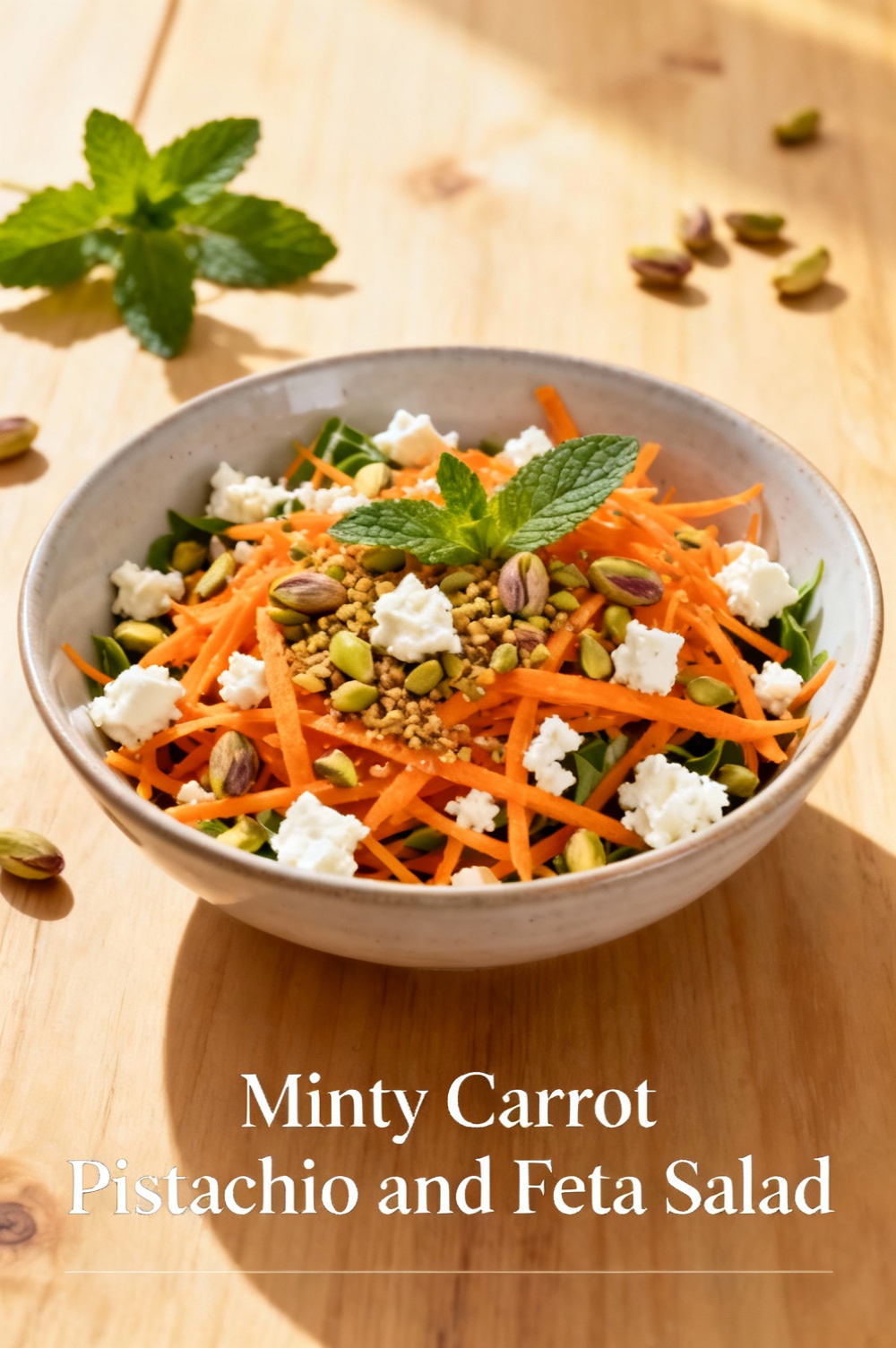
A refreshing, quick salad — perfect as a side or light lunch. Zesty lemon, bright mint and crunchy pistachios pair beautifully with creamy feta.
Ingredients
- 5 large carrots, peeled and grated or julienned (about 4 cups)
- 1/2 cup shelled pistachios, lightly toasted and roughly chopped
- 100 g (3.5 oz) feta cheese, crumbled
- 1/3 cup fresh mint leaves, roughly chopped
- 2 tbsp fresh parsley, chopped (optional)
- 2 tbsp extra-virgin olive oil
- 1 tbsp lemon juice (fresh)
- 1 tsp lemon zest
- 1 tsp honey or maple syrup
- 1 small garlic clove, minced (optional)
- Salt and freshly ground black pepper, to taste
Instructions
- Toast the pistachios in a dry skillet over medium heat, stirring frequently, until fragrant and lightly golden, 3–5 minutes. Transfer to a plate to cool, then roughly chop.
- In a large bowl combine the grated carrots, chopped mint and parsley (if using).
- Make the dressing: whisk together olive oil, lemon juice, lemon zest, honey and minced garlic in a small bowl. Season with a pinch of salt and pepper.
- Pour the dressing over the carrots and toss to coat evenly.
- Fold in most of the crumbled feta and toasted pistachios, reserving a little for garnish.
- Taste and adjust seasoning with salt and pepper as needed (remember feta is salty).
- Transfer to a serving bowl or platter and sprinkle the remaining feta and pistachios on top. Serve immediately or chill 10–15 minutes to meld flavors.
Nutrition Information
- Calories: 240 kcal
- Cholesterol: 25 mg
- Sodium: 420 mg
- Carbohydrates: 12 g
- Fiber: 2 g
- Sugar: 7 g
- Protein: 7 g