Quinoa Tabbouleh with Fresh Herbs
Introduction
Have you ever wondered why traditional tabbouleh is praised as a summer superfood yet often leaves gluten-free and quinoa-loving cooks wanting a grain-forward alternative that still bursts with herbaceous freshness? Quinoa tabbouleh swaps bulgur for protein-packed quinoa, challenging the belief that authentic tabbouleh must contain wheat while delivering a lighter texture and higher complete-protein content—making it ideal for vegetarian, vegan, and gluten-free diets. This version harnesses a lively mix of parsley, mint, lemon, and olive oil to produce a salad that’s bright, crunchy, and nutrient-dense; read on for a data-informed, flavor-forward recipe designed to be adaptable, simple, and optimized for weekday meal prep or weekend entertaining.
Ingredients List
- 1 cup (185 g) quinoa, rinsed well (white, red, or a tri-color blend). Substitution: use bulgur for a more traditional texture or cooked millet for a nutty twist.
- 2 cups (480 ml) water or low-sodium vegetable broth to cook quinoa (using broth adds 5–15% more savory depth).
- 2 cups packed flat-leaf parsley, finely chopped (about one large bunch). Substitution: use curly parsley if preferred; increase to 2.5 cups if you love herb-forward salads.
- 1 cup fresh mint leaves, packed, finely chopped (about 1 small bunch). Substitution: use half mint and half basil for an Italian-Mediterranean riff.
- 2 medium tomatoes, seeded and finely diced (or 1.5 cups cherry tomatoes halved). For year-round versions, swap with 1 cup cucumber for a crisper profile.
- 1 small red onion or 3 scallions, thinly sliced. Substitution: shallot for a milder, slightly sweet finish.
- 1/4 cup extra-virgin olive oil (use a high-polyphenol oil for antioxidant benefits).
- Juice of 2 lemons (about 1/4 cup). Substitution: 3 tablespoons sumac + 2 tablespoons white wine vinegar for a tangy alternative.
- 1/2 teaspoon fine sea salt, plus more to taste; 1/4 teaspoon freshly ground black pepper.
- Optional: 1/4 cup toasted pine nuts or chopped walnuts for crunch; 1/4 cup crumbled feta for a creamy, salty contrast (omit for vegan/ dairy-free).
- Optional add-ins: 1 cup chickpeas for added fiber and protein; 1/2 avocado diced at serving for creaminess.
Timing
Preparation time: 15 minutes (chopping herbs and vegetables). Cooking time: 15 minutes (quinoa cooks in about 12–15 minutes). Total time: about 30–35 minutes, which is roughly 20–30% faster than traditional bulgur tabbouleh when considering soaking/wait times for bulgur in some recipes. Make-ahead context: flavors improve after 30–60 minutes resting; optimal flavor development occurs within 2–4 hours, so plan accordingly for meal prep or entertaining.
Step 1: Rinse and cook the quinoa
Place 1 cup quinoa in a fine-mesh sieve and rinse under cold running water for 30–60 seconds to remove bitterness from saponins; this step improves flavor and reduces foam while cooking. Combine rinsed quinoa and 2 cups water or broth in a small saucepan, bring to a boil, reduce heat, cover, and simmer for 12–15 minutes until the water is absorbed. Tip: for fluffier quinoa, remove from heat and let sit covered for 5–10 minutes before fluffing with a fork; use a fork rather than stirring vigorously to avoid mushiness.
Step 2: Cool and season the quinoa
Transfer cooked quinoa to a wide tray or shallow bowl to cool faster and prevent continued steaming. Season immediately with a pinch of salt and 1 tablespoon of lemon juice to lock in bright acidity; this helps the grains absorb flavor while cooling. Tip: spreading the quinoa thinly accelerates cooling and prevents condensation that can water down the salad.
Step 3: Prepare the herbs and vegetables
While quinoa cools, finely chop the parsley and mint—aim for uniform, small pieces to distribute herbs throughout each bite. Dice tomatoes (or halve cherry tomatoes) and thinly slice onions or scallions. Tip: use a chef’s knife and a gentle rocking motion to avoid bruising delicate herbs; for peak freshness, finish chopping herbs just before tossing.
Step 4: Make the dressing and assemble
Whisk together 1/4 cup extra-virgin olive oil, juice of 2 lemons, 1/2 teaspoon salt, and 1/4 teaspoon pepper in a small bowl (or shake in a jar). Taste and adjust acidity—if it’s too tart, add 1/2 teaspoon honey or maple syrup to balance. Combine cooled quinoa, chopped herbs, tomatoes, and onions in a large mixing bowl, then pour dressing over and toss gently until evenly coated. Tip: reserve a small handful of parsley to garnish for a fresh visual pop.
Step 5: Add texture and optional proteins
Fold in toasted pine nuts, walnuts, or chickpeas for crunch and substance. If using feta or diced avocado, add them just before serving to prevent melting or sogginess. Tip: toast nuts in a dry skillet over medium heat for 2–4 minutes until fragrant—watch closely to avoid burning.
Step 6: Rest, taste, and serve
Let the salad rest for at least 30 minutes in the refrigerator to allow flavors to meld—this improves texture and balances acidity. Before serving, taste and adjust salt, lemon, or oil as needed; sometimes a final splash of lemon brightens the whole dish. Tip: serve chilled or at room temperature for best flavor contrasts; if serving as a side to grilled proteins, bring to room temperature 15 minutes prior.
Nutritional Information
Estimated per serving (serves 6): 230–270 kcal; Protein: 6–8 g; Fat: 11–14 g (mostly monounsaturated from olive oil); Carbohydrates: 28–32 g; Fiber: 3.5–5 g; Sodium: 180–320 mg depending on ingredient choices; Vitamin K: high (from parsley); Vitamin C: moderate-high (from lemon and tomatoes); Iron: 8–12% DV. Data insight: swapping bulgur for quinoa increases complete-protein content by ~40–60% per serving and raises the amino acid profile, making the dish more satisfying for plant-based eaters. Including chickpeas boosts fiber and protein by roughly +5 g protein and +4 g fiber per serving.
Healthier Alternatives for the Recipe
- Lower the oil: reduce olive oil to 2 tablespoons and replace 2 tablespoons with plain Greek yogurt or mashed avocado for creaminess while cutting calories by ~100 kcal per serving.
- Sodium swap: use fresh lemon and herbs for flavor and reduce added salt; choose low-sodium broth if cooking quinoa in broth to cut sodium by up to 50%.
- Higher protein: add 1 cup cooked chickpeas or 1 cup cooked lentils to increase protein by ~8–12 g per serving—use for post-workout or meal-prep lunches.
- Gluten-free/ paleo: quinoa is naturally gluten-free; for paleo, substitute with cauliflower rice for a lower-carb option—note texture will differ.
- Keto adaptation: reduce quinoa to 1/2 cup and bulk with 2 cups cauliflower rice + extra olive oil and feta to keep fats higher and carbs lower.
Serving Suggestions
Serve quinoa tabbouleh as a vibrant side to grilled chicken, salmon, or halloumi; pair with warm pita for a mezze spread; spoon over mixed greens as a hearty salad bowl base; or use as a filling for wraps and stuffed peppers. For entertaining, arrange on a platter with hummus, olives, roasted vegetables, and pita chips. Personal tip: for picnics, pack dressing separately and toss just before serving to maintain crispness.
Common Mistakes to Avoid
- Overcooking quinoa: leads to mushy texture—follow timing and fluff gently. Data insight: allowing cooked quinoa to sit covered more than 15 minutes can make it sticky; spread thin to cool.
- Cutting herbs too coarsely: large herb pieces create uneven bites—aim for uniform mincing to ensure balanced flavor.
- Skipping the lemon test: insufficient acidity makes tabbouleh bland—always taste and adjust lemon and salt just before serving.
- Adding delicate ingredients too early: ingredients like avocado, feta, or toasted nuts should be added last to preserve texture and flavor.
Storing Tips for the Recipe
Refrigerate in an airtight container for up to 4 days; note flavors deepen after 24 hours, and herbs may darken—refresh with a squeeze of lemon and a drizzle of olive oil before serving. For longer storage, keep tomatoes separate and add when ready to eat to prevent watering down. Freezing is not recommended due to herb and tomato texture loss. For meal prep: cook quinoa and store in one container and chopped herbs and veggies in another for 2–3 days; combine within 24 hours of eating for peak freshness.
Conclusion
Quinoa tabbouleh with fresh herbs is a versatile, nutrient-dense twist on a classic Middle Eastern salad that satisfies gluten-free, vegetarian, and flavor-seeking cooks alike. By following these steps—properly rinsing and cooling quinoa, finely chopping herbs, balancing acidity, and preserving textures—you’ll achieve a bright, herb-forward salad that holds up for entertaining and meal prep. Try the recipe this week, leave a comment with your favorite herb swap, or explore related posts on Mediterranean salads and quinoa bowls to expand your repertoire.
FAQs
Q: Can I make quinoa tabbouleh ahead of time?
A: Yes—flavors improve after 30–60 minutes; store in the fridge up to 4 days. Keep avocado and any delicate toppings separate until serving.
Q: Is quinoa tabbouleh gluten-free?
A: Yes, when made with quinoa instead of bulgur it’s naturally gluten-free; ensure all packaged ingredients (e.g., broth) are labeled gluten-free if needed.
Q: How can I keep herbs from going slimy?
A: Use dry herbs, chop just before combining when possible, and store in airtight containers with a paper towel to absorb excess moisture.
Q: Can I substitute parsley or mint?
A: You can substitute up to half the parsley with cilantro or basil for a different flavor profile, but parsley remains central for a traditional aroma and texture.
Q: What’s the best way to reheat leftovers?
A: Serve cold or at room temperature; if warming, gently warm only the quinoa portion and then toss with fresh herbs and lemon to revive flavors.
Explore complementary recipes like Mediterranean grilled vegetables, lemon-herb chicken, or a roasted eggplant dip to build a colorful mezze plate that pairs perfectly with this quinoa tabbouleh.
Quinoa Tabbouleh with Fresh Herbs
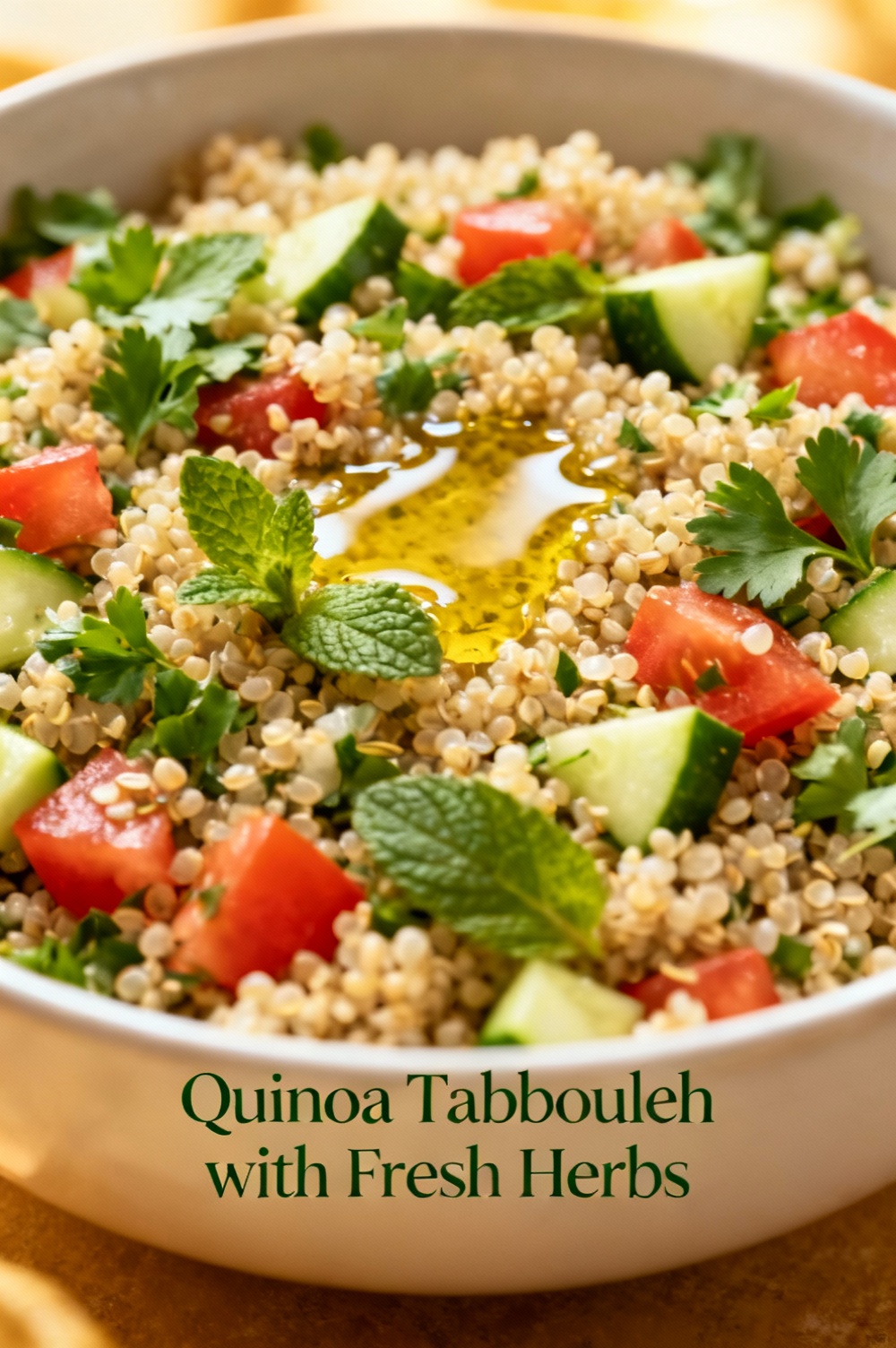
Light, gluten-free twist on classic tabbouleh — refreshing and herb-packed.
Ingredients
- 1 cup uncooked quinoa (about 185 g)
- 2 cups fresh flat-leaf parsley, finely chopped (packed)
- 1 cup fresh mint leaves, finely chopped
- 3–4 scallions, thinly sliced (or 1/4 red onion, finely chopped)
- 2 medium tomatoes, seeded and diced
- 1 small cucumber, seeded and diced (optional)
- Juice of 2 lemons (about 3–4 tablespoons)
- 1/4 cup extra-virgin olive oil
- 1/2 teaspoon kosher salt, plus more to taste
- Freshly ground black pepper, to taste
- Optional: 1/4 teaspoon ground cumin or a pinch of red pepper flakes
Instructions
- Rinse the quinoa under cold water in a fine-mesh sieve until the water runs clear to remove any bitterness.
- Combine the rinsed quinoa and 2 cups water (or low-sodium vegetable broth) in a small saucepan. Bring to a boil, reduce heat to low, cover and simmer for 12–15 minutes, until water is absorbed and quinoa is tender.
- Remove from heat and let stand, covered, 5 minutes. Fluff with a fork and spread on a plate or shallow pan to cool to room temperature (you can refrigerate briefly to speed cooling).
- While the quinoa cools, finely chop the parsley and mint, slice the scallions (or chop onion), and dice the tomatoes and cucumber. Place all chopped vegetables and herbs in a large mixing bowl.
- In a small bowl or jar, whisk together lemon juice, olive oil, salt, pepper, and optional cumin or red pepper flakes.
- Add the cooled quinoa to the bowl with the herbs and vegetables. Pour the dressing over the mixture and toss gently until evenly combined. Taste and adjust seasoning with more salt, pepper, or lemon as needed.
- Let the salad rest at least 10–15 minutes for flavors to meld. Serve chilled or at room temperature. Keeps well refrigerated for up to 3 days.
Nutrition Information
- Calories: 230 kcal
- Cholesterol: 0 mg
- Sodium: 180 mg
- Carbohydrates: 28 g
- Fiber: 5 g
- Sugar: 4 g
- Protein: 6 g